Be in the Know
Guided by industry experts, expand your sports massage knowledge with our in-depth career articles and guides
Guided by industry experts, expand your sports massage knowledge with our in-depth career articles and guides
If you’re considering how to become a sports massage therapist, it’s likely that you’ve had a few treatments, experienced what the therapy has to offer, and want to learn how to do it and share it with others. This is a common reason why many of our students report that they want to get qualified and work in this field.
In this article, we’ll explore what sports massage is, the role of the sports massage practitioner, and the types of training and qualifications options that are open to you. Like other professions in the active leisure sector (e.g., personal training, teaching Pilates, or yoga instruction), there are a lot of opportunities, sadly, not all of them good.
Whether you are a practising fitness professional working in the sector, or you are completely new to the active leisure industry, we’re confident you’ll find this article invaluable. We will highlight what good practice looks like in terms of training, qualifications and employment, and what pitfalls you’ll want to avoid.
Sports massage is a form of complementary physical therapy which involves manipulating the soft tissues of the body (skin, fascia, muscles, tendons and sometimes, ligaments) in order to promote recovery, reduce inflammation, stiffness and other types of restriction (e.g., trigger points, adhesions), to reduce the future risk of injury, and/or to improve how those tissues function.
Sports massage is used to promote balance between different types of soft tissue, which reduces unnecessary tension and allows them to function optimally. It is also often used alongside other exercise (e.g., strength training, stretching) or therapeutic treatments (physiotherapy, chiropractic, osteopathy), to achieve the intended treatment objectives. These are usually identified in a consultation with the client, and/or with a referral from another professional (e.g., physiotherapist, sports medicine doctor, strength and conditioning coach).
Sports massage is commonly used to support recovery from an injury, whether that’s an acute injury that has occurred while performing exercise or sport (e.g., sprained ankle, torn rotator cuff), or an overuse injury like tennis elbow or golfer’s elbow.
In response to overuse, underuse, or in response to a specific injury mechanism, the body’s soft tissues can become dysfunctional. This is actually quite common when people perform strenuous exercise and/or overly repetitive movements without developing sufficient strength, stability or length in other supporting tissues. In this situation, poor movement quality becomes habitual, and pain and dysfunction often follow. In this situation, sports massage therapists can use a variety of techniques, including pressure and friction, to release and soften stiff and knotted muscles so that the body can start the natural process of healing. When used alongside appropriate exercise and movement training, clients can reduce their pain and restore optimal movement quality.
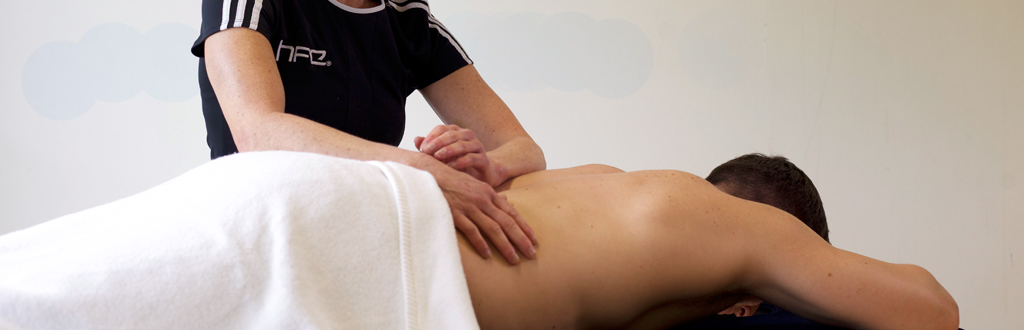
The role of a sports massage therapist is multifaceted and to some extent will depend on where the therapist is working and with which types of clients (e.g., general population, athletes, treating specific types of injury).
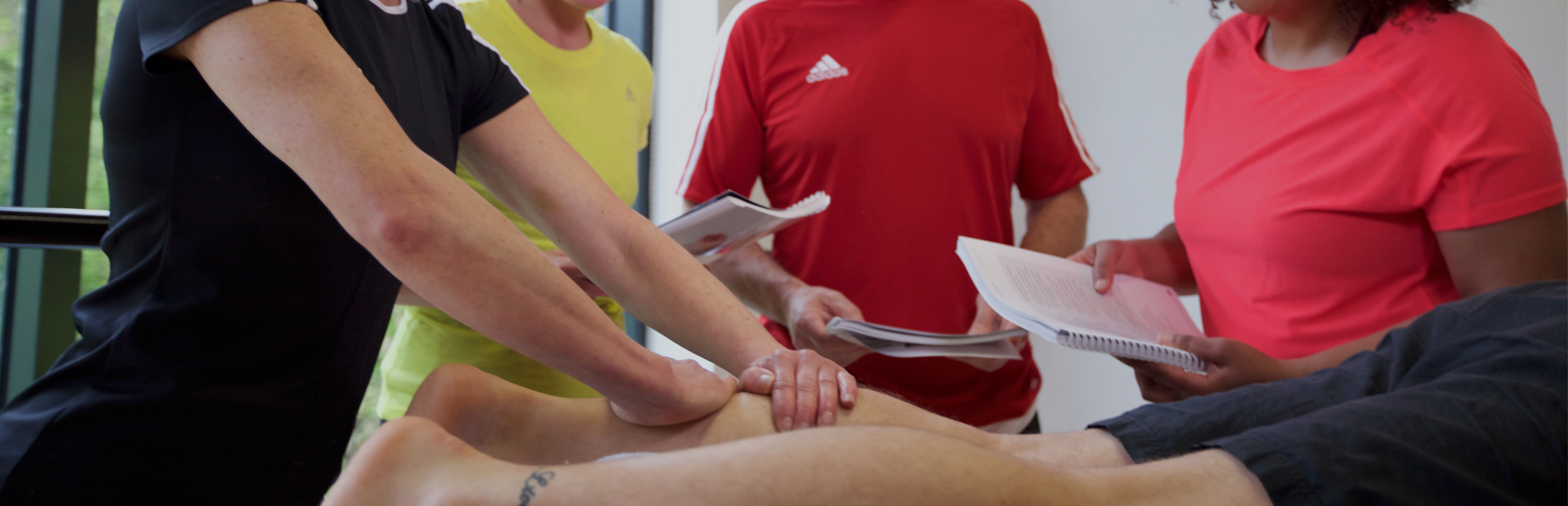
A massage therapist’s scope of practice will depend on the qualifications and insurance that they hold. Therapists who hold a level 3 sports massage qualification are able to work with healthy clients to support their preparation, participation, and recovery from training and/or competition. Therapists who hold level 3 qualifications don’t tend to provide treatments for specific types of injury or pain. Experienced sports massage therapists who complete a recognised level 4 sports massage qualification are able to work with clients who have more complex or individual needs, like specific injuries, dysfunction or pain.
Broadly speaking, massage therapists work with clients to either help them maintain the pliability and function of their soft tissues, or restore how those tissues function, with the goal of improving function in sport, exercise, or daily living.
Sports massage therapists are required to treat people of all ages and backgrounds, using a variety therapeutic techniques. These may not always involve massage, so being flexible and adaptive to each client’s individual circumstances and needs is a must.
While sports massage is perhaps still most often associated with rehabilitation, the work also focuses on injury prevention strategies and enhancing musculoskeletal function and athletic performance. Massage in this context is used to maintain optimum tissue quality and this approach is often referred to as ‘prehabilitation’ (improving function before injury occurs).
In addition to treating the physical effects of intense exercise or injury, sports massage therapists may also find themselves dealing with a client’s emotions, especially when they are in pain. Many people develop symptoms of depression, low self-esteem, anxiety and reduced mood/confidence when they are in pain, or have a chronic injury. Being able to provide a high-level of client-centred care, understanding and empathy is essential.
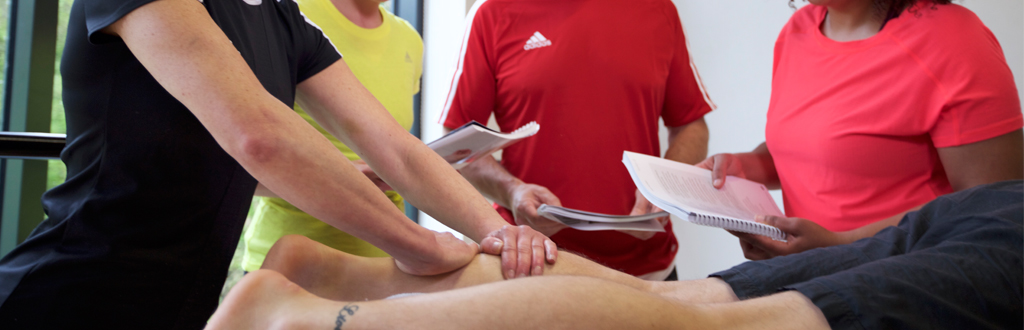
Sports massage therapists need high levels of knowledge and understanding in areas like anatomy, physiology, and injury mechanics and appropriate treatment and referral pathways. That said, at the heart of every treatment is the individual client, so it is essential that they have the ability to meet their clients where they are at. Some of the essential skills and qualities needed by therapists include, but are not limited to:

Broadly speaking, there are two routes to becoming a sports massage therapist; the academic route and the vocational route (sometimes called the technical route).
The academic route is normally completed at a university or other form of academic institute. It is normally accessed in the context of a degree programme and delivered over a number of years, usually three.
Academic sports massage qualifications will normally place more emphasis on rehabilitation and other sports science-related subjects like biomechanics, physiology and research methods for example. Degree-level therapy qualifications are typically tailored more towards those wanting to work in a clinical setting with more complex injuries, or in elite sports. Graduates of these programmes will usually have a much broader scope of practice (e.g. sports therapy) and sports massage is a minority focus.
Outside of degree programmes, vocational qualifications are available and these are the most common routes to becoming a sports massage therapist. Vocational sports massage qualifications are certificated by awarding organisations like YMCA Awards, Active IQ, Transcend Awards, and/or VTCT. These organisations are also regulated by Ofqual, which ensures that the content of these qualifications aligns with industry, employer, and best practice standards.
Anyone considering how to become a sports massage therapist will definitely want to ensure that they only consider sports massage courses that lead to a fully regulated qualification certificated by organisations like those mentioned above. There are a number of training providers who offer short, non-regulated sports massage courses, some online, some in-person, but these courses are not qualifications. Not only do these courses often fall short of industry knowledge and skills standards, they may also lead to problems with insurance and malpractice later down the line, especially if a client wanted to make a claim for loss or injury.
The two most widely recognised vocational sports massage qualifications are as follows:
The Level 3 Diploma in Sports Massage Therapy is the entry-level qualification to sports massage and as such the minimum level of qualification required to practise as a therapist. The level 3 programme covers a range of topics related to sports massage and soft tissue therapy, including: anatomy and physiology for sports massage; soft tissue dysfunction; common sports injuries; effects of different massage techniques; planning and evaluating treatments, consultation skills; and clinical and professional practice.
The Level 4 Certificate in Sports Massage Therapy acts as a progression from the level 3 qualification and as such, it is a requirement on entry that students already hold the level 3 diploma. Covering a broader and deeper range of subjects, the level 4 certificate looks at more advanced sports massage-related content, including: advanced therapy techniques; sports-related injuries and treatment modalities; injury management techniques and strategies; movement impairment and dysfunction; and assessment and screening tools for injury.
It is important to note that with both of these massage qualifications graduates will only be qualified to work with clients who have already been diagnosed with their injury. It would be considered beyond the scope and professional practice of a sports massage therapist to diagnose any injury or condition themselves.
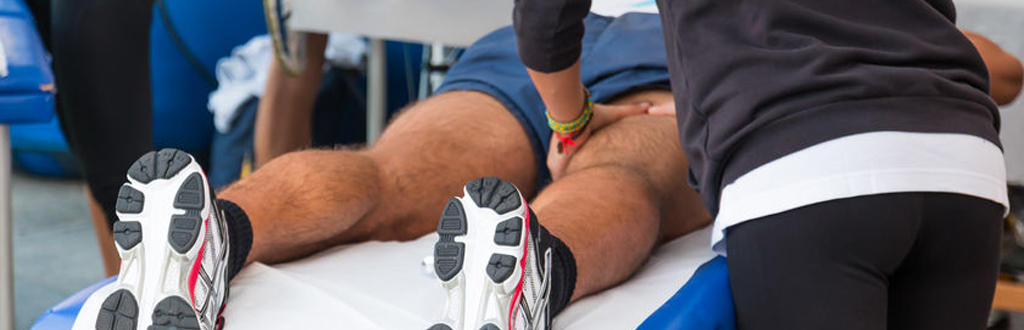
Sports massage is no longer a treatment reserved for elite athletes and so its appeal and application go far beyond the exercise, fitness and sporting sectors. There are now so many interesting and exciting opportunities available for skilled massage therapists.
Some of the more common places where massage therapists will be able to secure work include, but are not limited to:
• Exercise and fitness clubs – according to multiple leisure industry reports (e.g., State of the Fitness Industry Report, 2025), participation in exercise is currently at a record high. As such, it follows that more people will be looking for sports massage treatments, either to keep injuries at bay, or to treat them when they present. If these people are already in a health club, it makes sense that they can access the treatment in the same environment, which is why many gyms and health clubs have therapy rooms on site where sports massage can be accessed.
• Sports clubs – many amateur and semi-professional sports clubs (e.g. cricket, football, hockey, netball etc) have a team or club massage therapist who players can turn to when injury strikes, or they feel the onset of a niggle.
• Therapy clinics – chartered physiotherapists, osteopaths and chiropractic clinics will often provide advanced diagnoses and treatments for people who are injured, some of which may include the application of sports massage techniques. However, it is common to also find a dedicated sports massage therapist in a physio or osteopath clinic, providing treatments to clients who have simpler soft tissue injuries.
• Sporting events – many sporting events, like half marathons, full marathons, triathlons, duathlons, cycling races, and Ironman allow sports massage therapists to attend, providing pre and post-event massages to participants on demand.
• Mass participation events – the rise of events like Ironman, Tough Mudder, Born Survivor and Outlaw to name a few has been exponential in recent years. These events are often packed with groups of people coming together to complete a team challenge. Pre and post-event massages are again commonplace.
• Client’s home – the demand for mobile sports massage services are high. Even those people who are largely inactive will often want to use the services of a sports masseur in order to help them cope with the effects of an overly-sedentary lifestyle. The prevalence of neck, shoulder, back and wrist pain, as well as tennis elbow, is at an all-time high, especially amongst office workers and sports massage is often the first port of call for people suffering from such injuries.
Sports massage therapists can usually expect to earn between £28,000-£35,000 per annum depending on the number of hours they work, the facilities they are operating in, and their level of qualification.
Most sports massage therapists work part-time around other roles, delivering treatments on an hour-by-hour basis. Again, treatment charges vary depending on the level of skill, qualification, and the type of clients that they are working with. On average, most sports massage therapists charge between £40.00-£90.00 per hour. This again will depend on experience, qualifications and location.
For those wanting to become a great sports massage therapist there are a number of others steps that they can take outside of their training and qualifications to ensure that they become a fantastic therapist. Some of these steps include, but are not limited to:
And discover more about the world of massage therapy
Great news, you're on the list...