
Perfecting Your Burpee Technique
Improve your burpee technique with practical tips on form, movement and execution to help you perform this challenging full-body exercise more effectively.
Improve your burpee technique with practical tips on form, movement and execution to help you perform this challenging full-body exercise more effectively.
The burpee is a challenging full-body exercise that combines strength, coordination and cardiovascular fitness. Often included in circuit training, HIIT sessions and functional fitness workouts, burpees can quickly increase your heart rate and test your muscular endurance.
Performing repeated burpees can become tiring, particularly when working against the clock or completing a high number of repetitions. Developing an efficient technique can help you maintain a consistent pace, conserve energy and get more out of your workouts.
In this guide, we’ll explore how to perform burpees efficiently, common technique considerations and some variations that can help you manage fatigue.
A standard burpee combines several movements into one continuous exercise:
CrossFit-style burpees often use a chest-to-floor standard, whereas some general fitness variations don’t require the chest to touch the ground. The exact requirements can also vary depending on the workout.
The idea behind making burpees more efficient is a simple one of minimising effort or work, and the best way to do this is to stop thinking about the burpee as individual steps – a squat, a plank, a push up, a squat and a jump.
Instead, try to combine the steps into fewer, more fluid, movements. There are a few key pointers that can achieve this without much practice:
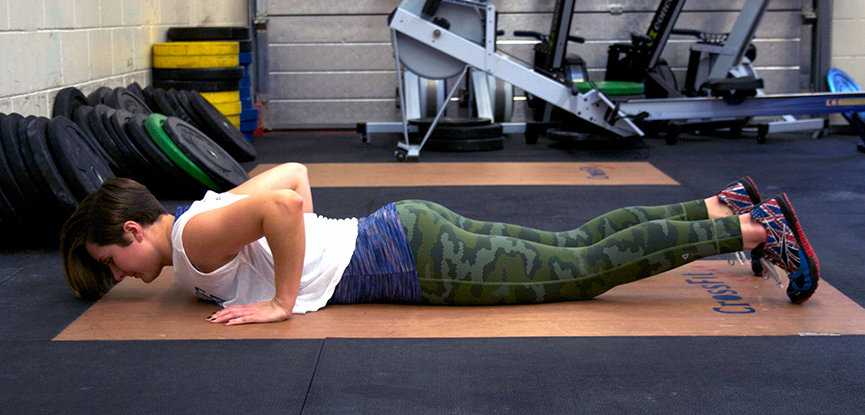
First up, you’re wasting energy if you do a controlled eccentric (lowering) movement to the floor. One you’ve bent down and placed your hands on the floor you should aim to jump your legs back while lowering your chest to the ground. It should look like a single movement rather than two obvious phases.
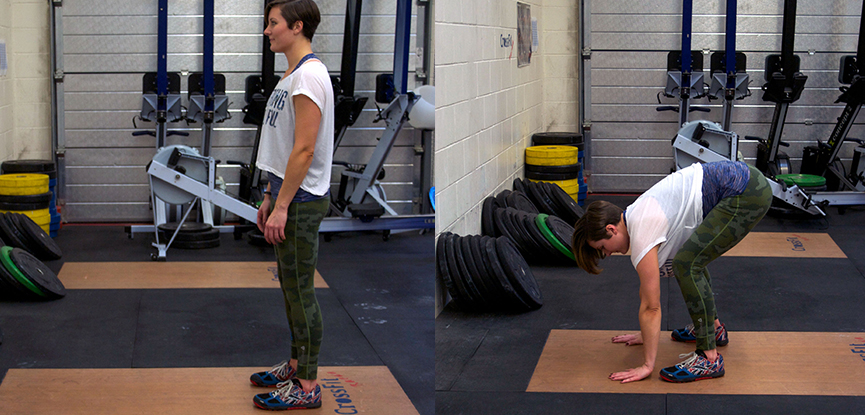
From the floor, you should try to push the top half of your body up while jumping your feet back in towards your hands. Doing a full push up here wastes energy and is fatiguing on your chest, shoulders and triceps – these will be the first to go to jelly if you’re not careful.
When you jump back in from the ground, try to land with your feet at least as wide as your hands, and with your feet flat to the ground – not on your toes. If you land on your toes you already have a shortened calf, reducing the spring in your jump and forcing you to use your calves and quads more to allow you to jump.
If you land on flat feet, however, you have a much better position to jump from and can explode up straight from the squat rather than standing up first.
To really get more out of your burpees, try to link the end of one rep into the start of the next by dropping straight back down to the floor from the upward phase of your jump.
Do this by bending forwards as you return to the ground from the jump, ideally landing almost straight into a plank position. This can be hard to get used to, but will save you a lot of time on your reps!
No matter how efficient your burpees are, there’ll still be times when you need to scale them back a bit. Even with fluid movements you’ll still get out of breath at some point. In longer WODs, or where you have a high volume of burpees to get through, it may be time to look at how you can conserve energy. Here are some more tips:
If you have a lot of burpees to do, consider pushing just your torso up and then jumping your feet in – this may look a bit counter-intuitive, and isn’t the nicest technique (only do this if you’re free from back problems), but it saves quite a lot of energy as your arms only have to push up a small fraction of your body weight from the ground.
To conserve energy, consider stepping your legs out one at a time, stepping them in one at a time, or both. You may be surprised how much longer you can keep this going than someone doing the jump out and jump in method.
When doing bar facing burpees, like in the CrossFit Games Open 16.1 WOD, jumping into a lunge position can be more efficient, as your front leg is already near the bar and you just need to step your back one in to then jump over the bar.
This is kind of a cross between jumping in and stepping in and can save you loads of energy allowing you to work through burpees more consistently.
Whether your eyes light up or you’re filled with doom at the sight of burpees on the WOD board, these tips should at least help you make them a little bit more comfortable! Burpees may be everyone’s favourite swear word, but the key to knocking them out when the clock is ticking is to keep them fluid and efficient.
Georgina Spenceley is a full-time business analyst, part-time sports massage therapist, freelance fitness writer and a lover of all things CrossFit.
And get the fast-paced world of personal training delivered straight to your inbox every week
Great news, you're on the list...