
Personal Training Qualifications Explained
UK Guide
UK Guide
Personal training is one of the most rewarding and fastest-growing careers within the fitness industry. Whether you want to work in a gym, run your own business, coach clients online, or specialise in areas such as strength and conditioning or health and wellbeing, becoming a qualified personal trainer can open the door to a wide range of opportunities.
Thousands of personal training jobs are advertised across the UK every year, highlighting just how in-demand qualified fitness professionals are. Before you can work professionally with clients, you need to get the right personal training qualifications and understand how the fitness industry works.
This guide explains everything you need to know about the qualifications needed to be a personal trainer, including the different course levels, how qualifications are regulated, how to choose a training provider, and how to continue developing your career after qualification.
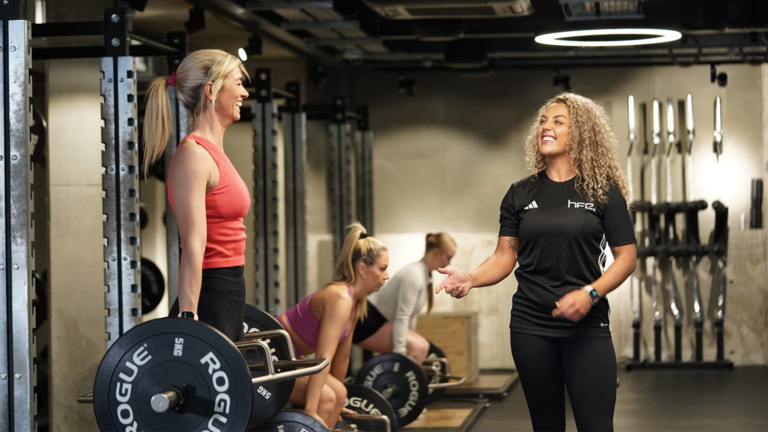
To work as a personal trainer in the UK, you need a recognised Level 3 Diploma in Personal Training. This is the industry-standard qualification that demonstrates you have the knowledge and practical skills required to design and deliver safe, effective exercise programmes for clients.
Many learners begin their journey with a Level 2 Gym Instructor course before progressing to a Level 3 Personal Training qualification. However, many modern personal training qualifications combine the foundational knowledge covered at Level 2 with the advanced skills required at Level 3. This means learners can often complete one structured programme and achieve a Level 3 Diploma in Personal Training, rather than completing separate qualifications.
The Level 2 Gym Instructor qualification provides the foundation for working within a gym environment. It covers areas such as anatomy and physiology, health and safety, client consultations, nutrition and healthy eating, as well as simple exercise instruction.
After completing Level 2, you can work as a gym instructor. However, you need a Level 3 Personal Training qualification before you can work professionally as a personal trainer.
The Level 3 Diploma gives you the technical knowledge and coaching skills needed to work with clients one-to-one and create personalised training programmes.
You will learn how to:
Once qualified, you can work as a personal trainer in any gym, health club or leisure facility. This could either be in an employed or self-employed capacity, delivering personal training sessions, online coaching, or building your own fitness business.
Understanding the qualifications needed to be a personal trainer starts with knowing what a qualification actually is.
A qualification is an officially recognised certificate that confirms you’ve successfully completed training and assessment against the professional standards for a specific occupational role, such as personal training.
In the fitness industry, personal training qualifications demonstrate that you have the knowledge, practical skills, and professional competencies needed to safely train clients and support them in achieving their health and fitness goals.
Recognised personal training qualifications provide reassurance to employers, insurers, and clients that you are capable of practising as a safe and effective coach. They demonstrate that you’ve been assessed against recognised industry standards and can practise safely and professionally.
It’s important to be aware that not every course leads to an industry-recognised qualification. Many short, often online courses present themselves as a qualification, but in fact are not. That’s why it’s important to focus on training that leads to the Level 3 Diploma in Personal Training, as this is what’s required to work as a personal trainer in the UK.

When comparing personal training courses, you’ll often come across the term regulated qualification. Understanding what it means will help you identify courses that meet recognised industry standards.
In England and Northern Ireland, regulated fitness qualifications sit on the Regulated Qualifications Framework (RQF), the national framework overseen by the Office of Qualifications and Examinations Regulation (Ofqual).
Choosing an Ofqual-regulated qualification provides confidence that:
When you successfully complete a regulated qualification, your certificate is issued by the awarding organisation rather than the training provider. This demonstrates that you have met recognised standards through formal assessment and provides employers, insurers and clients with confidence in your knowledge, skills and professional competence.
Holding an appropriate qualification can also become important if a complaint or insurance claim arises, as it provides evidence that you have been trained and assessed against recognised professional standards and are working within your scope of practice.
The terms regulated and recognised are often used interchangeably when describing personal training qualifications, but they have different meanings.
A regulated qualification is one that is officially recognised within a national qualifications framework, such as the Regulated Qualifications Framework (RQF) in England and Northern Ireland. Regulated qualifications are overseen by regulators such as Ofqual, which ensures that awarding organisations meet technical, quality and assessment standards.
A recognised qualification is a broader term that means a qualification is accepted or valued, usually by employers, but also by professional bodies, insurance providers, or the wider industry. However, a qualification can be recognised without being regulated, although these tend to be awarded by international organisations, like the National Academy of Sports Medicine (NASM) or the American College of Sports Medicine (ACSM).
When choosing a course, do not rely solely on the word “recognised”. Always check who awards the qualification, whether it is regulated, the exact qualification title you’ll receive, and who will issue the certificate.
Regulation is only one indicator of quality. Many employers also look for personal training qualifications that align with the Professional Standards developed by CIMSPA (the Chartered Institute for the Management of Sport and Physical Activity). As the professional body for the UK’s sport and physical activity sector, CIMSPA membership can further demonstrate your commitment to maintaining high standards of professional practice.
When choosing a personal training qualification, it’s important to understand the role of awarding organisations (AOs).
Awarding organisations are responsible for developing, managing, and awarding regulated personal training qualifications. They work with employers, industry specialists, and technical experts to ensure qualifications reflect the knowledge and skills required for a specific occupational role.
Training providers deliver the learning experience, including teaching, learner support, and assessment, whilst the qualification itself is certificated by the awarding organisation.
Some of the leading awarding organisations for fitness industry qualifications in the UK include:
The relationship between each organisation can be summarised as follows:
When comparing personal training courses, always check which awarding organisation issues the qualification and what certificate you will receive upon completion.
Once you understand the qualifications needed to become a personal trainer, choosing the right training provider becomes one of the most important decisions you’ll make.
With many providers offering similar courses, it’s important to look beyond price and consider the quality of the training, including the available support, and overall learning experience. Just because the course leads to the same personal training qualifications does not mean they are all of a similar quality.
A reputable provider should offer clear information before enrolment, a structured learning pathway, practical skills development, comprehensive learner support and transparent assessment guidance.
Different learners benefit from different study methods. Most training providers offer one or more of the following:
1. Full-time learning
Typically involves a combination of classroom learning and practical workshops delivered Monday to Friday.
Best for learners:
• who want to qualify quickly
• who need more individual attention
• who enjoy learning in-person with others
2. Blended learning
These programmes combine online study with more intensive in-person theory and practical training.
Best for learners:
• who want to balance quality with price
• who need greater flexibility
• who still want to attend in-person
3. Online learning
This approach allows students to complete all of their coursework remotely.
Best for learners:
• who can study independently
• who are unable to travel to venues
• who want to learn at their own pace
Choosing the right learning format for your preferred style of learning is essential. If you are not an independent learner, choosing a fully online personal training qualification can have a major impact on your overall experience and future success.
If practical attendance is required, check:
• Training locations
• Travel requirements
• Workshop frequency
• Assessment venues
Some providers operate nationwide, while others only cover specific regions. Convenient locations and flexible scheduling can make completing your qualification much easier.
Course prices can vary significantly, so it’s important to understand exactly what’s included.
Check whether the following are covered:
• Learning materials (print of just digital)
• Tutor support
• Practical workshops
• Assessment fees
• Certification costs
• Resits (if needed)
Some providers advertise low prices initially but charge additional fees later. Try to get a sense of the full package before booking.

A recognised Level 3 Diploma in Personal Training develops the knowledge and practical skills required to work professionally with clients.
While course content varies slightly between different training providers and awarding organisations, most programmes cover broadly the same subjects because these are what are defined in the CIMSPA Professional Standards document that most personal training qualifications are mapped to.
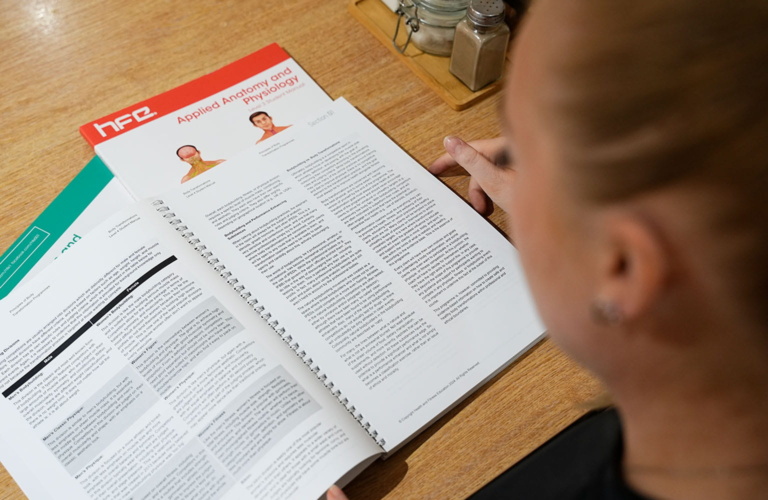
Understanding how the human body works is fundamental to personal training.
You will learn about:
• muscles, bones, and joints
• movement and biomechanics
• nervous, hormonal and energy systems
• how the body adapts to different exercise types
Most personal training qualifications introduce essential information about nutrition and healthy eating so that trainers can provide more holistic advice and support.
Content usually includes:
• macronutrients and micronutrients
• energy balance and weight management
• hydration, supplements and gut health
• essential healthy eating principles
Personal trainers need to be able to be able to coach their clients effectively using person-centred approaches to improve their lifestyle and achieve their individual goals.
You will learn how to:
• carry out consultations
• set goals and identify barriers
• assess readiness for behaviour change
• communicate in a way that supports motivation
One of the core skills of a personal trainer is designing and implementing personalised training programmes, usually using gym-based exercise, but often incorporating other training approaches.
You will learn how to:
• Programme sessions for different goals
• Create balance and synergy in sessions
• Adapt sessions for different needs and abilities
• Progress sessions over time to maximise results
Successful personal trainers need strong communication skills if they are going to be able to empower their clients to make positive lifestyle changes to support their health, fitness and general wellbeing.
You will learn how to:
• Teach exercises effectively
• Connect with clients and build rapport
• Providing positive and inspiring feedback
• Support effective behaviour change
Personal trainers owe a duty of care to their clients so it’s essential that they have a sound understanding of a range of health, safety, and welfare matters as they relate to a fitness environment.
This includes:
• Assessing and managing risks
• Screening clients before exercise
• Referring clients who need specialist support
• Monitoring client’s safety throughout sessions
Many personal trainers are self-employed so it’s essential they have a good understanding of how to run their business and market their personal training services.
You will learn:
• Different business models
• How to attract and retain clients
• Branding and value propositions
• Simple accounting and finance
Once you have completed your personal training qualifications you will want to start working with real clients. There are many interesting and rewarding career paths you could take in the fitness industry, depending on where your interests lie.
Some of the more popular pathways include:
Some of the above pathways do require more specialist personal training qualifications, but these are usually completed over time while trainers acquire essential experience in a live training environment.
Some trainers also progress into education, management roles, or running their own fitness business or facility. The flexibility of the profession is one of its biggest attractions.
The fitness industry is constantly evolving, with new research, training methods, and client needs emerging regularly.
While personal training qualifications provide the foundation for your career, ongoing professional development helps you continue growing as a fitness professional.
For this reason, successful personal trainers continue learning throughout their careers. This ongoing development is known as Continuing Professional Development (CPD).
CPD helps trainers:
Continuing to develop your skills demonstrates professionalism and helps you provide a higher standard of service to clients.
Understanding the qualifications needed to be a personal trainer is the first step towards building a successful career in the fitness industry. Becoming a personal trainer can be an exciting and rewarding career choice for those passionate about fitness and helping others.
The journey begins by choosing the right personal training qualifications. This will usually be a Level 3 Diploma in Personal Training that is awarded by a reputable, Ofqual-regulated awarding organisation like Transcend Awards, YMCA Awards, or Active IQ. This qualification will provide the foundational knowledge and practical skills you need to start working as a personal trainer with real clients.
Choosing the right training provider is equally important. Look for a provider that offers a recognised qualification, print and digital learning materials, quality support, practical learning opportunities, as well as career guidance to help you succeed in your role.
Remember, your qualification is the start of an exciting and rewarding career, so give yourself the best chance of success by choosing wisely. You also need to ensure that you continue to develop and refine your knowledge and skills by completing regular CPD activities. This can be additional training, qualifications, or by supervising more qualified and experienced personal trainers in the areas you are keen to develop.
And get the fast-paced world of personal training delivered straight to your inbox every week
Great news, you're on the list...