The trap bar deadlift vs conventional deadlift: What does the science say?
We explore how the trap bar deadlift compares to the conventional deadlift and what science says the key differences are between the two methods.
We explore how the trap bar deadlift compares to the conventional deadlift and what science says the key differences are between the two methods.
People have lifted heavy objects off the ground for as long as humans have walked the earth. But the conventional deadlift as we know it became well-known in the early 1900s. This was thanks to Hermann Goerner, a German strongman often called the ‘father of the deadlift.’ Since then, the deadlift has become a key part of many strength-training programmes, and has also been an official competitive lift since the 1960s.
The trap bar deadlift began to grow in popularity in the 1980s. Today, it’s used in fitness tests for groups like the British Army and police forces. It’s also common in athletic and functional training programs. Many people prefer it because it can boost performance, is safer, and is less technical than the conventional version.
Still, some critics disagree. They say the trap bar deadlift offers a weaker grip challenge and puts less load on the spine. They argue that it works the back of the body less, is less useful for sports like powerlifting and Olympic lifting, and may cause people to rely on it too much because it feels safer.
So which view is correct? Is the trap bar deadlift a valuable tool in strength training, or should it be sent to the scrapyard?
The trap bar, or hexagonal bar—its technical name—is a weight-training bar that differs from the conventional bar due to its hexagonal shape. This allows the user to stand within the framework of the bar. It also has a handle at each end, which is positioned at 90 degrees to the axis of the bar.
You can use the trap bar in a high-handle position, placing the handles above the bar for a higher starting point and a more upright torso. Alternatively, you can choose a low-handle position, with the handles set below the level of the bar. This produces a lower starting position and a more horizontal torso angle.
Powerlifter Al Gerard developed the trap bar to help him train around a recurring back injury. He patented it in 1986. Since then, manufacturers have created a variety of models, including open trap bars, dual-handle designs, and bars with rotating grips.
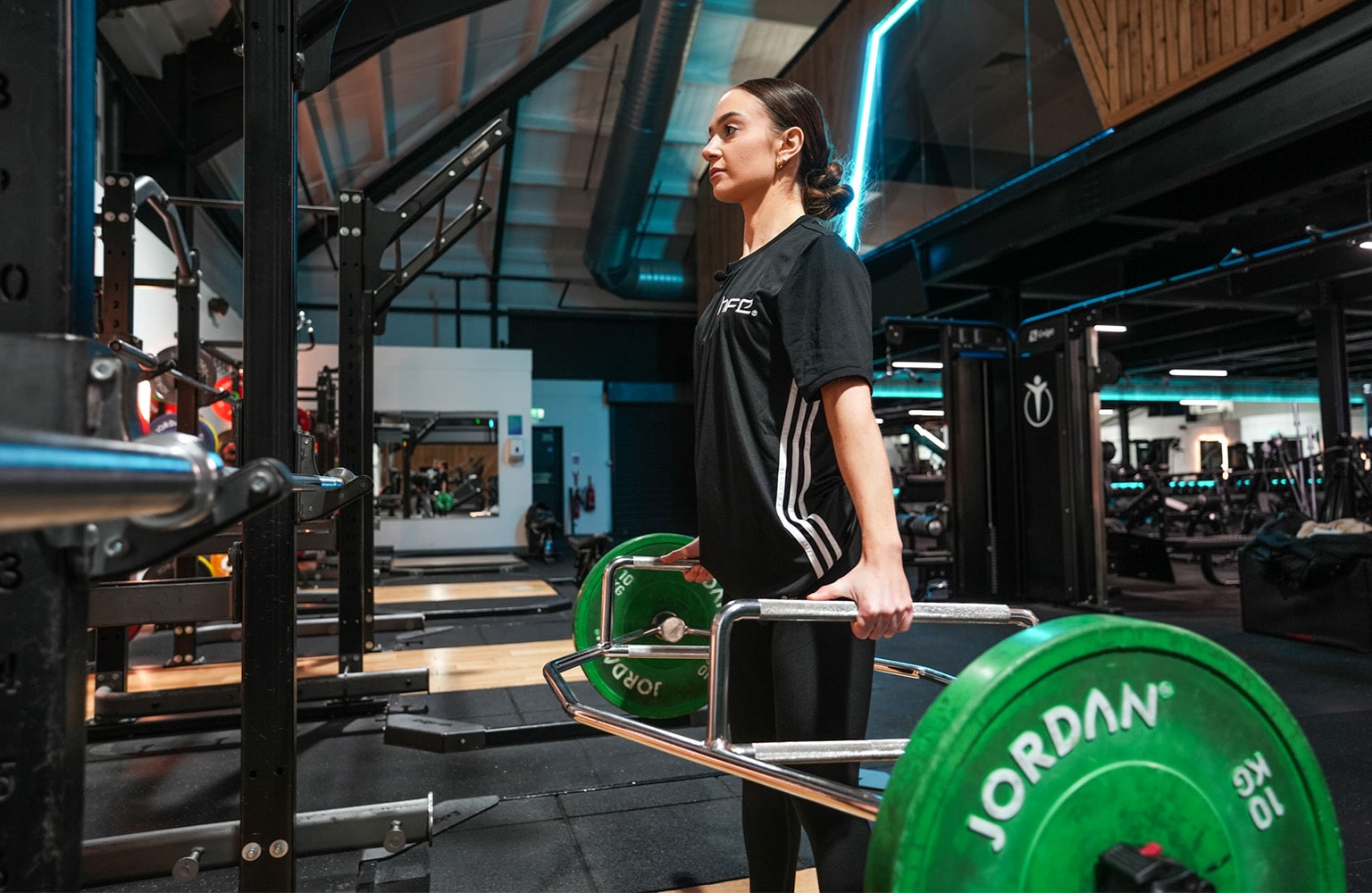
The trap bar design differs to the mechanics of the conventional straight bar in numerous key ways, including:
The purpose of a deadlift is to develop back strength. While many lifters praise the trap bar deadlift for reducing spinal force, you still need to understand how each deadlift variation affects spinal loading.
When performing the conventional deadlift, the barbell is in front of the body, requiring the lifter to hinge more at the hips. As the bar is farther from the centre of mass, it creates a longer moment arm, which is the distance between a joint and the line of force acting on it. While this increases the activity of the posterior chain musculature, it also increases the shear force on the spine. Shear forces are the horizontal forces that acts parallel to the vertebrae, in effect trying to slide them past each other.
Excessive or repeated shear forces are associated with a variety of spinal injuries. These include disc herniation, vertebral fractures, spondylolisthesis (a condition where one vertebra in the spine slips forward over the one beneath), and damage to spinal ligaments and facet joints.
When performing the trap bar deadlift, the lifter assumes a more upright posture, which reduces the hip hinge. Consequently, the bar travels more vertically and closer to the centre of mass, which shortens the moment arm and reduces the shear force on the spine.
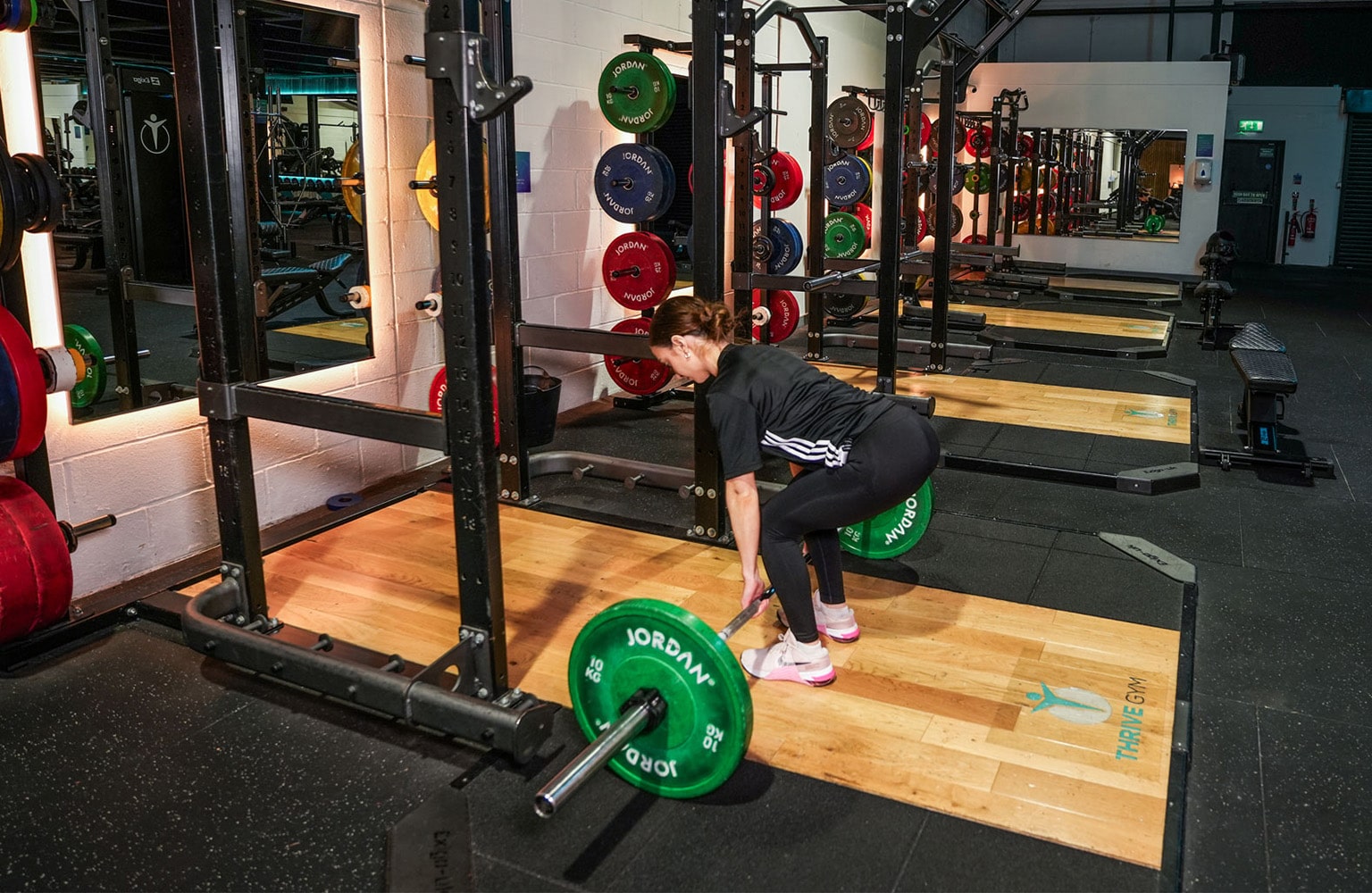
When we look at biomechanics, there are clear differences between the trap bar deadlift and the conventional deadlift. But does one actually work better than the other? Several studies have tried to answer this question, and their results are interesting.
Swinton and colleagues (1) studied how the body moves and what forces act on it when people perform both types of deadlifts. 19 male powerlifters took part. They lifted at maximum speed with loads from 10% to 80% of their one-rep max (1RM), which is the heaviest weight someone can lift once.
The researchers found that maximum peak power—the highest power someone can produce during a short burst—was higher with the trap bar at all submaximal loads. The lifters could also lift a heavier 1RM with the trap bar. In terms of joint stress, the trap bar reduced forces at the lower back, hip, and ankle, but increased them at the knee. Based on these results, the authors suggested that the trap bar might be a more effective exercise overall.
Another study by Camara et al. (2) found different results for 1RM values. They reported no major difference between the two lifts. Still, the trap bar deadlift showed higher peak force, peak power, and peak velocity.
The researchers also looked at muscle activity. The trap bar caused more activation in the vastus lateralis during both the lifting and lowering phases. In contrast, the conventional deadlift activated the biceps femoris more during the lifting phase and the erector spinae more during the lowering phase. Camara and colleagues concluded that the trap bar may be better for building maximum force, power, and speed.
These findings line up with results from other studies as well, including those by Martin-Fuentes et al. (3) and Lee and colleagues (4).
Based on the results of these studies, you could be tempted to abandon the conventional deadlift in favour of the trap bar version. Before you do this, it’s important to consider a few points.
When approaching this exercise, whether you’re a personal trainer designing a programme for your client or are considering which exercise will work best for you, it’s important to consider ability and purpose.
Based on the current evidence, the trap bar deadlift is more appropriate for increasing strength, building muscle, and developing explosive power. It’s particularly suitable for beginners who do not have the technical skill or mobility to perform the conventional deadlift safely and effectively, or for those with lower back issues.
In contrast, the conventional deadlift is more appropriate for advanced lifters with good technique who require greater posterior chain engagement. It is more suited to those looking to develop their athletic potential, or use Olympic or powerlifting exercises in their training or for competition.
The answer to the question ‘should the trap bar deadlift be sent to the scrapyard?’ is a resounding no, according to the evidence. Nor should the long-established conventional deadlift be abandoned. It’s not a question of either/or. Rather, an individual’s abilities and needs should be taken into consideration to determine the most appropriate exercise. The differing characteristics of each mean that they may both find a place in a comprehensive training programme.

Paul Orridge is a graduate in the field of sport, exercise and health, and has over 30 years’ experience within the fitness industry. In this time, he has performed a variety of roles including personal training, lecturing and writing. Paul now works as a freelance technical author and subject matter expert within the fitness industry. His work is based on his practical experience gained working with a diverse range of people from very unfit, overweight individuals to highly conditioned athletes, and is underpinned by the latest research.
And get the fast-paced world of personal training delivered straight to your inbox every week
Great news, you're on the list...