Like any structured form of exercise, yoga classes benefit from thoughtful planning to ensure they are safe, effective, and aligned with a clear theme or purpose. Before designing a lesson plan, you should gather basic information about your participants—such as their yoga experience, technical skill level, and any relevant health considerations. It’s also helpful to understand the venue setup and the props available, as these factors influence class design. Still, it’s important to remember that a plan is just a guide; flexibility is sometimes needed. Adapting an existing plan is far easier than creating one on the spot.
This article offers guidance on how to prepare for a yoga class as a teacher, including lesson planning and sequencing asanas (poses) to create a meaningful and enjoyable experience for your students.
Yoga classes are generally divided into four sections. These sections may be more or less obvious to participants, especially as the warm-up ends and the main component begins. The four main components of a yoga class that you should have in your lesson plan include:
The opening phase should prepare the body and mind for the yoga activities that follow, and be relevant to the main component. The content will vary according to the style of yoga you’re teaching and the temperature of the environment.
The opening phase will often start in a static lying position (savasana) or in a seated cross-legged position (sukhasana) for pranayama (breathwork). In some classes, it’s common to include a flowing sequence of postures, such as sun salutations (surya namaskar), either as a bridge between the warm-up and main component, or within the main component. This will depend on the ability of the participants, environmental temperature, and the style of the class.
This is the section of a yoga class where more challenging asana and transitions will be included to improve various physical or skill-based attributes. These include, but are not limited to:
This part of the class is likely to include asana performed in various positions, especially in a standing position.
The closing phase helps students cool down and return the body to a calmer, more restful state. After a dynamic main component, this phase shifts the focus away from strength and balance challenges and toward passive flexibility.
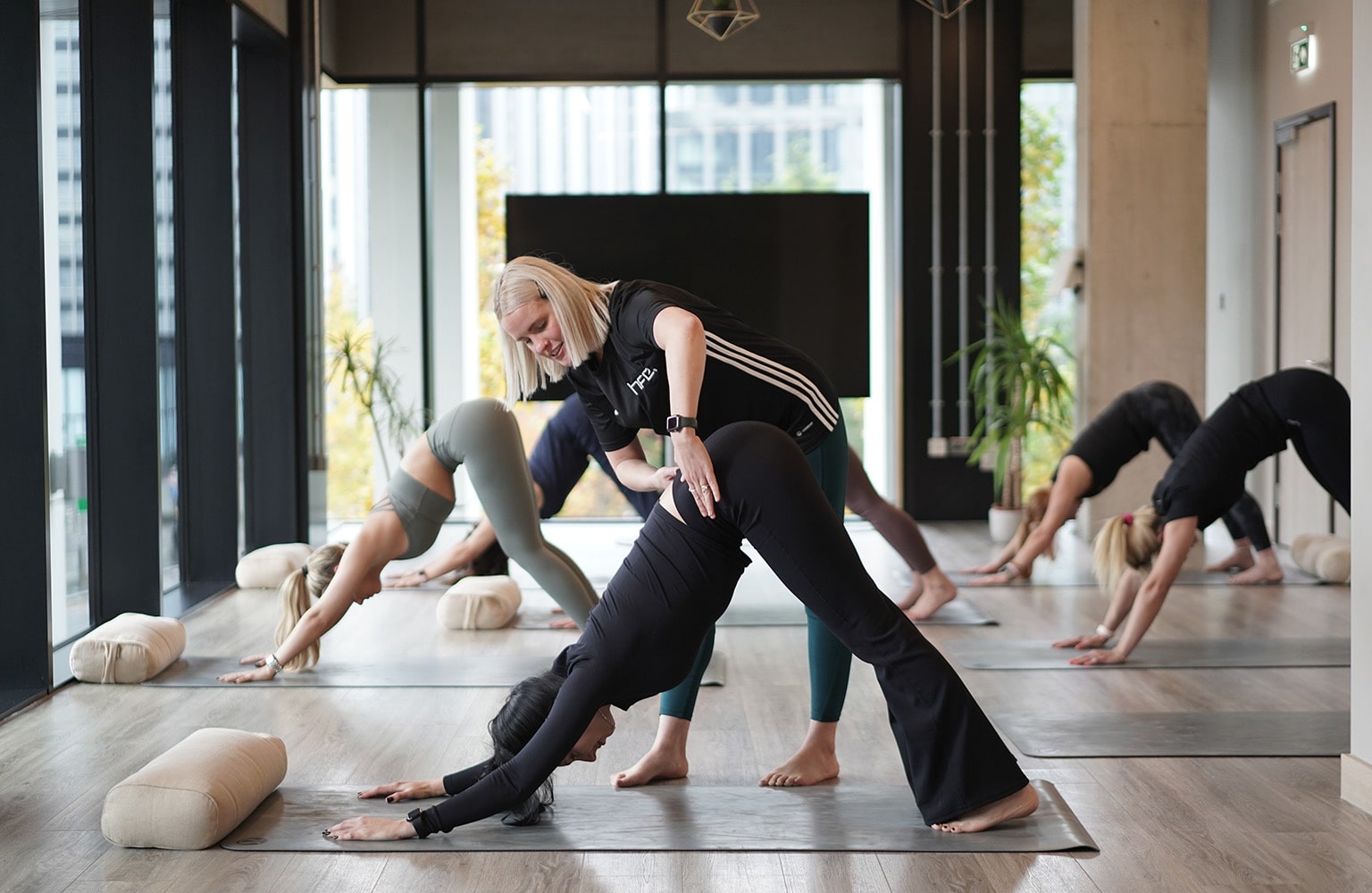
In the closing phase, students typically hold stretches for longer. Asana in this section becomes gentler and more passive, with the body supported by other body parts or by props such as bricks, straps, and bolsters. In fact, you can use props at any point in the class to support students’ needs.
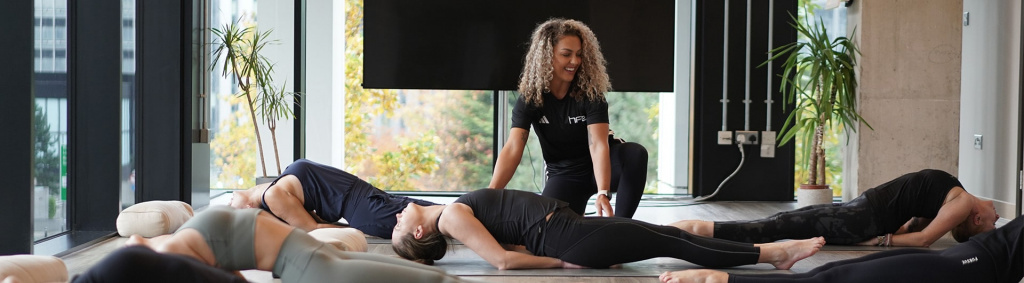
The final phase of a yoga class is usually the relaxation phase, which may include the practice of a calming pranayama and some form of meditation. This will usually involve returning to a seated or lying position, and you should guide participants on how to move towards mental and physical relaxation and time in stillness.
Some yoga teachers may use this stage of the class to practice a calming pranayama. This will usually be performed before the relaxation and meditation stage.
When you plan a yoga class, you can draw on many different ways to create a theme. There are no strict rules, and this is where a teacher’s creativity and imagination come alive. You might design a session that develops a specific fitness component, such as balance, or focuses on improving a particular movement quality, such as spinal rotation or extension.
No matter what theme you choose, make sure you understand the purpose of every asana you include and know how to teach it safely and effectively. Encourage students to listen to their bodies and work within a range that feels safe and attainable.
It’s equally important to give the same level of attention to transitions. Consider how students will move in and out of each asana, prioritising safety, clarity, and a smooth, simple flow.
Below are several ways you might theme a class.
This involves building the session gradually towards a challenging asana (the peak pose). The class should include a mix of easier positions and postures intended to improve the joint alignment and positioning for the peak pose. The peak post may involve leg or arm balancing, or advanced flexibility or bodily positions for one or more joints.
This approach aims to build muscle stability and focuses on the key muscles involved in a commonly practised asana. It helps students deepen their understanding of the posture and refine their technique of the pose. For example, you might include positions that emphasise establishing a strong base (grounding) or developing a specific arm position.
This style aims to balance opposing muscle groups. When you know that one group is weaker—for example, when the upper-back muscles are weaker than the pectorals—you can focus on movements that strengthen the weaker area, such as shoulder retraction, depression, and extension. This approach is especially helpful for students who spend long hours seated at a desk, as it can mitigate the postural patterns created by prolonged sitting.
This approach focuses on preparing the body for a specific sport or countering the overuse patterns that the sport creates. For example, golfers may work on core stabilisation to improve their swing and balance out the repeated rotation to one side (typically left for right-handed golfers).
This approach emphasises creating smooth, intentional connections between asanas, as seen in practices like Sun Salutation. You might include static holds for certain postures, or you may guide students through continuous, fluid movement across a sequence.
Yin Yoga typically features long holds with smooth, though not necessarily flowing, transitions between poses. Vinyasa Yoga, on the other hand, links asanas in a dynamic, flowing sequence, with brief pauses between movements.
Designing smooth transitions requires attention not only to the physical movement but also to the breath—specifically, when to cue an inhale or an exhale to support the transition.
This style of class focuses on the direction of prana (subtle energy) through a combination of poses and breathing techniques. It aims to restore balance to the body by reestablishing the flow of energy around the body.
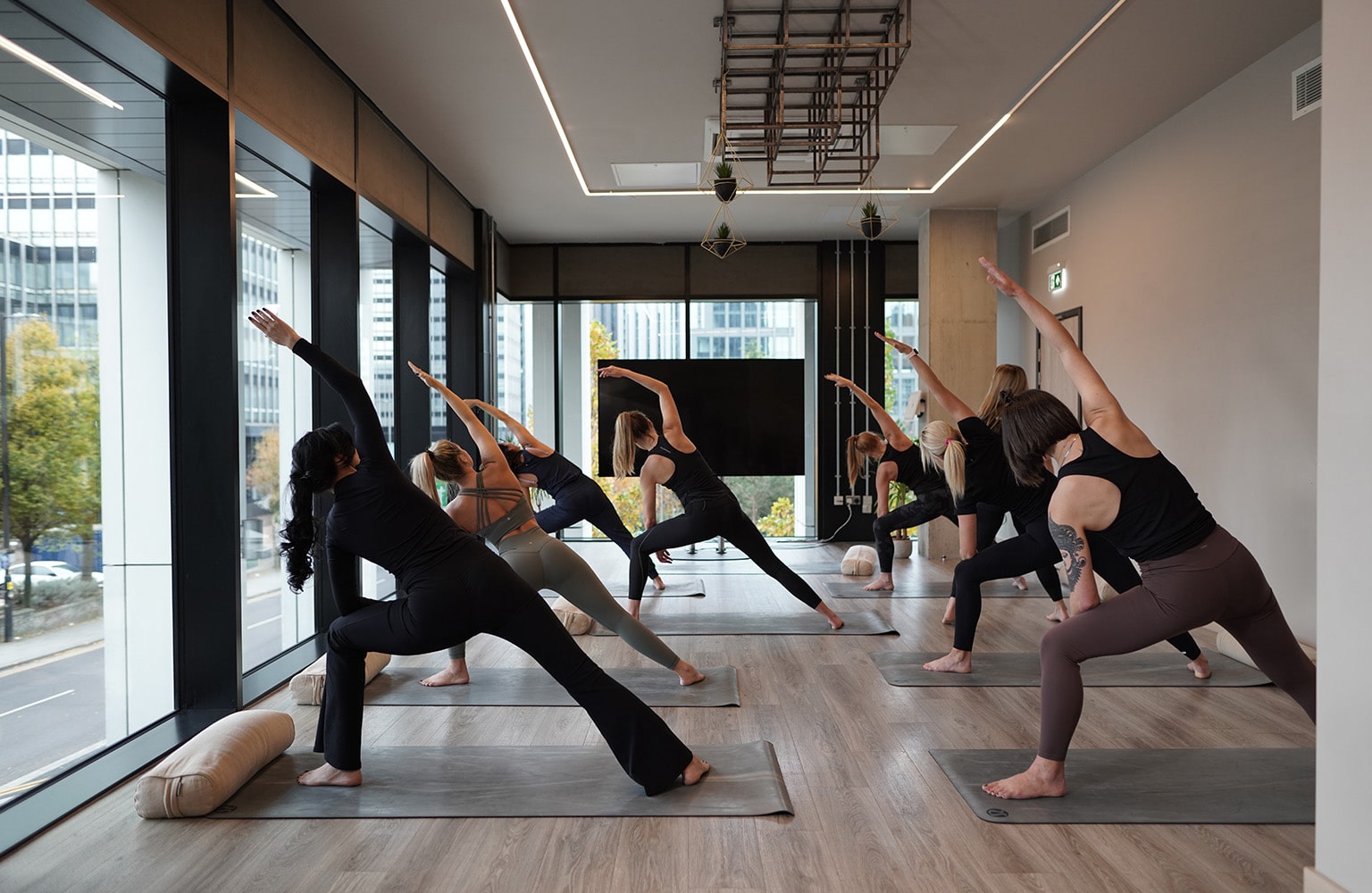
Many asanas—especially standing ones—engage a wide range of muscle groups across the body. Some muscles actively contract (either shortening or lengthening under load), others lengthen in a stretch, and some act as stabilisers by contracting statically.
As a general rule, unless you have a specific reason not to, include the following spinal movements in your practice:
When students move through these spinal actions, the major joints of the arms (shoulders, elbows, wrists, and fingers) and legs (hips, knees, ankles, and toes) naturally explore multiple ranges of motion. However, a single class won’t challenge every muscle in the limbs, so instructors may want to keep this in mind when planning consecutive sessions.
For any asana that relies on muscles on one side of the body—such as the abdominals—you can include a counterpose that engages the opposing muscle group, like the erector spinae. For example, you might follow Boat Pose with Sphinx or Cobra.
When you include a rotational movement, follow it with a rotation to the opposite side. For instance, practice Lord of the Fishes on both sides. Similarly, if a sequence begins with the right leg leading, repeat it with the left leg leading. This approach helps balance the two sides of the body.
You can perform all of these movements and positions in standing, seated, inverted, or lying postures. Standing poses often create the most challenge, though this isn’t always the case.
A sequence of yoga postures is typically described as a vinyasa. Taken from Sanskrit,
this means ‘to place in a specific way’. In yoga, the word vinyasa is commonly used to describe the specific placement or sequence of asana, especially the transitions between them. In a vinyasa, the goal is to perform the asana in a flowing sequence with smooth transitions, much like the Surya namaskar.
Interestingly, vinyasa yoga is now also a modern style of yoga that was popularised by Pattabhi Jois. While the origins of vinyasa can be traced back much further, Jois was a highly influential yoga teacher who developed the Ashtanga lineage of yoga, which focuses on linking the breath to flowing movements.
In some styles of yoga, such as Iyengar yoga, the approach will be relatively static, moving from one asana to the next without much emphasis on the transition. However, other styles, like vinyasa, require instructors to carefully plan the asana and pay much closer attention to the transitions between the asana.
As a yoga professional, you must think carefully about the content of every class you teach. Your students should understand what is happening in each part of the session and how each element supports the overall theme. Whether the class offers physical or mental challenge, or takes a more restorative and calming approach, the sequence should feel coherent and follow an order that reinforces its purpose.
If you’re looking to develop your skills as a yoga teacher, explore a selection of our yoga instructor courses.
Sara has over 30 years' experience in the health and fitness industry, teaching classes in private and local authority facilities. She enjoys sharing her knowledge and skills in her role as a tutor, assessor and course developer. She has been involved in writing syllabus, manuals and assessments, including as the lead tutor to the Inclusive Fitness Initiative, working with disabled people, and through her work with frail older people. She co-created one of the first Yoga Teacher training courses within the fitness sector, having benefited from her own personal yoga practice.
And embrace the rich and vibrant world of yoga
Great news, you're on the list...