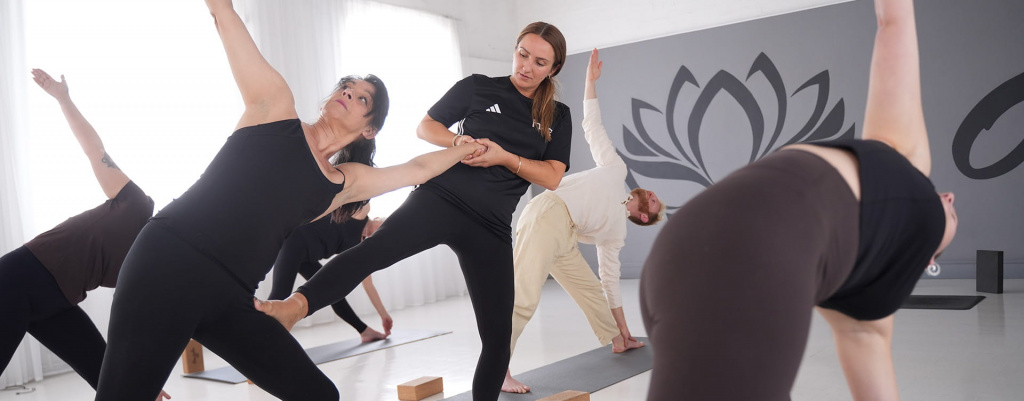
Yoga comes in many styles, from calm, slow-paced classes to active, movement-focused sessions. Vinyasa yoga is one of the more dynamic styles and is especially popular in health clubs, thanks to its benefits for both mind and body.
It’s known for flowing, breath-led sequences, mindful movement, and core-strengthening qualities—making it a great choice for aspiring teachers who want to lead classes that are both mindful and physically engaging.
Understanding vinyasa can help you decide if this style matches your teaching goals, energy, and the kind of classes you want to guide in the future.
The word vinyasa comes from Sanskrit and means ‘to place in a specific way’. In modern-day yoga, it’s used to describe the sequencing of postures (asana).
In Vinyasa yoga, movement is synchronised with the breath. Each inhale or exhale guides the transition from one posture to the next, creating a flowing asana—much like the familiar surya namaskar (sun salutation). This connection between breath, body, and mind is central to the practice.
A Vinyasa Yoga class has three key sections, including a warm-up, main component, and a cool-down. This structure allows energy to build gradually, be sustained through continuous movement, and then ease down towards stillness.
A Vinyasa class usually begins in a seated or lying position, although shorter classes of less than 60 minutes may start in a standing Tadasana (mountain pose). This is a short period of stillness that creates a ‘change of state’, helping students let go of thoughts and worries about everyday life and into the practice.
The concept of breath control is introduced at this stage, encouraging students to consciously regulate the inhale and exhale. This helps students to fully arrive with their mind as well as their body.
Slower and smaller range activities are introduced to warm up the muscles and prepare the body and mind for more dynamic activities. This includes appropriate movements from lying, seated, on all fours, through to standing, building the energy for larger and more dynamic movements that follow.
The main component of a Vinyasa class is characterised by continuous movement and flowing sequences. Postures are typically linked together through variations of sun salutations that challenge:
Due to the flowing nature of the sequence, there are no static holds for the postures. Instead, students move rhythmically from one shape to another, with each transition guided by the breath. Research suggests this style of movement can also support cardiovascular health due to its dynamic nature and repeated transitions between standing and floor-based positions.
Sequences may be structured in different ways, such as:
This variety keeps classes engaging and ensures continued physical and mental challenge.
The final part of the class focuses on slowing the body and calming the nervous system. This may include seated or lying stretches, followed by a period of stillness—most commonly savasana (corpse pose).
Depending on the instructor, this may be accompanied by silence, gentle guidance, or calming music. The class usually closes in a seated position, offering a moment to reflect on the practice before returning to daily life.
There may be background music during some or all of the class. While soothing music is appropriate in the warm-up and cool down, more upbeat music can be suitable during the main component as long as the instructor’s voice can still be easily heard. A single song during the cool-down relaxation is a helpful way for the students to have some idea of the duration of stillness, and can effectively aid in preventing the mind from wandering.
Although there may be some postures and sequences that are familiar and repeated in every class, the content of a Vinyasa Yoga class will typically vary quite considerably from one class to another, even when taught by the same instructor. Changing the order of the postures within the sequence, or focusing on certain muscles or body lines, will enable instructors to provide variety and constant challenge for those who regularly attend.
One of the defining features of Vinyasa Yoga is its variety. Even with the same instructor, no two classes feel identical. Sequences can be adapted to emphasise specific muscle groups, movement patterns, or themes, making the practice continually fresh and engaging.
For regular practitioners, the class can become a form of moving meditation. Despite the physical challenge, the focus on breath and present-moment awareness often leaves students feeling calm, centred, and mentally refreshed.
Over recent years there has been an increasing amount of academic research into yoga and its benefits. Studies have shown that Vinyasa Yoga offers benefits for:
Vinyasa Yoga is generally best suited to those with some prior yoga experience. Because of the continuous flow and limited time for detailed instruction, complete beginners may find the pace challenging at first.
Students are usually expected to recognise common posture names (in English or Sanskrit) and to move confidently between positions. The practice can be physically demanding, and it’s not uncommon to experience muscle soreness after class—particularly when new to the style.
Those with injuries or health conditions may still be able to participate, but should seek guidance and ensure the class is appropriate for their needs.
For those considering studying yoga or becoming a teacher, vinyasa is a particularly skillful style to teach. Instructors need to be confident with posture knowledge, sequencing, breath cues, and class management.
Key skills include:
Teaching vinyasa requires preparation, personal practice, and experience—but it can also be deeply rewarding.
If you’re curious about Vinyasa Yoga, the best way to decide is to experience it for yourself. Try classes with different instructors, notice how sequencing and pacing vary, and observe how the practice makes you feel—physically and mentally.
For those considering studying yoga, vinyasa offers a rich foundation in movement, breath, and mindful awareness, making it a valuable style to explore as part of your yoga education. To build on this foundation, our Level 3 Yoga Teacher Training course provides comprehensive training for aspiring yoga instructors.
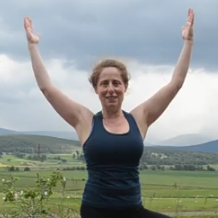
Sara has over 30 years' experience in the health and fitness industry, teaching classes in private and local authority facilities. She enjoys sharing her knowledge and skills in her role as a tutor, assessor and course developer. She has been involved in writing syllabus, manuals and assessments, including as the lead tutor to the Inclusive Fitness Initiative, working with disabled people, and through her work with frail older people. She co-created one of the first Yoga Teacher training courses within the fitness sector, having benefited from her own personal yoga practice.
And embrace the rich and vibrant world of yoga
Great news, you're on the list...