
Personal Training and Performance
Luke Worthington, a personal trainer specialising in actor preparation for film and television, shares insights in this exclusive Q&A.
Luke Worthington, a personal trainer specialising in actor preparation for film and television, shares insights in this exclusive Q&A.
Have you ever binge-watched a show on Netflix and admired the cast? Not just for their acting, but for their energy, physique, and overall presence? I can’t be the only one frantically hitting enter on Google, trying to uncover more about the real people behind the characters. After all, no one is born TV-ready—I want to know where they came from and how they ended up on my screen.
A lot more goes on behind the scenes than most of us realise, and world-renowned personal trainer, Luke Worthington, knows this better than anyone. With over 25 years in the fitness industry, Luke has earned recognition as one of the best personal trainers in the world. He’s evolved from commercial gyms and professional sports into the specialist world of actor preparation, collaborating with renowned studios like Marvel. (Yes, I did wonder if I could meet Captain America. No, it didn’t happen.)
Luke combines strength and conditioning, sports science, biomechanics, nutrition, and injury prevention to create performers who are camera-ready, role-ready, and resilient under intense filming schedules. In this exclusive Q&A, he shares how specialised training turns storytelling into performance—and what it teaches us about personal training in general.
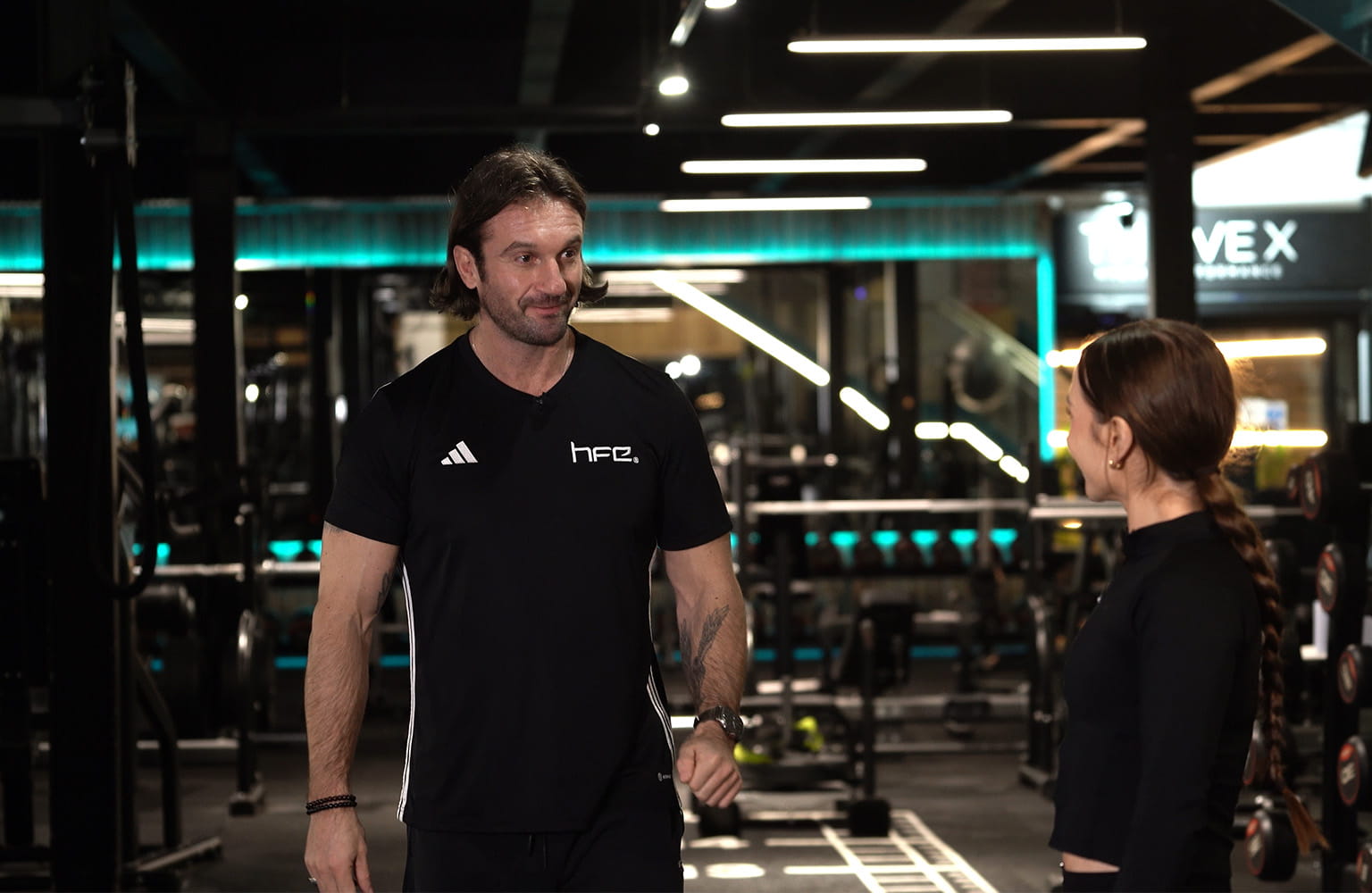
I’ve been working in the industry for over 25 years! I started on the gym floor in commercial fitness, had a stint in professional sport, and eventually evolved into specialist physical preparation for film and television. This work combines:
Ultimately, my role is to support production by ensuring actors look the part and can meet the physical demands of the role safely and consistently.
It started organically. I was already working with high-performance clients and creatives when I was approached to prepare an actor for a role requiring a very specific aesthetic and athletic movement skillset. From there, it grew through word of mouth among directors, producers, and agents. In my opinion, personal referral is the highest professional compliment and the best way to grow in any niche.
I’ve been a film enthusiast my whole life, so my approach was always to consider that an actor’s physicality is part of storytelling. The goal isn’t just “getting in shape”; it’s creating a body that matches the character, supports performance, and remains available throughout shooting.
Over the years, I’ve been lucky enough to support incredible performers in some iconic roles. I work closely with directors, choreographers, stunt teams, medical departments, hair and makeup, and production. Understanding that my role is to give the actor the tools to do their job has been crucial.
Actor availability is the number one priority. Everything else—physique, movement, performance—sits underneath that.
On a compressed timeline, it becomes a careful balance of:
My job is to deliver the required physicality without compromising availability, keeping the actor healthy and injury-free for every day of filming.
Always with assessment. I look at:
Then I work backwards from what the character needs to look, move, and perform like. From there, I build the training and nutrition strategy as an overall arc before breaking it into smaller mesocycles.
Every role has different physical demands, and every actor has a different starting point. Genre doesn’t determine physicality—the character does. Two characters in completely different productions can require similar builds, and two characters in the same production can require completely different ones.
The brief is always driven by the story and the interpretation of the character by the actor and director. No two programmes are ever the same because no two roles—or actors—are ever the same.
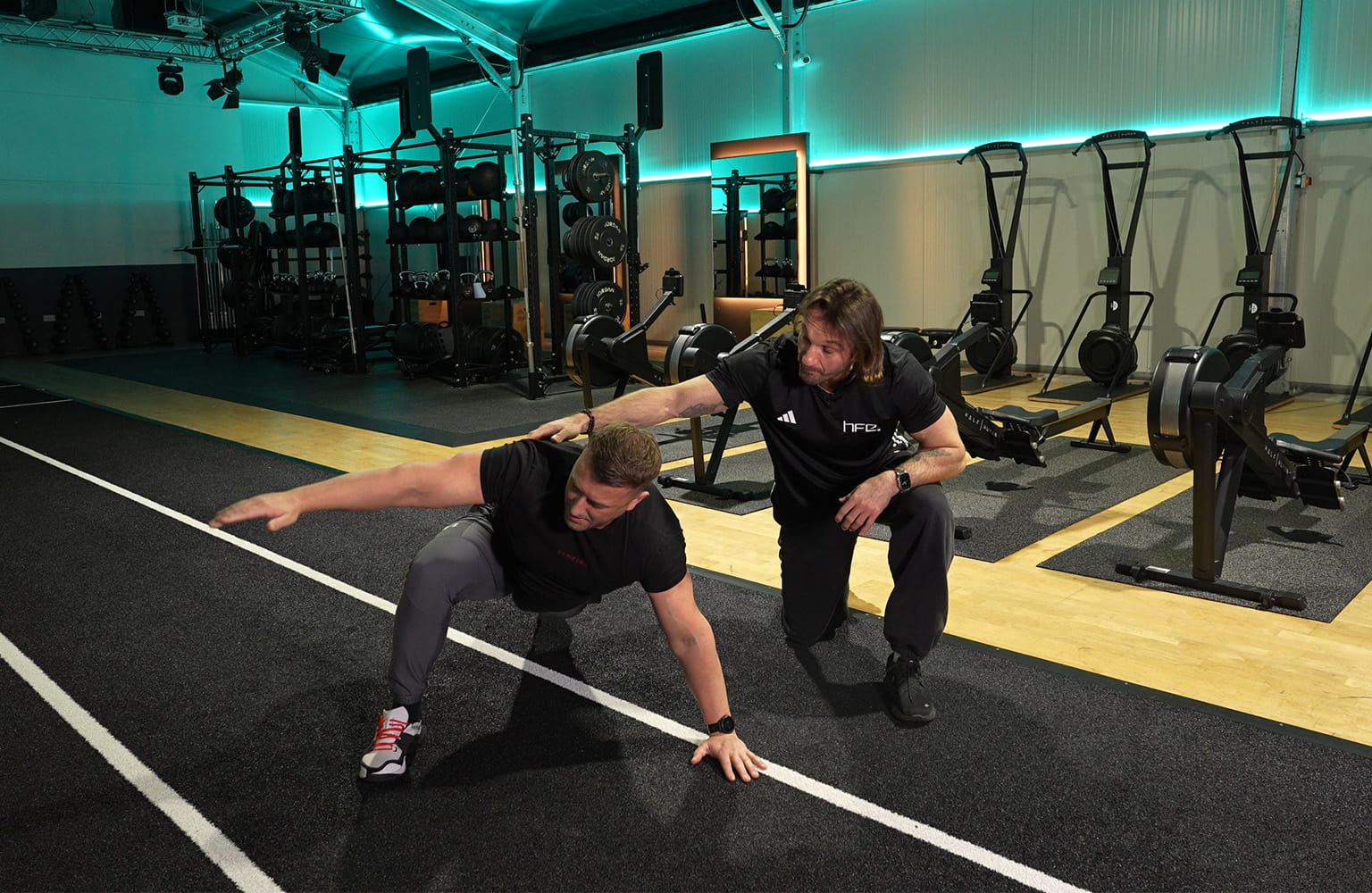
By controlling load:
Most injuries happen when training doesn’t account for on-set activity. My priority is ensuring nothing in the gym jeopardises performance or availability on camera.
Yes—anything high-risk with low transfer to the role. Examples include:
Fast results are meaningless if the actor gets injured or cannot perform.
By identifying risk early. I examine:
Then I build a programme that develops resilience specifically for those challenges. Prevention isn’t just exercises—it’s planning, load management, and communication.
By simplifying everything outside the gym:
Long hours on set are a constant stressor. Training must reduce stress, not add to it. We aim for sustainable habits, not extremes.
By keeping everything grounded in process, not perfection. My role is to:
The calmer and clearer the process, the better the outcome. My goal is for clients to start a role knowing the physical side has been taken care of, so they can focus entirely on performance.
The real skill isn’t building muscle or losing weight; it’s staying injury-free and available while doing so. People see the physique, but not:
The unseen part is resilience, not aesthetics.
Seeing the end result! When an actor moves, fights, or occupies space in a way that fully embodies the character, knowing the preparation supported that—that’s the reward.
Yes—it reinforced that health is context-specific. In film, success isn’t defined by personal bests or body fat percentages; it’s defined by:
I’ve carried that into all my coaching.
Be exceptional at the fundamentals: assessment, communication, biomechanics, nutrition, and understanding load. Be reliable under pressure.
Remember: your job isn’t just to train someone—it’s to support the production. If you can keep an actor healthy, resilient, and fully available, you’ll be trusted again.
Training actors for film and television goes far beyond building a physique. It requires a strategic combination of strength, conditioning, nutrition, recovery, and mental resilience—all tailored to the unique demands of a role.
Luke Worthington demonstrates that the real skill lies in balancing aesthetics, performance, and availability, ensuring actors are fully prepared to deliver on camera, safely and effectively. And while we might only see the finished result on screen, it’s the unseen work behind the scenes that truly makes the transformation possible.
Excitingly, Luke has joined the HFE team and is now sharing his expertise as a core presenter on all of our personal trainer courses. This ensures that all our aspiring trainers get the chance to learn directly from one of the best in the business, who has operated at the highest level.
Beth is a content creator specialising in health, wellness and education. With an MA in Graphic Design, she brings together strategy, design thinking and storytelling to create engaging content that informs, inspires and connects with audiences.
And get the fast-paced world of personal training delivered straight to your inbox every week
Great news, you're on the list...