Level 4 Pilates instructor course
Get ahead with the most advanced Pilates qualification in the active leisure sector
Fitness industry's leading awarding bodies.
2,305 Reviews
Get ahead with the most advanced Pilates qualification in the active leisure sector
2,305 Reviews
Reach new heights in your career as a professional Pilates teacher with this advanced Level 4 Matwork Pilates course. Discover how to work with clients with more complex clinical needs, including amongst others, postural dysfunction and movement impairment syndromes.
Complete the practical aspects of the course live and virtual
Active IQ, CIMSPA and Ofqual regulated
Aligned with the latest evidence and guidance for pain and dysfunction
Our level 4 Pilates instructor course contains everything you need to pass first time, including a world-class level of support from our Learning Support team. From the moment you enrol, you'll have access to a team of tutors who will be on hand to help and guide you through your studies. What's more, they'll also be able to help if you need a little friendly career advice.
Support is completely limitless and we usually provide this service via:
We’re frequently asked by students that have completed, or are working towards, our Level 3 Diploma in Mat Pilates, why they should complete the level 4 Pilates qualification? After all, they can teach in most health clubs and Pilates studios with only a level 3 qualification.
There are a number of possible ways in which we could answer this question, and we’ve supplied some of our responses in the following bullets. Ultimately, if you’re committed to becoming the most knowledgeable and skilled Pilates teacher that you can be, our answer is why wouldn’t you want to complete this qualification?
With many G.P’s, physiotherapists, chiropractors, osteopaths and midwives now advising their patients to participate in Pilates in order to improve their musculoskeletal health, and/or to reduce specific symptoms of pain and dysfunction, the lines between clinical outcomes and general fitness are evermore blurred. Today’s Pilates professional needs more than just a foundation level of knowledge relating to anatomy and movement science if they are going to meet the complex needs of modern participants.
Here are 5 strong reasons why you should complete this advanced level 4 Pilates qualification:
This level 4 Pilates qualification will provide you with greater knowledge and understanding of a wide range of factors that give rise to musculoskeletal disorders, dysfunction, and pain. These are often the very reasons why participants turn to Pilates in the first place.
With this cutting-edge course content, you’ll develop more understanding and confidence around the science of movement, impairment syndromes, kinesiology and the ways in which muscles and groups of muscles integrate with the myofascial system. You’ll go beyond the simple isolated muscle theory taught at level 3, and develop a richer and more advanced understanding of how muscles, nerves and fascia integrate to create patterns of movement (engrams).
We understand that many of our prospective students aren’t motivated by being the best that they can be. If your number one priority is simply to get a qualification, or you only want to teach fitness-related Pilates, then this qualification is probably unnecessary for you.
However, if you want to align your Pilates planning and teaching with the latest clinical standards and scientific thinking around injury mechanics, dysfunction, compensation, facilitation, inhibition, pain, and reprogramming these challenges, then this qualification is absolutely for you.
Today, people are more sedentary than ever before, largely due to the advances in science, technology, and automation that have occurred over the past fifty years or so. Never in the history of human civilisation have people been so inactive, which is creating somewhat of a postural pandemic, poor movement mechanics, injury and pain. We are literally seeing millennia of evolutionary adaptations unravelling before our eyes, and this effect isn’t just happening in the older populations.
If you want to equip yourself with the necessary knowledge, understanding and skills to help those in search of solutions that will help them to break free from their daily pain, then this qualification will be perfect for starting you off on that journey.
Many health clubs and active leisure facilities only require their Pilates teachers to hold a Level 3 Pilates qualification because in the main, these teachers are delivering general fitness-related Pilates classes to apparently ‘healthy’ individuals who do not have complex conditions, injury or dysfunction.
However, if you plan to secure work in a dedicated Pilates studio, open your own studio, take referrals for 1-2-1 sessions, or deliver any form of therapeutic or clinical Pilates service, then you will really need to develop and demonstrate that you have sufficient knowledge and understanding to operate in this space and to work with these populations. This qualification will definitely deliver these results for you.
If the above hasn’t convinced you that you need this qualification, then realistically, you probably don’t. However, if you are motivated by status, then this is the highest level mat Pilates qualification (regulated) in the active leisure sector and so if you want to be qualified to the highest level in Pilates, then you do need this qualification.
Throughout this advanced level 4 matwork Pilates course, you’ll complete a wide range of theory and practical learning specifically designed to prepare you for a career as an advanced matwork Pilates teacher. Here’s an outline of some of what you’ll encounter during your journey to become an elite level 4 Pilates instructor:
Adaptations to mat-based Pilates using small equipment
Adaptations to mat-based Pilates using a standing position
Modes of progression and regression
Advanced teaching methods
Movement assessment and analysis
Contraindications and further adaptations
ABC principles of Pilates
Spinal and pelvic alignment
Scapula stabilisation
Pilates breathing techniques
Centring techniques
Classical matwork Pilates repertoire
Integration of core muscles
Effective core stability training
Specific core exercises and analysis
Progressive stabilisation training
Progression of motor control exercises
Functional integration of core exercises
Functional anatomy and kinesiology in Pilates
Joint and muscle actions
Postural disorders and dysfunction
Movement impairment syndromes
The myofascial system
Muscle inhibition and facilitation
Osteoporosis in the UK
Effects of ageing on bone density
Risk factors for low bone density
Stimulating bone growth with exercise
Applying bone health knowledge to support clients
Designing physical activity programmes
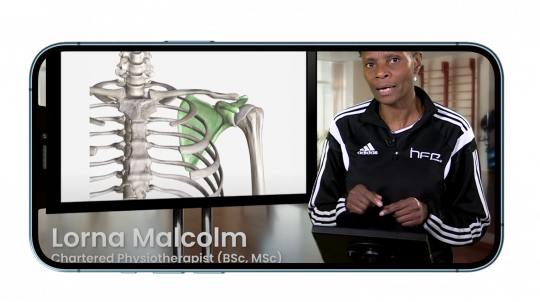
*Images and videos are for illustration purposes and may not depict specific course materials.
Join our elite-level Pilates instructor graduates working with some of the world's leading gyms and health clubs. Taking your education a step further means your career can reach new heights - where will you take yours?







Through this level 4 matwork Pilates course, you'll complete a range of theory and practical assessments to demonstrate that you have sufficient knowledge and skills to practice as an advanced-level Pilates teacher. Most of the knowledge-based assessments will be completed remotely online, although the practical aspects of your training will place a great deal of emphasis on preparing you for these. For the practical assessment, you'll deliver a session remotely, which you'll need to record and submit for marking.
Here’s a summary of the assessment methods you’ll encounter: