
Yoga teaching and practice
A guide to yin yoga for yoga teachers and trainees, exploring its benefits, teaching principles, class structure, and physiological effects.
A guide to yin yoga for yoga teachers and trainees, exploring its benefits, teaching principles, class structure, and physiological effects.
Yin yoga is a calming, relaxing, and restorative practice that offers deep, long-held stretches performed mainly in seated or lying positions on the mat.
Each position within the practice is held for between three and ten minutes. This extended stillness creates an opportunity for mental quiet to mirror the body’s physical state. Small, mindful adjustments may be made during each pose to help find the most easeful and supportive position.
Attention remains focused on the sensations in the muscles being stretched, ensuring there is a sense of lengthening without discomfort. Practitioners are also encouraged to use all phases of the breathing cycle, promoting a slow, steady, and calming rhythm of breath that supports both body and mind.
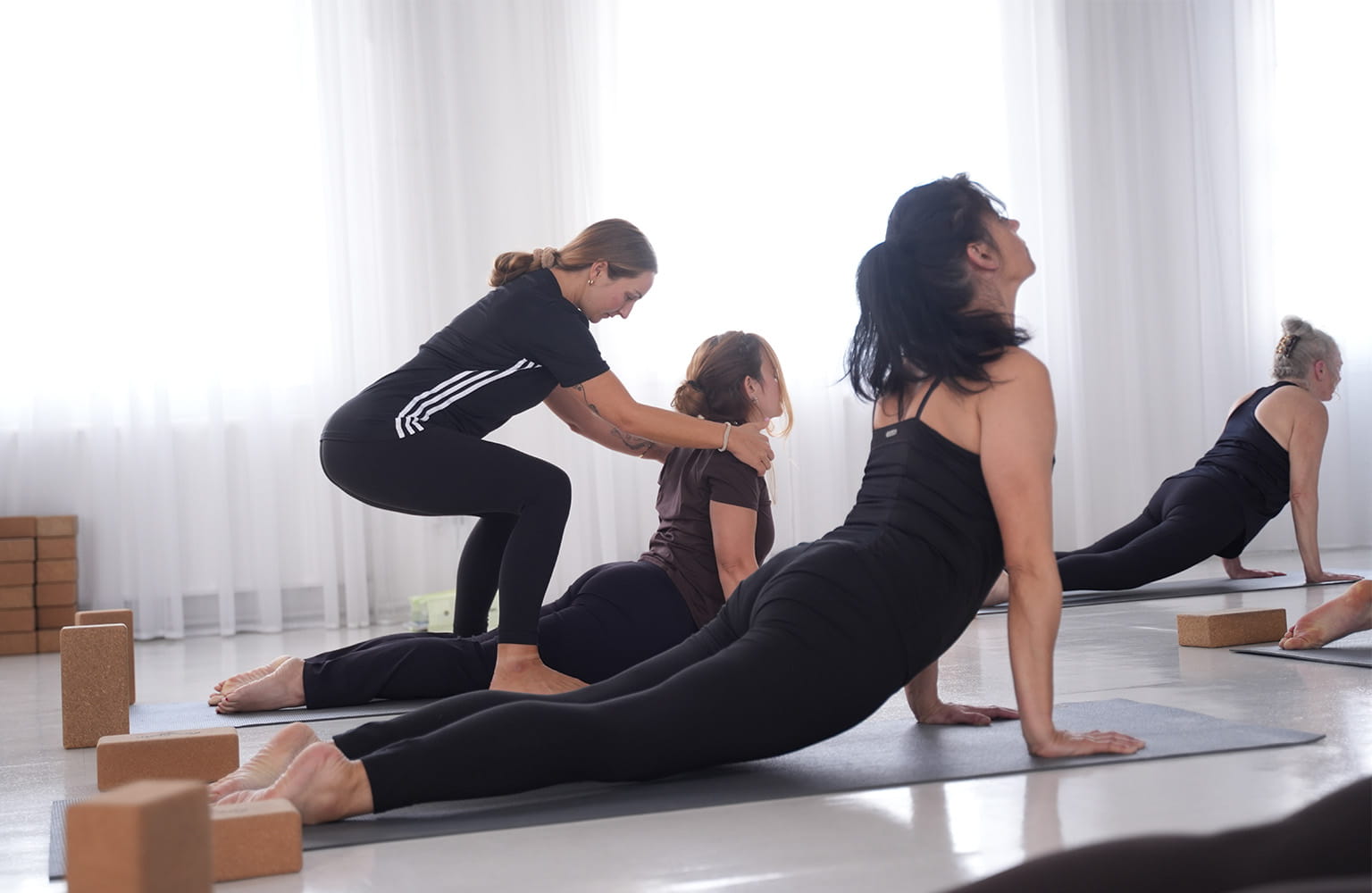
Yin yoga can be a wonderful release from the stress created by the demands and pace of a busy life. Its benefits extend well beyond the stretching of muscles, influencing other structures within the body as well as overall mindful wellbeing.
The extended length of time spent in each pose goes beyond what is typically experienced in other styles of yoga. While most yoga practices include stretching, they do not usually involve holding positions for three minutes or longer. This longer duration allows for a deeper and more gradual release within the body.
Yin yoga works across multiple systems, including the fascia, nervous system, and cardiovascular system, while also supporting emotional regulation and mental clarity.
Fascia surrounds every structure in the body as a continuous sheet of flexible connective tissue. It helps maintain the integrity of those structures while allowing smooth and coordinated movement.
The fascia that surrounds skeletal muscles can become tight or sticky as a result of physical injury, lack of movement, or mental tension. When this happens, muscles may feel tight, knotted, or restricted, and become less effective in producing movement.
Yin yoga targets this system through long-held, passive stretches. Stretches lasting at least three minutes are thought to be required to effectively influence fascia. These sustained holds allow the connective tissue to gradually soften, supporting improved mobility and ease of movement.
Coming to stillness in a yin yoga practice has a positive effect on the nervous system. The practice helps shift the body away from a constant fight-or-flight state, which for many people becomes the status quo due to ongoing life demands.
The sympathetic nervous system, responsible for the fight-or-flight response, can become overactive when managing work, family, and other responsibilities. When this becomes a long-term state, it can have negative effects on health.
Yin yoga helps reduce this stress response. Levels of stress hormones such as cortisol and adrenaline decrease, while activity in the parasympathetic nervous system increases. At the same time, there is an increase in “happy” hormones such as endorphins, dopamine, and serotonin. This shift brings the body into a repair and recovery state, supporting relaxation, improving mood, and promoting restful sleep.
As the body relaxes into each posture, energy channels (meridians) open, allowing energy (prana) to flow more freely. Specific meridians are associated with particular organs, influencing both energy flow and physiological function.
This process may also encourage the release of stored emotions. It’s not uncommon for practitioners to experience emotional responses during a session, such as laughter, tears, or a sense of emotional release.
Although not always considered an obvious benefit, yin yoga may also influence the cardiovascular system, particularly with repeated practice over time.
During long-held stretches, there may be a temporary decrease in blood flow and oxygenation within the tissues being stretched, alongside an increase in internal pressure. This can lead to a short-term rise in localised blood pressure.
However, once the stretch is released, blood flow increases and oxygen returns to the muscles. This rebound effect supports circulation and tissue recovery. Evidence suggests that the intensity and duration of stretching can influence the cardiovascular response following the activity.
With regular practice, yin yoga may contribute to longer-term adaptations, including improved elasticity of the arteries, better function of blood vessels, and reductions in resting heart rate and blood pressure.
Many of the benefits of yin yoga are relatively short-lived. Increased parasympathetic nervous system activity may last for approximately 30 to 60 minutes before returning to baseline levels. The effects on fascia may last slightly longer, often up to 48 hours.
However, repeated practice can create longer-term changes. Over time, consistent yin yoga supports more effective hormone regulation, improved muscle and fascia health, and sustained increases in flexibility and joint range of movement.
The structure of a yin yoga class is similar to other styles of yoga, typically including a warm-up, a main component, and a final relaxation. However, the content within this structure differs.
Most of the practice takes place in seated or lying positions, with little or no standing. This supports a sense of relaxation without the need for strength or balance.
The warm-up prepares both the mind and body for the main component. Gentle movement provides a gradual transition from the activity of the day into the stillness of the practice, while also bringing awareness to the breath.
Unlike more active styles of yoga, the purpose of the warm-up is not to raise body temperature. Instead, it helps to lubricate the joints and prepare them for a greater range of movement. This is achieved through mobility work and shorter, less intense stretches targeting the muscles that will be the focus later in the practice.
In a 60-minute class, the main component typically includes postures held for around three minutes, with one or two held for longer. Longer sessions, such as those lasting up to 90 minutes, allow for holds of up to ten minutes and a greater number of poses.
Because of the duration of each posture, yin yoga classes generally include fewer poses than more active styles.
Teachers select postures based on the theme of the class. This may focus on a specific area of the body, such as the legs or hips, or take a full-body approach.
The most important consideration is that each posture allows the participant to relax into the position. Gravity is the main tool used to create the stretch, making the practice largely passive rather than forceful. Props such as blocks, bolsters, and blankets may be used to accommodate individual differences in body proportions and flexibility. In some cases, alternative postures may be more appropriate.
As with entering each pose, it is important to take time to ease out of each position to avoid injury and maintain a calm atmosphere.
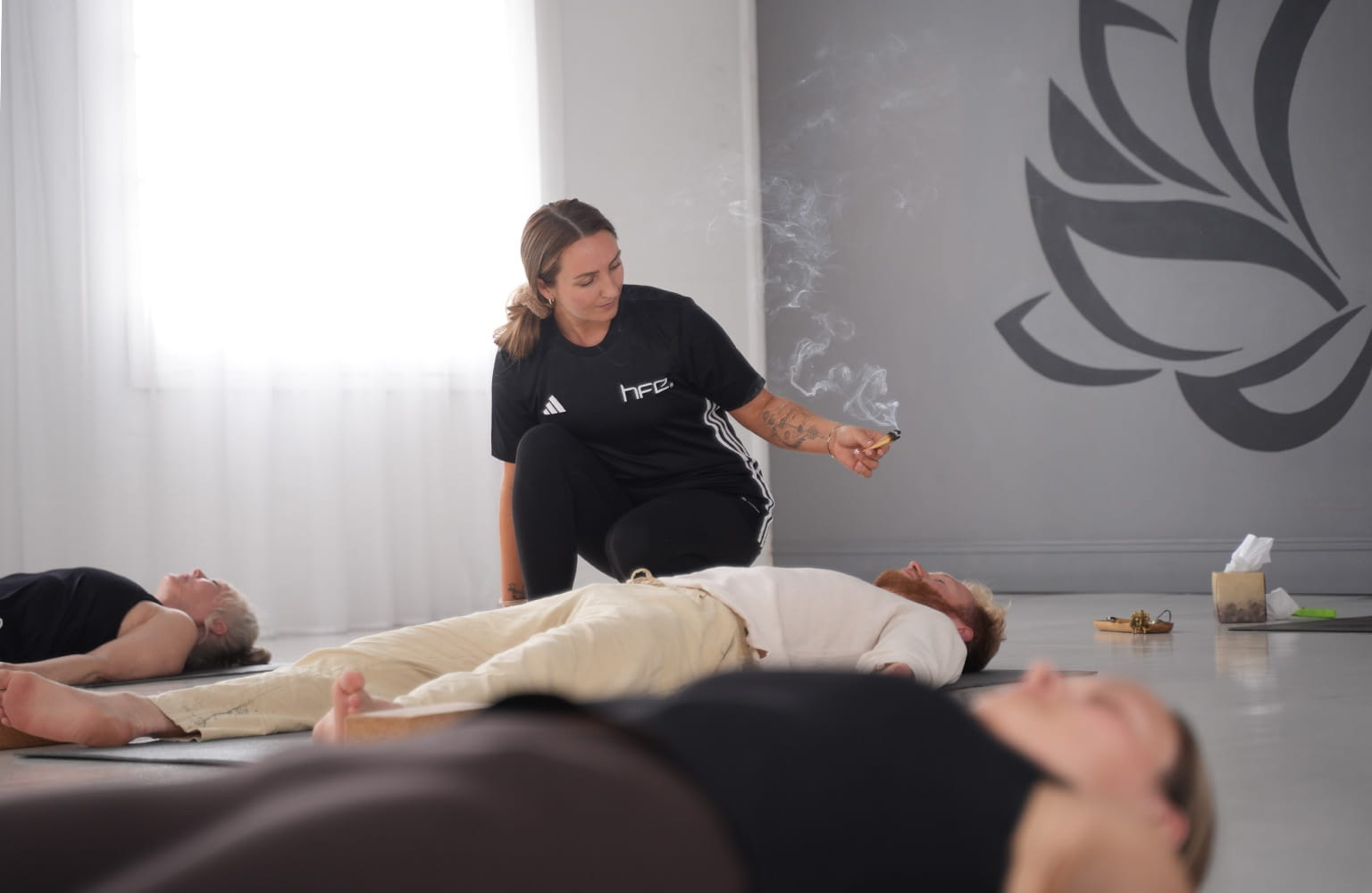
Because the main component is relatively static, no specific transition is required before the final relaxation. The practice typically concludes in savasana (corpse pose), where participants lie on their backs in stillness.
This stage provides an important opportunity for the body to settle and realign. Research suggests that relaxation responses occur after the stretch has ended and the muscle returns to its resting length. As the main component involves multiple stretches, this final rest is essential to the effectiveness of the practice.
One common misconception is that yin yoga must feel intense to be effective. In reality, moving too quickly into an intense stretch can create tension and reduce flexibility. The effectiveness of yin yoga lies in the duration of the stretch and the gradual easing into it.
Another misconception is that yin yoga is easy because there is little movement. In practice, many people find it far from easy. Holding a position for an extended period requires both physical and mental endurance.
The mental aspect is often the greatest challenge. The mind may wander or resist stillness. With practice, individuals learn to remain present, maintaining awareness of breath and sensation throughout each posture.
Yin yoga is well suited to those who enjoy slower, more restorative practices, or who are looking to bring balance to a busy or physically demanding lifestyle.
It can be practised in a meditative way, encouraging deeper self-awareness while still benefiting from the shared experience of a group setting.
A weekly yin yoga class can provide an effective “rest day” session for those following an intense exercise routine. It is also particularly beneficial as an evening practice, helping to prepare the body and mind for restful sleep.
Effective yin yoga teaching relies on creating a calm, supportive, and appropriate environment while remaining attentive to individual needs.
Foundational training, such as a Level 3 Yoga Teacher Training course, provides the knowledge and skills required to teach a range of yoga styles.
For those wishing to specialise in yin yoga, continuing professional development courses can build on this foundation. These courses support the selection of appropriate postures and sequences, deepen understanding of physiological responses, and develop advanced teaching skills.
They also help teachers guide participants into a meditative state and support individuals in finding optimal positions without disrupting the wider class environment.
Sara has over 30 years' experience in the health and fitness industry, teaching classes in private and local authority facilities. She enjoys sharing her knowledge and skills in her role as a tutor, assessor and course developer. She has been involved in writing syllabus, manuals and assessments, including as the lead tutor to the Inclusive Fitness Initiative, working with disabled people, and through her work with frail older people. She co-created one of the first Yoga Teacher training courses within the fitness sector, having benefited from her own personal yoga practice.
And embrace the rich and vibrant world of yoga
Great news, you're on the list...