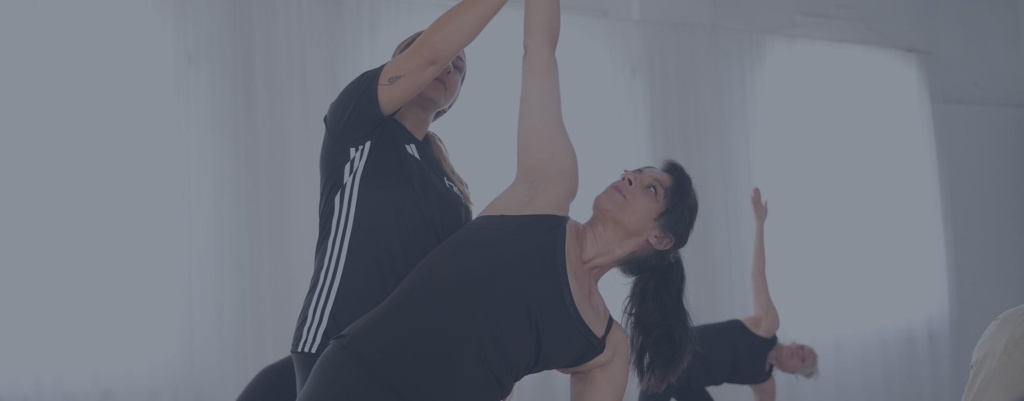
Menopause Exercise and the Changing Female Body
How exercise supports symptoms, health, and long-term wellbeing.
How exercise supports symptoms, health, and long-term wellbeing.
The menopause has existed for as long as humans have. Yet until recently it was rarely discussed in public, and when the subject was raised, it was spoken about in hushed tones and often using euphemisms, such as ‘the change’. For some women it’s a time of gradual transition to the next phase in their life, with few or no unpleasant or debilitating effects. But for others, it’s a physically, mentally, and emotionally traumatic time which can be utterly life‑destroying.
Thankfully, times have changed, and now there is greater understanding of this issue and a considerable amount of guidance to help women through this important phase.
As women now spend up to one third of their lives in post‑menopause, lifestyle strategies such as menopause exercise that support long‑term health are increasingly important. Research shows that exercise is one of the most effective non‑pharmacological interventions for managing menopausal symptoms and promoting healthy ageing.
In this article, we will explore the effects of the menopause, outline the benefits of exercise during and after this stage, and provide evidence‑based guidance for effective exercise prescription.
The menopause is when the ovaries stop releasing eggs, and there is a significant reduction in the production of the hormones oestrogen and progesterone.
Clinically speaking, it’s diagnosed after a woman has experienced 12 months with no periods, known as amenorrhoea, which is not due to pregnancy, illness, or medical treatment.
For most women, the menopause occurs between the ages of 45 and 55, with the average age in the UK being around 51 years.
It’s important to understand that the menopause is one step in a broader transition, which is broken down into several phases:
Menopause exercise can be beneficial across all stages, helping to manage symptoms and support physical function.
The symptoms of the menopause and perimenopause are varied and comprise physical, psychological, and emotional issues. These include:
These symptoms can be experienced for several months to years before the last menstrual period and can continue for several years after.
Research shows that menopause exercise can play a key role in reducing symptom severity and improving quality of life during this stage.
After 12 months without menstruation, the post‑menopause phase begins. This is accompanied by a number of changes that impact a woman’s health. These include accelerated bone loss, reduced muscle mass, and changes in cardiovascular and metabolic health. The result of these changes is an increased risk of:
Menopause exercise directly targets many of these risk factors, making it a vital component of menopausal health management. A systematic review and meta‑analysis examining cardiovascular and strength training interventions in women transitioning from perimenopause to post‑menopause found that regular exercise significantly improves vitality, mental health, and overall quality of life (1).
Cardiovascular exercise was found to be particularly effective in reducing general menopausal symptoms, with key benefits including:
Strength training is also extremely valuable during menopause, as it helps to counteract the loss of muscle mass, bone density, and the deterioration in metabolic health driven by declining oestrogen.
The results of a study by Capel‑Alcaraz et al. (2) showed that resistance training reduces hot flushes and improves:
Similarly, strength training has been shown to enhance hip strength, balance, flexibility, lean body mass, and insulin sensitivity in women aged 40–60 (3). Importantly, these benefits were seen across pre‑, peri‑, and post‑menopausal groups, indicating that resistance training supports physical function throughout the entire menopausal transition.
The female gender is often cited as being protective against cardiovascular disease. This is because before the menopause, women have lower rates of heart attack and stroke than men. However, after menopause, the rate of heart disease in women continues to rise to equal that of men after the age of 65 due to changes in lipid profiles, endothelial function, and body composition (4).
The benefits of cardiovascular exercise during this time are not limited to improvements in cardiovascular fitness, but also reductions in blood pressure and enhanced metabolic health. Interestingly, evidence suggests that combining aerobic and resistance training yields the greatest cardiometabolic benefits (4).
A comprehensive menopause exercise programme that fully accommodates the needs of women during the menopause and beyond should not only address strength and cardiorespiratory fitness, but also the other facets of health‑related fitness.
Functional‑type resistance training using bands, ankle weights, and dumbbells has been shown to improve balance, strength, and flexibility (5). This is particularly beneficial for:
General stretching, yoga, and Pilates also support joint mobility, reduce stiffness, and improve posture. Additionally, they help to manage stress and improve sleep quality (1).
Balance tends to decline naturally with age, and the hormonal changes of menopause can make this decline more pronounced. Therefore, incorporating balance drills, single‑leg exercises, stability, and functional movements can help to reduce the risk of falls and improve confidence (6).
Menopause exercise is recommended by numerous authorities such as the World Health Organisation (WHO) and the NHS, but specific advice seems to be lacking.
For example, the NICE guidelines (7), although recommending the use of regular physical activity to support symptom management and long‑term health, do not provide precise guidelines.
However, the physical activity guidelines for health‑related fitness (see below) are generally appropriate for most women. As with any exercise prescription, trainers should individualise the programme to fully accommodate the needs and abilities of each client based on symptoms, fitness level, and the presence of comorbidities.
In addition to a programme of structured menopause exercise, a reduction in sedentary behaviour is recommended by minimising time spent sitting and incorporating movement throughout the day. This could be achieved with walking breaks, active commuting, and standing tasks. Even small, frequent interruptions, such as standing, stretching, or short walking breaks, can improve metabolic and cardiovascular health. Spending more time outdoors should also be encouraged to enhance vitamin D production and improve mood (8).
It’s important for personal trainers to be aware that across the menopausal transition, women commonly experience additional barriers to exercise that go beyond those typically experienced and which will need to be addressed. These may include physical symptoms which can reduce comfort and motivation to be active, such as:
Psychological factors including low mood, anxiety, reduced confidence, lack of motivation, and fear of injury further limit participation. In addition, lifestyle pressures such as work demands, caring responsibilities, and limited time are very common in midlife. Many women are also unsure about which types of exercise are safe or effective during the menopause.
These barriers may occur before, during, and after menopause, often interacting to reduce long‑term adherence to physical activity.
While it is beyond the scope of this article to provide a detailed account of strategies to overcome barriers to physical activity, presented below are a selection of useful tips:
Menopause exercise is one of the most effective non‑pharmacological interventions for managing menopausal symptoms and promoting healthy ageing. This puts personal trainers in the perfect position to help women during this time. To do so effectively, they need to understand that their needs, symptoms, and barriers to exercise may differ from those of other clients.
Therefore, PTs need to adopt a flexible, empathetic approach and individualise every session and the broader programme to fully accommodate each client’s needs and abilities. They also need to listen to clients’ concerns, calm their fears, and ensure their exercise prescription not only supports their fitness goals, but also enhances their motivation and long‑term adherence to a physically active lifestyle.
For PTs looking to advance their knowledge in this area, we offer a Level 3 award in supporting clients through the menopause, which explores how to support women through exercise, nutrition and lifestyle factors.

Paul Orridge is a graduate in the field of sport, exercise and health, and has over 30 years’ experience within the fitness industry. In this time, he has performed a variety of roles including personal training, lecturing and writing. Paul now works as a freelance technical author and subject matter expert within the fitness industry. His work is based on his practical experience gained working with a diverse range of people from very unfit, overweight individuals to highly conditioned athletes, and is underpinned by the latest research.
And get the fast-paced world of personal training delivered straight to your inbox every week
Great news, you're on the list...