
Start Your Journey Towards Teaching Pilates
Interested in becoming a Pilates instructor? Explore the qualifications, the skills and the different training routes available.
Interested in becoming a Pilates instructor? Explore the qualifications, the skills and the different training routes available.
If you love Pilates and want to learn how you can turn your passion into a career, we’ll tell you everything you need to know about how to become a Pilates instructor or teacher.
Before we explore the specific steps necessary to become fully qualified in the field of Pilates, it is first necessary to distinguish between a Pilates instructor and a Pilates teacher. When talking about Pilates instructor courses, many people use these titles interchangeably as if they mean the same thing – they absolutely don’t!
An instructor is somebody who will show their participants how to perform exercises safely and effectively. They will demonstrate the necessary techniques, provide appropriate feedback and encouragement as is required. In contrast, a teacher will educate their students about the movement, how it should feel, which muscles should be activating at which stages of the exercise, how to activate these muscles and how to get in and out of the exercise safely.
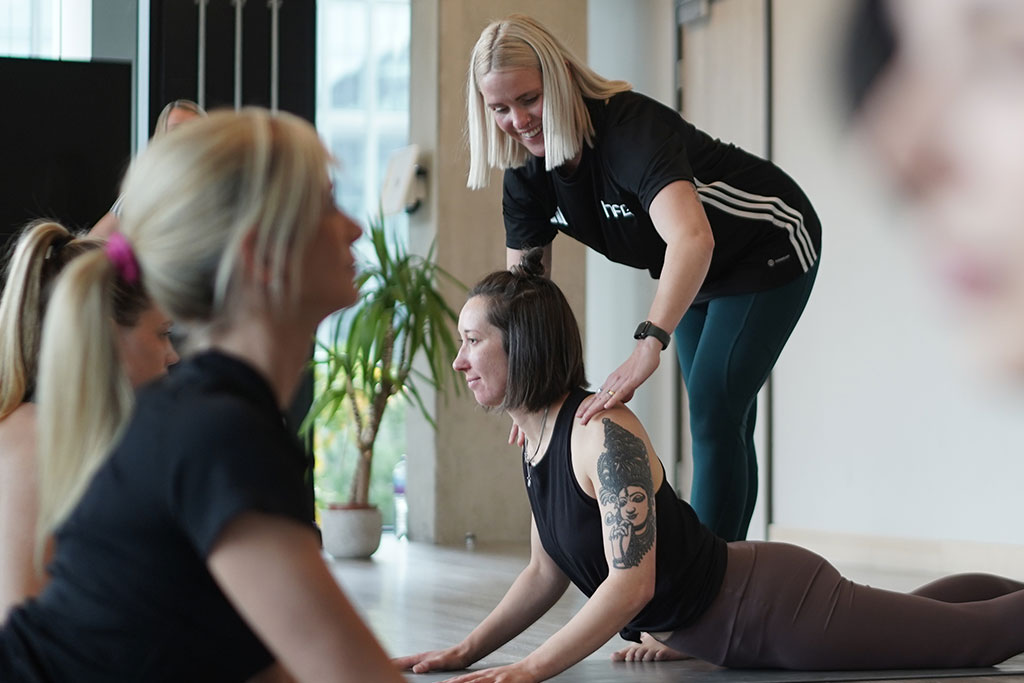
A teacher, however, will provide their students with enough information to enable them to become somewhat self-sufficient over time. They will observe how their students move, what muscular imbalances and dysfunctions that they present with, providing appropriate Pilates-based interventions to address any issues. A Pilates teacher may also provide advice and guidance to their students on how to move better at home and in the workplace.
If you are considering how to become a Pilates teacher, it is probably best first of all for you to consider the qualities required so that you can really assess whether this is an opportunity for you.
Great Pilates instructors and teachers have:
If you are still reading up to this point, then presumably you think you have what it takes to become a Pilates instructor and eventually progress to being a teacher. On this basis, we’ll now explore the different qualifications required to do just that.
The entry-level qualification to become a Pilates instructor is the Level 3 Diploma in Teaching Mat Pilates. There are no entry requirements for the level 3 diploma, other than a keen interest in, and practical experience of, mat-based Pilates. The qualification on average takes between 8-10 weeks to complete, although those who have a busy lifestyle often struggle to achieve this in less. This is certainly something that should be considered at enrolment.
For those who have commitments that prevent travel for a face-to-face course, another option to consider would be virtual Pilates teacher training. This alternative offers a blended learning approach similar to other courses, replacing the in-person classroom environment with a similar and scheduled virtual setting.
While level 3 may be the entry-level qualification to become a Pilates instructor, it is by no means a foundational qualification. The course covers a range of theory and practical subjects related to anatomy, physiology, health and safety, posture, postural assessment, planning and teaching Pilates exercises. In addition, students learn the principles and fundamentals of Pilates, how to motivate clients and how to set goals effectively.
The Level 4 Certificate in Mat Pilates provides more advanced study option for those who have demonstrated their ability at Level 3. The programme is much more modular than the level 3 programme and students are able to select units which best align with their interests and areas of expertise, alongside a small range of mandatory units.
Irrespective of who is delivering the training, it’s important to ensure that this qualification is backed by a reputable and recognised awarding organisation. Certainly, in the health and fitness sector, YMCA Awards and Active IQ are the safest hands to be in, because they are both active-leisure sector specialists.
More generic awarding organisations like City & Guilds or Pearson may offer similar qualifications, but they often don’t have technical experts in their organisations verifying these qualifications. Consequently, the standards are often lower in their training providers, and this may draw the attention of potential future employers.
For more information about Pilates qualifications, our comprehensive guide to Pilates instructor qualifications explains things in much more detail.
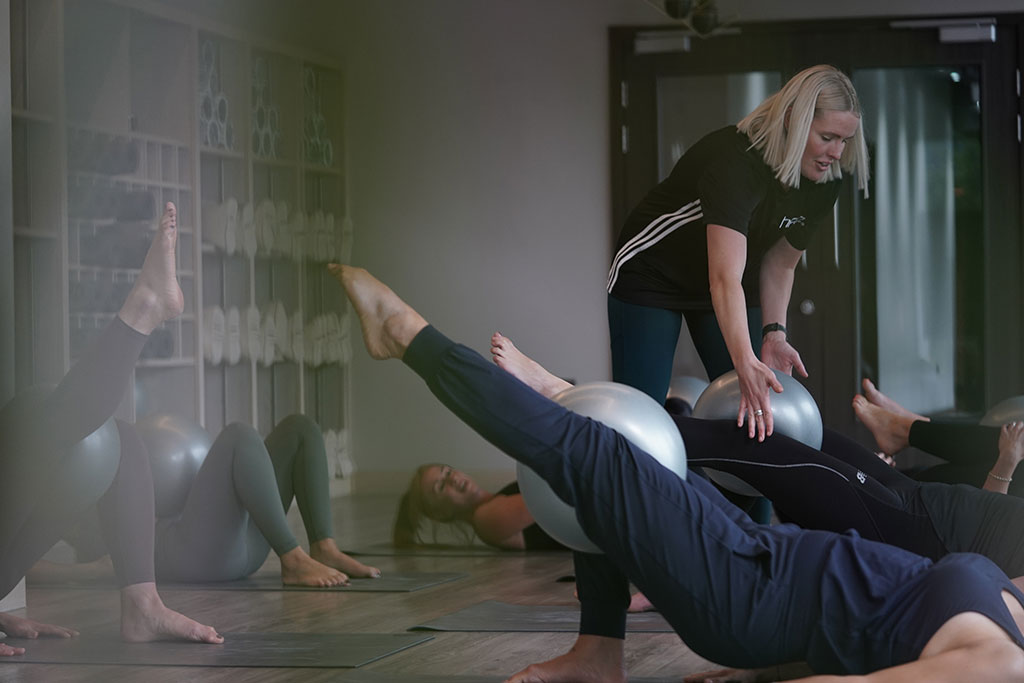
For those looking to truly advance their career in Pilates, there are a number of equipment-based courses in place for Pilates teachers. Joseph Pilates specifically designed a number of pieces of apparatus to support his training methods, so these equipment courses focus on these techniques.
Such courses include, but are not limited to the Pilates reformer, Cadillac, trapeze, ladder barrel and spine corrector. If you’re interested in learning more about the history and applications of these pieces of apparatus, our guide to Pilates equipment will prove very informative and interesting reading.
For more information about what is required to teach Pilates on the reformer, take a look at our Level 3 reformer Pilates training course. We also have a Level 3 Pilates small equipment course, for those interested in incorporating tools such as the Pilates circle or stability balls into their sessions.
Once the studies are over and your qualifications are complete, there are a number of potential employment opportunities available to you.
It’s important to remember that the following list is not completely exhaustive, and only provides a summary of some of the more popular routes Pilates instructors take once they are qualified:
GP exercise referral: Work alongside doctors and other medical professionals to prescribe exercise to help patients manage chronic diseases and medical conditions like obesity, diabetes, asthma, arthritis and many more.
Special populations: Develop the knowledge, skills and confidence to prescribe exercise to pre and postnatal clients, older adults, and people with physical or mental health conditions, impairments or disabilities.
Nutrition coach: Upskill your nutrition knowledge and understanding so that you can educate and inspire your clients to eat a healthier and more nutritious diet that will better meet their specific health and fitness needs.
Fitness education: Help to shape the next generation of fitness professionals. Whether you want to become a course tutor, work as an assessor, or both, this is a really rewarding career in which you get the chance to give so much back.
Virtual coaching: Many Pilates teachers are taking their business entirely online, working with clients around the world to deliver Pilates training solutions. Virtual coaching has become big business in recent years and there is serious demand for online training.
Exercise specialist: Become the ultimate fitness professional by concentrating your services on a specialist discipline. Whether it’s cardiac rehab, managing back pain, or working with obese or diabetic patients, this can be lucrative and rewarding.
The wealth of opportunities available to qualified Pilates instructors and teachers is explored in much greater detail in our guide to Pilates instructor jobs and qualifications.
Most Pilates instructors are paid on an hour-by-hour basis for the classes that they teach. The pay and salary vary depending on the region of the country, the type of employment and the specific employer.
On average, Pilates instructors and teachers are paid between £20.00-45.00 per hour, although those who are self-employed can often earn much more. It’s normal for those qualified in Pilates to teach around 15-20 classes per week, although again, some do often teach more.
We dive deeper into this subject in our guide on how much Pilates teachers get paid, where we look to account for all the varying factors, sources of income and employment available.
If you’re still interested in learning more about what it takes to become a Pilates instructor, then contact our Careers team today for their expert advice on any questions you might still have.
Back to articlesStep inside the world of Pilates
Great news, you're on the list...