
Rotator Cuff Injuries
Discover the functional anatomy of the rotator cuff muscle, common injuries, and how sports massage treatments can support recovery.
Discover the functional anatomy of the rotator cuff muscle, common injuries, and how sports massage treatments can support recovery.
Rotator cuff injuries are one of the most common shoulder injuries we see in physiotherapy clinics. Whether it’s an acute injury caused directly trauma (e.g., dislocation and ineffective loading), or a chronic injury caused by repeated microtrauma and micro-tears (e.g., driving, desk working or other occupational stress), no one is completely immune. Up to 70% of the adult population will experience shoulder pain in their lifetime, with the majority of pain being attributed to the rotator cuff muscle and subacromial structures (Luime et al., 2004).
In this article, we will explore the functional anatomy of the rotator cuff and identify common injury mechanisms, including how sports massage therapists can use treatments to support their client’s recovery.
The rotator cuff is a group of 4 muscles whose primary role is to keep the humeral head (the ball) located in the glenoid fossa (the socket). These muscles are supraspinatus, infraspinatus, teres minor and subscapularis.
Infraspinatus and teres minor sit on the posterior aspect of the shoulder and are external rotators of the shoulder joint (glenohumeral joint). Subscapularis sits on the anterior aspect of the shoulder and is an internal rotator of the glenohumeral joint. Supraspinatus sits on top of the shoulder joint and assists the deltoid muscles with abduction of the shoulder.
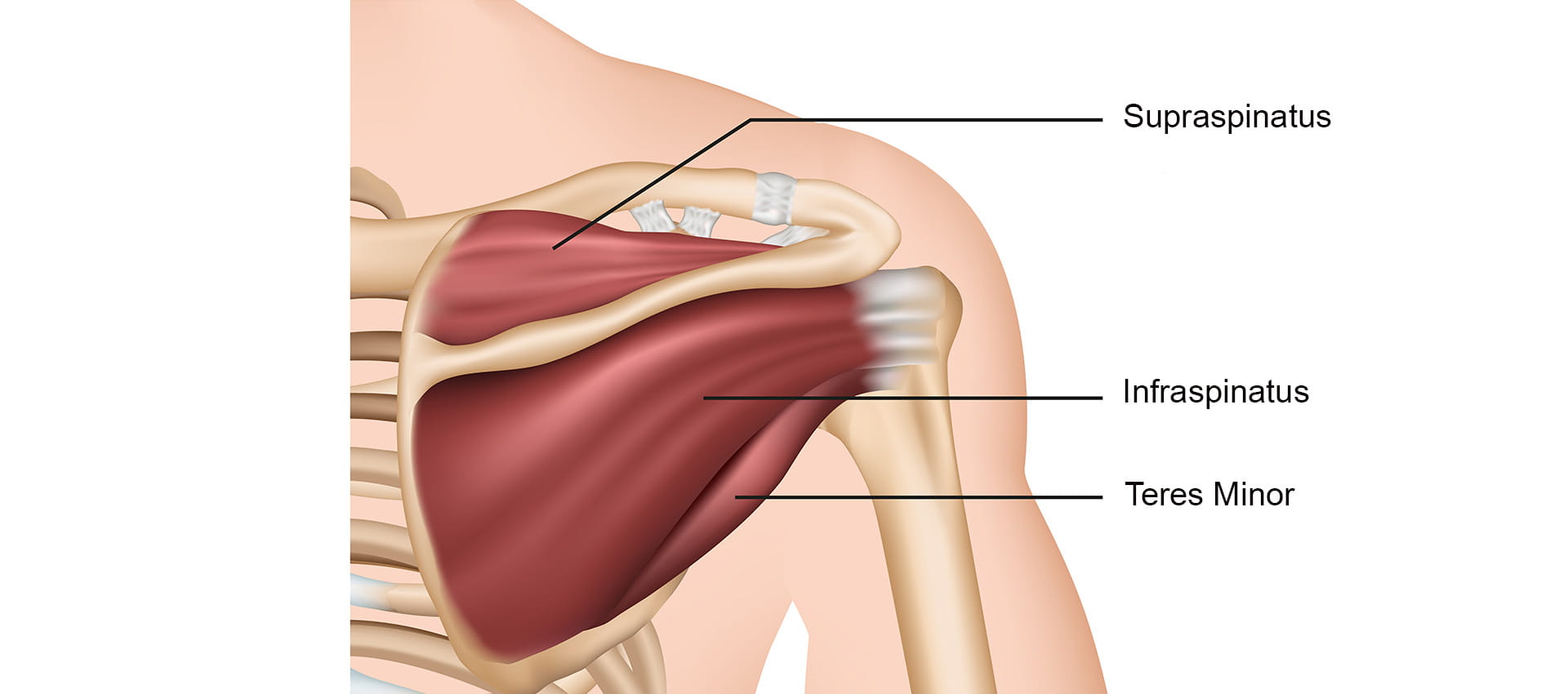
The rotator cuff muscles work in conjunction with the larger, more powerful muscles in the shoulder area (e.g., deltoid, pectorals, rhomboids and latissimus dorsi), to provide local stability, supporting alignment and tracking.
Each rotator cuff muscle attaches to a large, thick tendon which spans the entire humeral head, creating an almost suction-like pressure on the humeral head, keeping it inside the glenoid fossa. This level of pressure helps to safeguard against dislocation while also supporting smooth function of the glenohumeral joint.
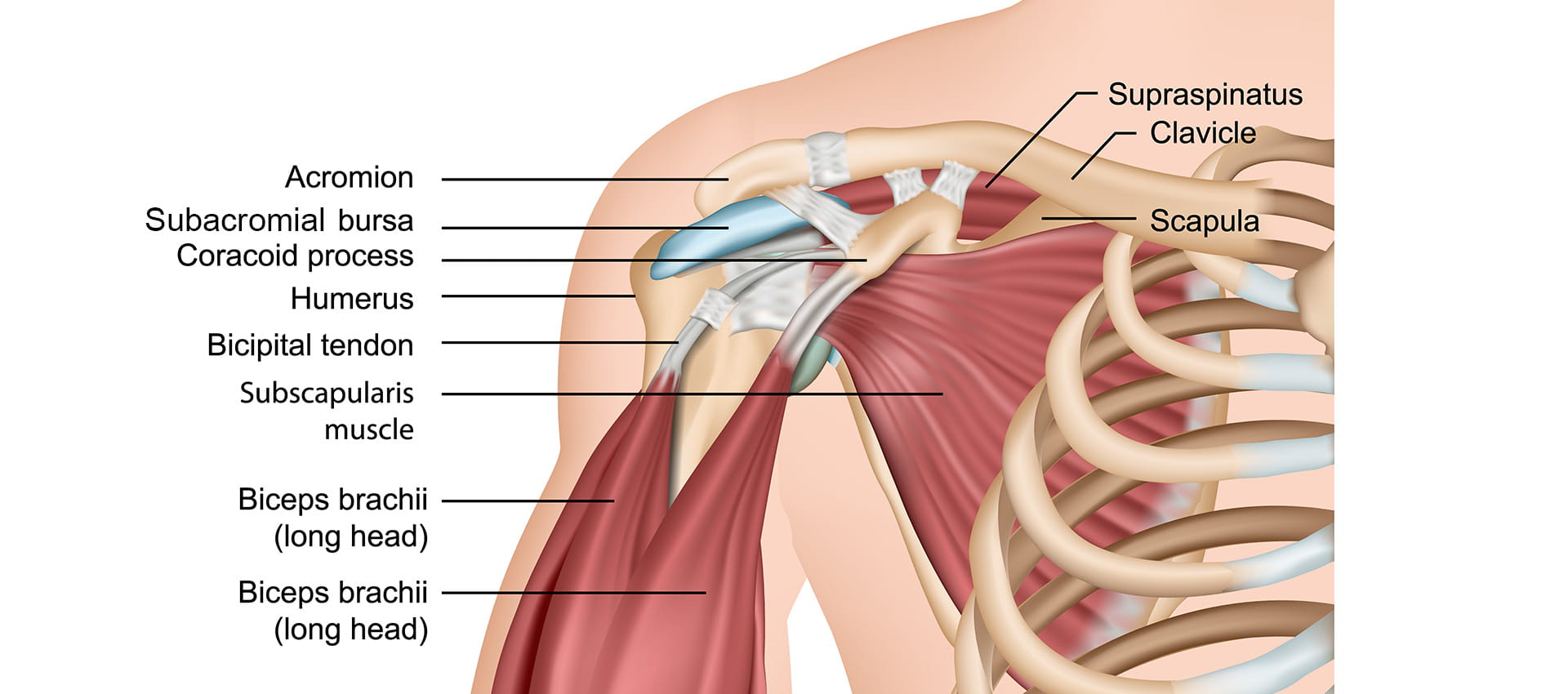
By design, the glenohumeral joint is not a particularly stable joint because the humeral head sits on the glenoid fossa in much the same way as a golf ball sits on a golf tee. It is precariously balanced, and therefore relies heavily on the muscles, ligaments and shoulder joint capsule to keep the joint stable.
Because the shoulder is so reliant on the soft tissue to maintain movement, stability and control, it is much more prone to injury and dysfunction arising from muscle imbalances and associated tightness.
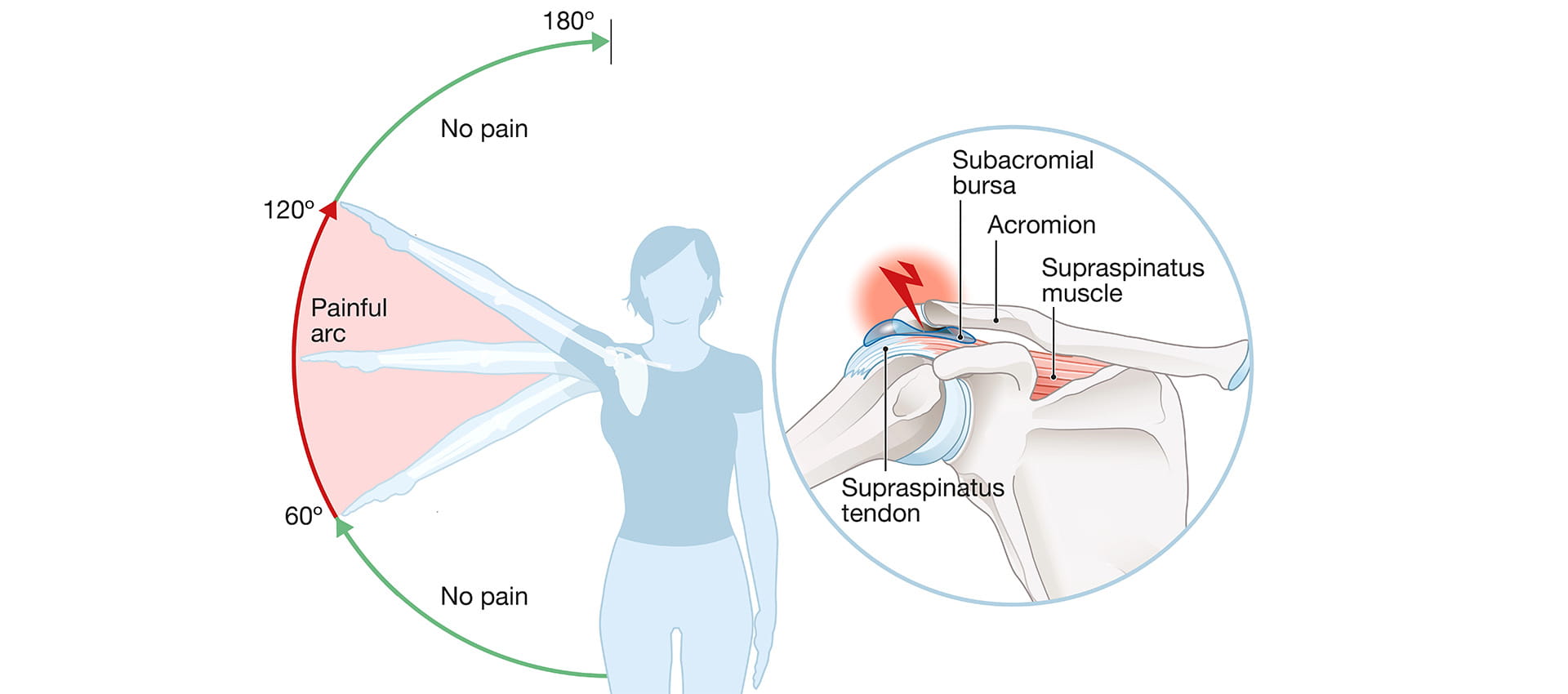
The supraspinatus is particularly prone to injury and dysfunction because it sits on top of the humeral head and directly under the acromion process. This location exposes it to greater shear forces as it needs to work to prevent the humeral head from being displaced in a cephalad direction (upwards towards the head).
Supraspinatus is the rotator cuff muscle that is most likely to be cited as the cause of shoulder pain and is often the muscle that has the most amount of degenerative change over time. Previously, it was thought that the supraspinatus became ‘pinched’ between the humeral head and acromion during overhead movements. This position is no longer supported by the research, and it now seems that the sub-acromial bursa (a fluid filled sac that reduce friction forces in the joint) may be irritated by a dysfunctional humeral head. This dysfunctional movement appears to cause the supraspinatus to experience micro trauma over time from excessive shearing forces in the joint, rather than an active ‘pinch’ of the tissue.
Historically, subacromial decompressions were common. These minor surgeries involved shaving the underside of the acromion process to create more joint space by removing osteophytes (additional bone growth). The surgeries often appeared successful in the short-term, however, research has shown that the long-term outcomes for subacromial decompression surgeries against more conservative measures, like physiotherapy or targeted sports massage therapy, are very similar. The pain and risk that comes with surgery can be avoided in the vast majority of cases.
Today, most people have sedentary occupations. They spend most of their day with their shoulders in 10 degrees of flexion and 20-30 degrees of internal rotation, typing on their keyboard or staring at their phones.
Their shoulders rarely move beyond 40 degrees during the day unless they’re doing structured exercises that involves the upper body.
Consequently, their rotator cuff muscles rarely receive adequate load, so don’t develop the necessary strength to sustain everyday function without undue strain. This phenomenon results in microtears developing in the muscles and tendons when they are loaded, leading to pain, tendinopathy and further degeneration over time. These tissues need consistent load in order to remain healthy, so when they aren’t adequately loaded, blood flow and nutrient supply are limited.
Those engaging in targeted shoulder strengthening can also get rotator cuff injuries. Many exercisers focus solely on the larger muscle groups, often working in predominantly in linear planes of movement. This approach to exercise can lead to an unhealthy dominance of the larger pectoral, deltoid, rhomboid and latissimus dorsi muscles, increasing the potential for injury and dysfunction.
If exercises to develop shoulder stability and control aren’t included in upper body training programmes, excessive shearing of the rotator cuff muscles can occur, increasing the potential for microtears and further trauma. Over time, microtears can lead to larger tears, giving rise to further pain.
Including loaded internal and external rotation exercises, as well as abduction strengthening movements may help slightly to maintain rotator cuff strength. This is perhaps one of the most common approaches for targeting the rotator cuff muscles. However, this doesn’t address shoulder stability directly. What I mean by shoulder stability is the way the rotator cuff and scapular muscles work together to ensure the congruence of the glenohumeral joint, creating smooth movement of the joint through its full range. Shoulder stability work is essential to ensure good shoulder biomechanics and to maintain the health of the rotator cuff.
A classic initial sign of rotator cuff issues is a mild grumbling or soreness in the shoulder region. Often present the day after a workout, or at the start of the workout. The discomfort usually eases after a warm-up has been completed, only to return with the heavier lifts. This is the client’s body giving them a sign that something is amiss with their stability. Clients will often put up with these minor grumbles for years and they rarely stop somebody from exercising because they are so easy to ignore. However, as we have already established, repeated microtrauma will over time lead to larger tears, and these will eventually stop people from training.
One of the most provocative exercises for the rotator cuff muscle from a pain and injury perspective is the chest press, or its derivatives (e.g., bench press, dumbbell press). In the physiotherapy literature, it’s one of the most commonly cited exercises to cause or trigger shoulder pain.
Optimal chest pressing requires a harmonious relationship between the glenohumeral and scapular muscles to ensure smooth scapular rotation and controlled stabilisation of the glenohumeral joint, particularly during the lowering phase of the movement. Muscle imbalance, poor coordination, and poor shoulder mobility increase excessive shearing forces through the rotator cuff. This is the mechanism, which when repeated over time, often leads to rotator cuff tendinopathy and significant rotator cuff tears.
Large rotator cuff tears often require surgery, particularly in younger and active individuals. However, they can also in some cases be managed more conservatively. This is because the rotator cuff muscles work together, and often one muscle can compensate sufficiently for another. The thick tendon that joins all of the muscles together can be an advantage when treating tears. If the muscle is torn but the tendon remains intact, clients can often strengthen and utilise strength from the remaining rotator cuff muscles to improve glenohumeral joint stability.
The relationship between a rotator cuff trauma and pain is unclear. For example, approximately 40% of baseball pitchers were found to have significant rotator cuff tears when they were MRI’d, but none of them were symptomatic, and all played baseball at a high level (Connor et al., 2003). This data illustrates that full muscular compensation in people that are strong and healthy is possible.
In older and less active populations, treating rotator cuff injuries is much harder. Sarcopenia (age-related muscle loss), postural changes, especially in the thoracic spine, as well as a general decline in physical activity mean there is less scope for compensation. Pain tends to be worse and longer-lasting, which encourages people to be less active to avoid pain and dysfunction, further reinforcing the cause of the injury and resulting in greater joint instability.
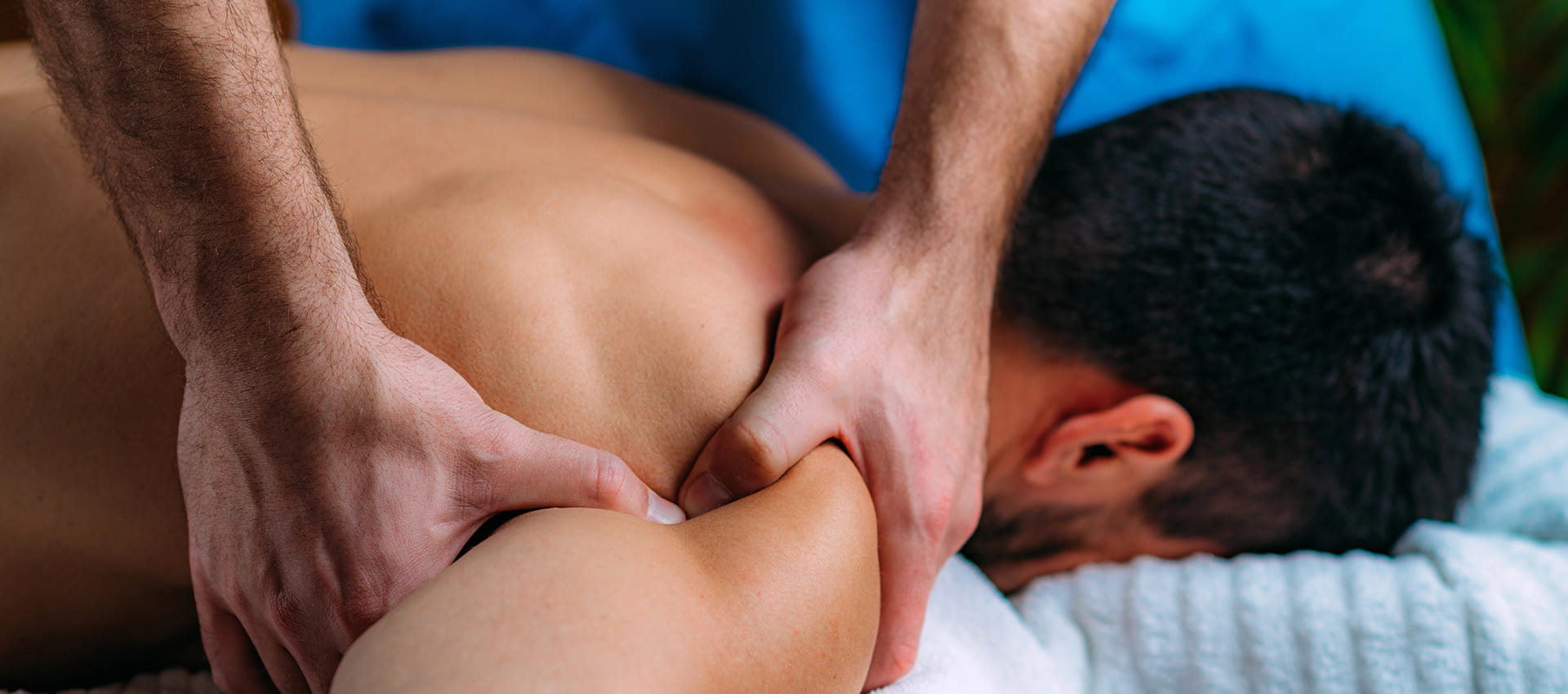
Targeted sports massage therapy can be incredibly helpful in alleviating pain and reducing muscular inhibition during the rehabilitation process. Regular sports massage helps to prevents excessive muscular tension from developing around the glenohumeral joint and scapular muscles, as well as preventing tension in the thoracic and cervical spine. If tension around the shoulder escalates, it can often stop clients from being able to lift their arm effectively, purely because of the pressure and muscular inhibition around the shoulder joint.
With clients that have shoulder pain, testing shoulder range of motion before and after any sports massage treatment is a really clear and easy objective marker. Because the shoulder is so reliant on muscular control to function effectively, you can sometimes take a person from 90 degrees pain free range to a full 180 degrees pain free in just one session. Of course, this does depend on whether the rotator cuff is torn or merely inflamed, but you can get some great initial changes in movement with effective sports massage interventions.
Sleep is often disrupted when pain is intense and this can lead to delayed recovery. Impaired sleep can also lead to low mood, which may influence compliance with any rehabilitation or treatment plan. Massage has a positive sleep enhancing effect, and encourages parasympathetic nervous activity, promoting recovery.
Any sports massage therapists working with clients that have shoulder pain, the key is to identify the source of the dysfunctional movement. Looking at the quality of a client’s movement, particularly in overhead shoulder positions, can really help to identify which muscles are exerting more of a pull on the glenohumeral joint. Releasing deltoid and trapezius is always a must as the nervous system will always increase activity of these muscles in order to try and stabilise this region.
However, being more selective in your treatment can be useful to gain maximum efficiency and effectiveness. The thoracic and lower cervical spine is sometimes forgotten, but releasing locally around the spine can make a huge difference. Clients will often hunch their shoulders and fix their upper body in the presence of pain, which encourages further internal rotation of the glenohumeral joint and reinforces the injury mechanism. Releasing the tissue around the front of the shoulder, as well as those in the upper back and neck can really help to improve thoracic posture, alignment and thoracic extension, supporting better diaphragmatic movement also.
Of all the joints to treat with massage, the shoulder is my favourite. Results can be instant if you release the right muscles, and it can make a huge difference to client’s joint function, level of pain, and quality of life.
If you are not a sports massage therapist and you enjoyed reading this technical information, perhaps you should consider becoming a sports massage therapist. We have a range of sports massage courses available, with flexible study and payment options to suit all budgets and circumstances. Get in touch with our Careers Team today if you’d like more information.
Luime, J.J., Koes, B.W., Hendriksen, I.J., Burdorf, A., Verhagen, A.P., Miedema, H.S. and Verhaar, J.A., 2004. Prevalence and incidence of shoulder pain in the general population; a systematic review. Scandinavian journal of rheumatology, 33(2), pp. 73-81.
Connor, P. M., Banks, D. M., Tyson, A. B., Coumas, J. S., & D’Alessandro, D. F. (2003). Magnetic resonance imaging of the asymptomatic shoulder of overhead athletes. The American Journal of Sports Medicine, 31(5), 724–727.
Back to articlesAnd discover more about the world of massage therapy
Great news, you're on the list...