
Yoga articles and career guides
Enlighten your mind and reawaken your inner yogi with our range of expert yoga articles and career guides
Enlighten your mind and reawaken your inner yogi with our range of expert yoga articles and career guides
Kundalini yoga is a form of yoga that uses movements, mantras, meditations and breathing techniques to build physical and spiritual energy.
Kundalini, literally translated from Sanskrit, means coiled or spiralled. The word is the feminine variant of the term, symbolically representing feminine energy, also known as Shakti. Kundalini is thought to be present in everyone, regardless of gender; the feminine form of the word reflects the symbolic character of the energy, not a claim that it’s only found in women.
Kundalini energy, or prana, is said to lie dormant at the base of the spine. The principles behind Kundalini yoga use this symbolism to awaken it. In Kundalini yoga, this spiritual awakening is said to create greater calmness and emotional balance, especially with regular practice.
Kundalini yoga is an ancient yogic practice that dates back many years. Possibly the first specific reference to it is in the Hatha Yoga Pradipika, which was composed in the 15th century. The Yoga Kundalini Upanishad was the first text solely dedicated to Kundalini. This is one of the latest Upanishads, dated to the late 16th or early 17th century (specific dates are unknown). The Upanishads are a series of ancient texts that were written by different sages (wise philosophical leaders) to share knowledge and insight about the relationship between human beings and the spiritual universe. The earliest Upanishads are reported to date as far back as 800–600 BCE and are much more generic in their content. More Upanishads, like the Yoga Kundalini Upanishad, are much more detailed and specific about their subject matter.
While scriptures relating to Kundalini are, in yogic terms, relatively recent, techniques practised in Kundalini yoga date back much further. The core concept of Kundalini is thought to derive from early Hindu scriptures such as the Vedas (composed somewhere between 1500 and 900 BCE). The Vedas were in fact handed down through storytelling rather than in written form, and these informed yoga practices.
The concept of Kundalini yoga was brought to the western world by Harbhajan Singh Puri (1929–2004). More widely known as Yogi Bhajan, his teaching was a synthesis of yoga, tantric theory, and Sikh mantras.
Born in British India, in a part of India that is now Pakistan, Yogi Bhajan was invited in 1969 to teach yoga in Canada, where he lived for one year. A year later, and following another invitation, he moved to the USA to spread his wisdom and teachings. In particular, he was keen to establish a yoga practice that involved much more than physical exercise, but instead had a strong sense of spirituality, energy and uplifting content within it.
While most approaches to yoga stem from Hindu traditions, Yogi Bhajan was Sikh. Physical yoga postures are not part of traditional Sikh devotional rituals. Yogi Bhajan’s approach can therefore be considered a more modern take on yoga, blending ancient Hindu mechanics with Sikh devotional practices and mantras.
The vast majority of yoga styles practised in the west have no specific religious element to them. Rather, they use yogic techniques for enhancing each individual’s personal spirituality.
Kundalini instructors are often recognisable by their distinctive clothing. Traditionally they will wear all white, often with a head covering or turban. White is said to expand the person’s aura and act as a protective energy shield by reflecting all other colours, preventing the absorption of outside influences. Covering the head helps to focus energy towards the third eye (Ajna chakra), which is also known as the sixth chakra (situated in the centre of the forehead). This helps to clear the mind and deepen the connection with inner wisdom. Keeping the clothes and head covering clean is said to demonstrate observance, care and respect for the spiritual lineage of the guru (spiritual leader).
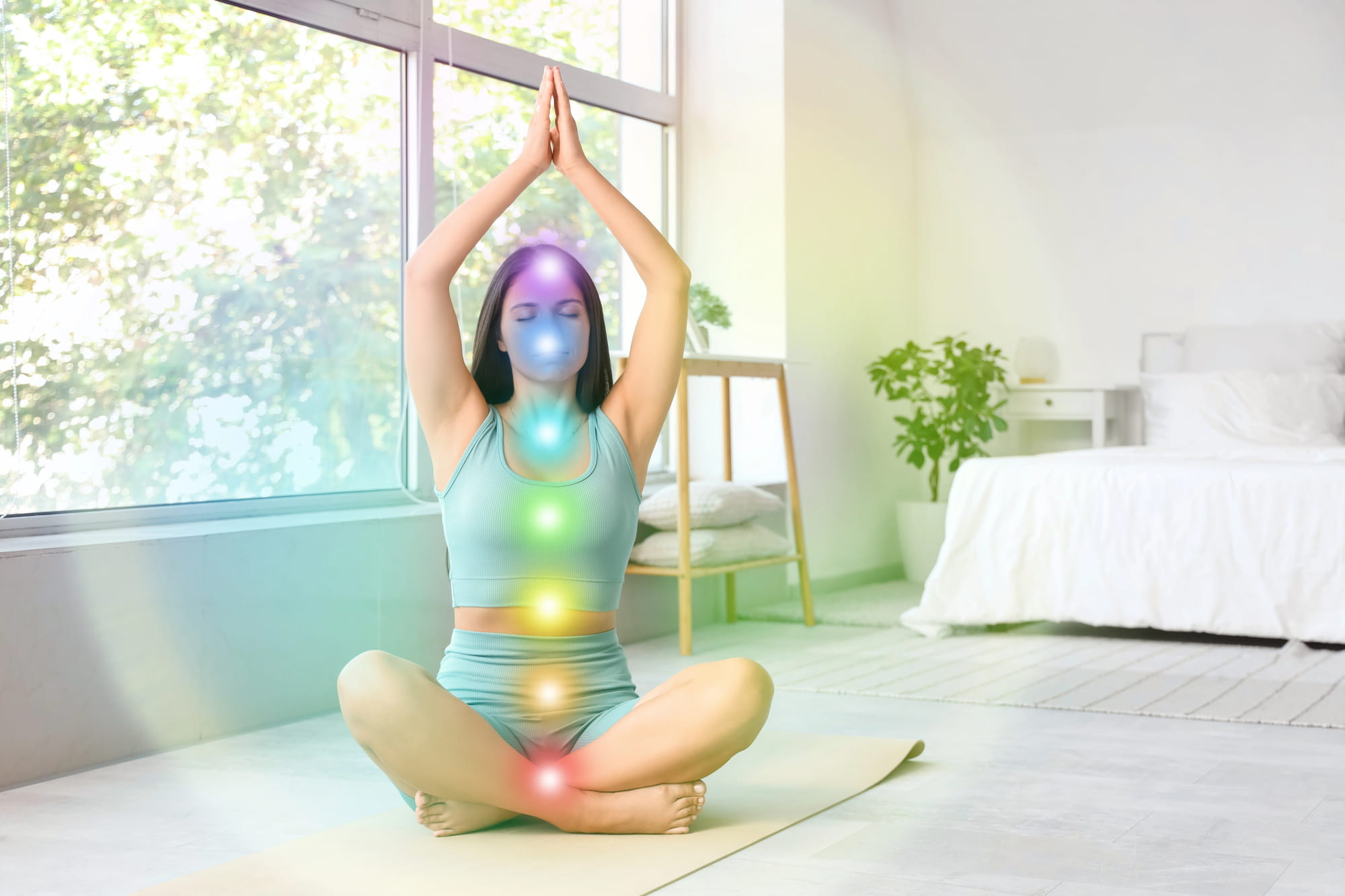
Kundalini yoga is often closely associated with tantric yoga because tantric techniques are used to awaken the dormant and subtle energy in the body.
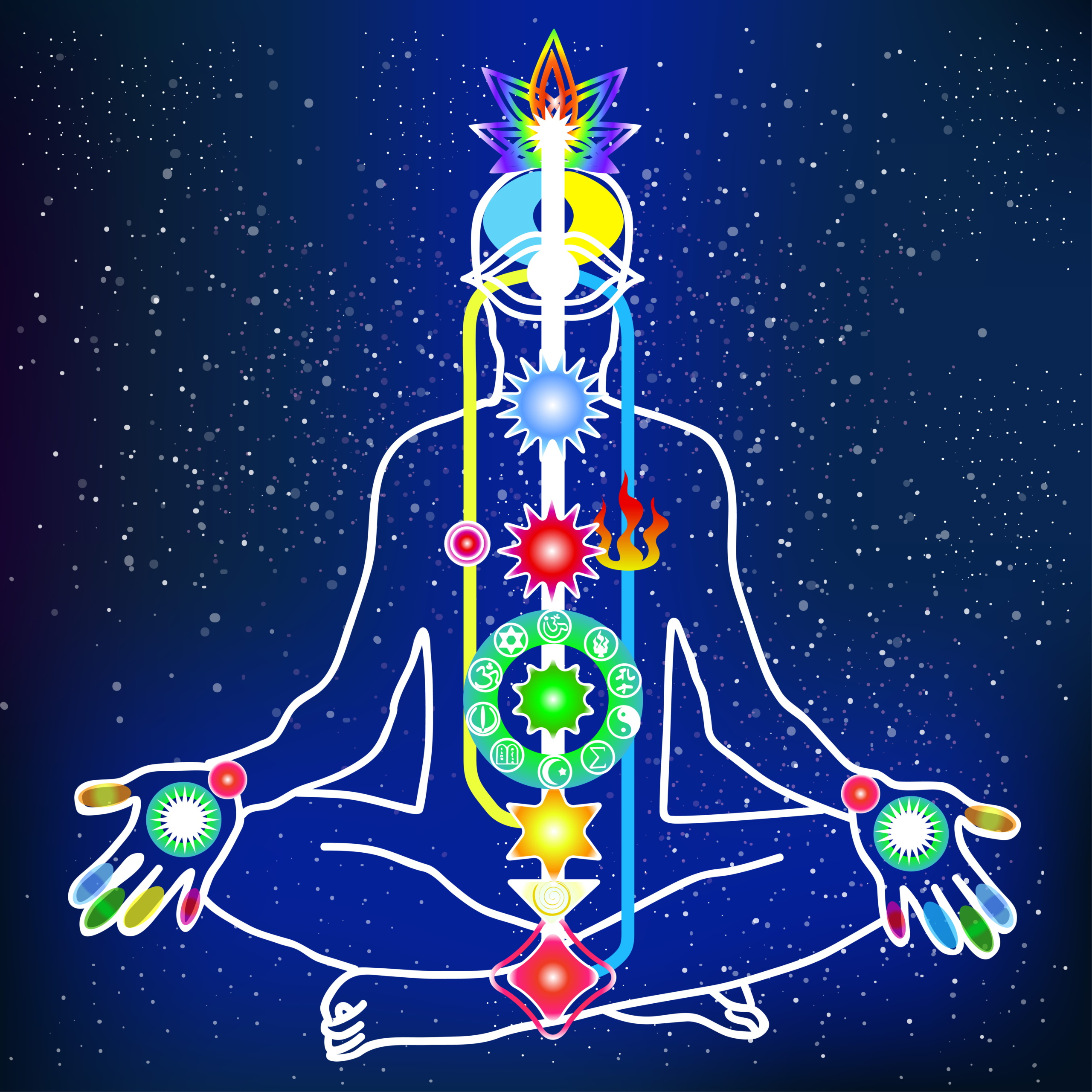
In yoga, prana is said to flow through subtle energy channels in the body known as Nadis. Chakras are the energetic centres that are located along the spine and up to the head (from the root to the crown respectively). Each chakra is denoted by a symbol that comprises various geometric shapes, each connected to a different spiritual context. For example, the third eye represents awareness, and the root chakra represents basic trust.
When Kundalini yoga techniques are practised regularly, it is said that prana rises up the spine like the coil of a snake, travelling from the first (root) chakra towards the seventh (crown) chakra, in order to achieve enlightenment, or spiritual awakening. When this enlightenment is achieved, there is said to be a Kundalini awakening.
The techniques to achieve a Kundalini awakening include:
Regular Kundalini yoga practice can bring about many of the benefits associated with most yoga practices, including physical, mental and spiritual. Broadly speaking, the physical benefits include improved flexibility, mobility, balance, coordination, joint stability and alignment. Mentally and spiritually, yoga can help to reduce stress, improve brain function and sleep, and better manage the symptoms associated with modern living.
Physiologically, Kundalini yoga increases the activity of the parasympathetic nervous system, downregulating many of the fight-or-flight mechanisms (also known as the stress response). This brings about a series of positive responses in the body, including reducing levels of stress hormones, especially cortisol, as well as all the benefits associated with this (e.g., improved sleep, better metabolic health, improved immune function and lower blood pressure).
Based on MRI investigations, it is even suggested that there may be structural changes in the brain that lead to improved neuroplasticity (the ability of the brain to grow new neural pathways that improve cognition and general brain function).
In summary, Kundalini yoga is a powerful style of yoga that has profound and overarching health benefits.
Each Kundalini yoga class follows a distinct structure, which includes:
In any Kundalini yoga practice, it is essential that mental focus is maintained throughout the session. Unlike Hatha yoga (and other styles), there is much less emphasis on physical postures, or asana.
Kapalabhati, or ‘Breath of Fire’, is an example of a breathing technique used at least once in most Kundalini yoga classes, as part of ‘Tuning in’, or at the beginning of a kriya, to build energetic heat, awaken the navel centre and clear the mind, much like the breathing technique used during the forward-bend phase of ‘Miracle Bends’, but practised from a seated position, with the forced exhale and passive inhale repeated for 30 seconds to 3 minutes.
Within the Kundalini yoga structure, there is lots of opportunity for variety. The class duration and intensity, the experience of the participants and the purpose of the class will all influence the time dedicated to kriyas.
For those yoga teachers who want to diversify their teachings and specialise in Kundalini yoga, many of the concepts and subjects will be familiar from their own yoga practice and their foundational yoga teacher training course (e.g., Level 3 Yoga Teacher Course).
However, in order to teach a Kundalini class, teachers require an enhanced level of knowledge and understanding that extends beyond simply being familiar with the components and structure of the class. This is why completing a specialist Kundalini yoga teacher training course is so important.
Alongside the teacher training, teachers on their Kundalini journey are advised to participate regularly in Kundalini practices, both self-practice and under the supervision of another Kundalini practitioner.
If you enjoyed this article and would like to learn more about how to become a yoga instructor, take a look at our range of yoga instructor courses and teacher training modules.
Sara has over 30 years' experience in the health and fitness industry, teaching classes in private and local authority facilities. She enjoys sharing her knowledge and skills in her role as a tutor, assessor and course developer. She has been involved in writing syllabus, manuals and assessments, including as the lead tutor to the Inclusive Fitness Initiative, working with disabled people, and through her work with frail older people. She co-created one of the first Yoga Teacher training courses within the fitness sector, having benefited from her own personal yoga practice.
And embrace the rich and vibrant world of yoga
Great news, you're on the list...