
What Separates a Good Coach from a Great One?
Find out how empathy is one of the qualities that can distinguish a good coach from a great one.
Find out how empathy is one of the qualities that can distinguish a good coach from a great one.
Technical knowledge and practical skills are the foundations of effective coaching. Having a thorough understanding of anatomy, biomechanics, exercise physiology and programme design is essential part of completing any quality personal training course, as is the ability to apply that knowledge safely and effectively afterwards. These are not optional extras, they are the fundamental competencies of the profession. But technical competence alone doesn’t necessarily make someone a successful coach.
Coaching is ultimately about working with people, and people are considerably more complex than the programmes we write for them. Every client brings their own experiences, expectations, motivations, insecurities and challenges into the training environment.
The ability to understand those individual circumstances, to see situations from another person’s perspective and to respond appropriately is what can elevate a technically competent coach into a truly exceptional one. That quality is empathy.
Empathy is often thought of as an innate personality trait, something that people either naturally possess or they don’t. While some individuals may be more naturally empathetic than others, I believe professional empathy is also a skill that can be developed and refined through accumulated experience.
Over the course of a coaching career, we encounter people from different backgrounds, with different personalities, abilities, motivations and life circumstances. We work with clients through periods of success and progress, but also through injury, frustration, disappointment, personal difficulties and setbacks. Each of these experiences provides an opportunity to develop a broader understanding of human behaviour, and to recognise that two people facing what appears to be the same challenge may experience it in entirely different ways.
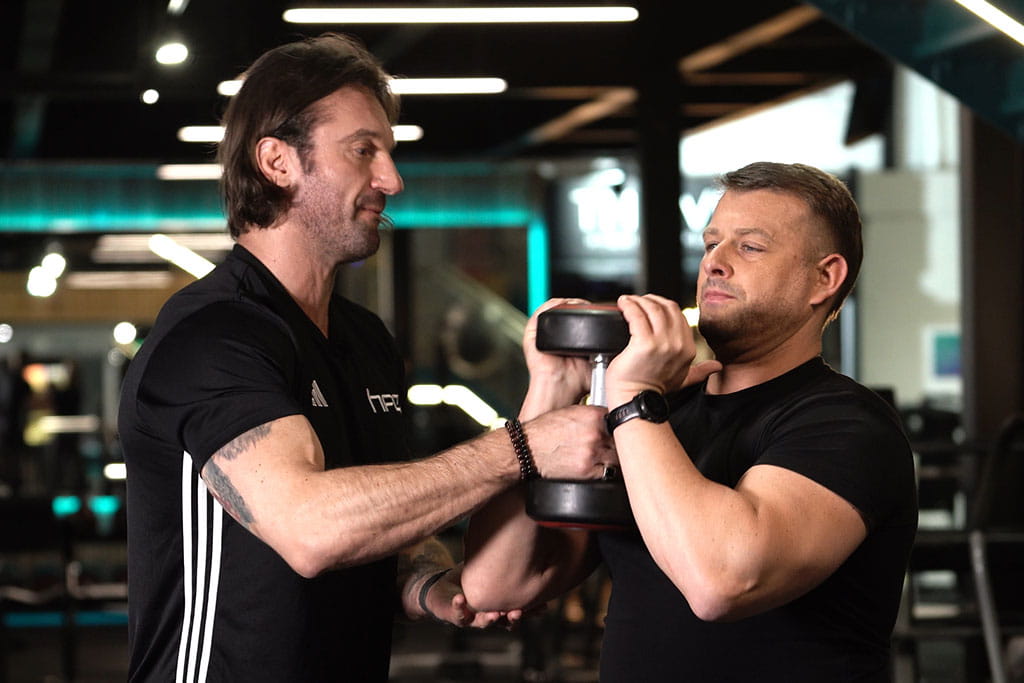
Something that might seem straightforward to us as coaches can represent a significant physical, practical or emotional challenge to someone else. The more varied our experiences, the better equipped we become to appreciate those differences.
However, experience alone doesn’t automatically create empathy. Simply spending years working with clients isn’t necessarily the same as learning from those interactions. It requires reflection, an openness to different perspectives and a willingness to question our own assumptions. Over time, that accumulated understanding becomes an increasingly valuable part of our professional skill set. It allows us to approach situations with greater perspective, fewer assumptions and a deeper appreciation of the individual we’re working with.
One of the most important lessons we learn through experience is that a client’s ability to engage with training is influenced by far more than their physical capabilities. Clients don’t arrive at a session in a vacuum from the rest of their lives. They bring with them the effects of work, relationships, family responsibilities, stress, sleep and countless other factors that may influence both their physical performance and emotional state.
As coaches, it’s easy to interpret missed sessions, inconsistent effort or a lack of progress as evidence of poor motivation or commitment. However, these behaviours don’t always tell the whole story.
For someone whose own life revolves around health, fitness and physical performance, it can be difficult to appreciate that exercise may occupy a very different position in somebody else’s priorities. Empathy allows us to recognise that distinction without making judgements. It encourages us to ask questions rather than make assumptions, and to understand the circumstances behind someone’s behaviour before deciding how best to respond. Ultimately, our role isn’t simply to deliver the programme we’ve written. It’s to help the individual in front of us achieve their goals within the realities of their own life.
An important thing to highlight is that there’s a difference between empathy and sympathy. Being empathetic doesn’t mean avoiding difficult conversations, accepting every excuse or removing the expectations and accountability that are necessary for progress. In fact, some of the most valuable coaching interventions involve challenging a client to do something they may initially find uncomfortable.
The skill lies in understanding when someone needs encouragement, when they need reassurance and when they need to be challenged. An experienced coach recognises that the same approach won’t necessarily work for every individual, or even for the same individual on different days. What motivates one person may undermine another’s confidence, while an approach that was effective previously may be inappropriate when circumstances change.
Empathy allows us to make those distinctions without compromising the standards we set. Ultimately, the objective isn’t to make every session comfortable or to ensure that every interaction is positive. It’s to create an environment in which clients feel understood and supported, while still being encouraged to take responsibility for their progress and work towards their goals.
Trust is fundamental to any successful relationship, and coaching is no different. Empathy plays an important role in establishing and maintaining trust. When clients feel that their coach genuinely understands their circumstances, they are more likely to communicate openly about the challenges they’re facing. That might mean admitting they haven’t followed their nutrition plan, acknowledging that they’re struggling with motivation, or expressing concerns about an exercise or aspect of their programme.
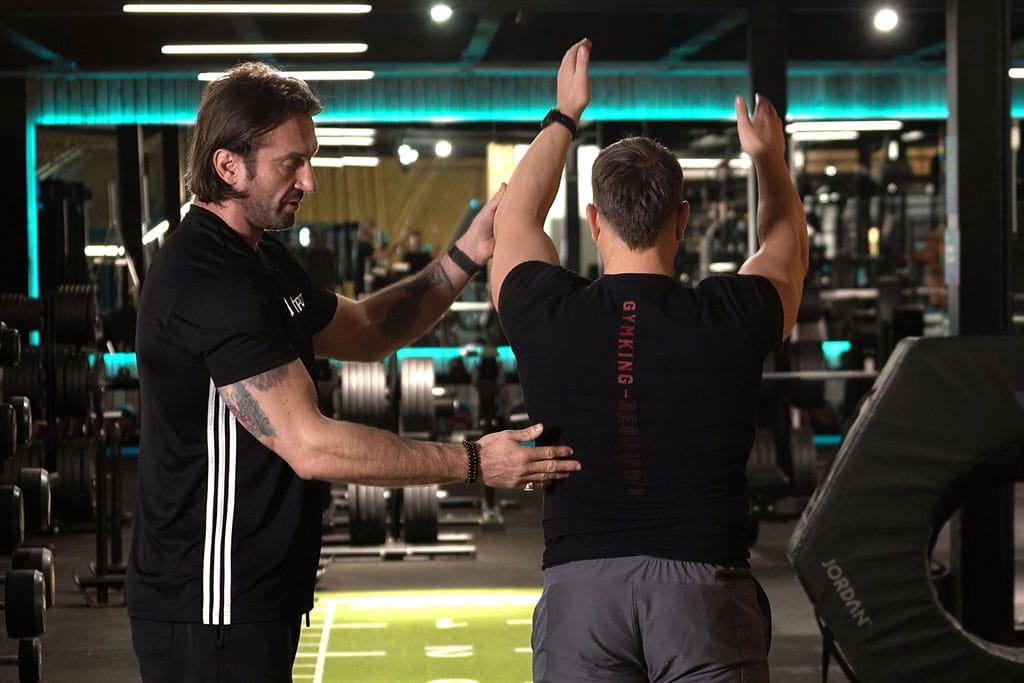
Without that trust, clients may be inclined to tell us what they think we want to hear, rather than what we actually need to know. This matters because the quality of our coaching decisions depends, in part, on the quality of the information available to us. Even the most technically sophisticated programme is of limited value if we’re working from an inaccurate understanding of the client’s circumstances.
Empathy also helps establish a relationship in which clients feel that their coach is invested in them as an individual, rather than simply in their physical results. Over time, that sense of understanding can strengthen engagement, improve consistency and create coaching relationships that extend well beyond the achievement of an initial goal.
If empathy is a skill that develops through experience, then it’s something we should actively seek to improve throughout our coaching careers. One of the most valuable things a developing coach can do is work with a broad range of people. Different ages, abilities, backgrounds, personalities and objectives all present opportunities to challenge our assumptions and broaden our understanding of what motivates people and the difficulties they face. This can also lead to you finding your niche and taking on an additional personal training course.
Equally important is learning to listen. Not simply waiting for an opportunity to offer advice, but genuinely paying attention to what someone is telling us, asking thoughtful questions and being willing to consider perspectives that differ from our own. Reflection is another essential part of that process. When a coaching relationship becomes difficult, or a client doesn’t respond as expected, it’s worth considering whether there was something about their circumstances that we failed to understand.
Perhaps most importantly, we need to recognise that our own experiences aren’t universal. What seems obvious, straightforward or achievable to us may look very different from someone else’s perspective. Technical knowledge and practical competence will always be the essential foundations of our profession. But as we accumulate experience, develop perspective and learn to better understand the people we work with, empathy becomes one of the qualities that can distinguish a good coach from a great one.

Luke Worthington is a personal trainer who needs no introduction. Arguably, he's one of the best personal trainers is the UK, and probably the world. He is globally recognised as an elite personal trainer and physical preparation coach, specialising in training actors for film, television, and stage. He has a strong of high-profile clients and is frequently assigned to projects for Netflix, Amazon, Disney, and other film and television companies.
And get the fast-paced world of personal training delivered straight to your inbox every week
Great news, you're on the list...