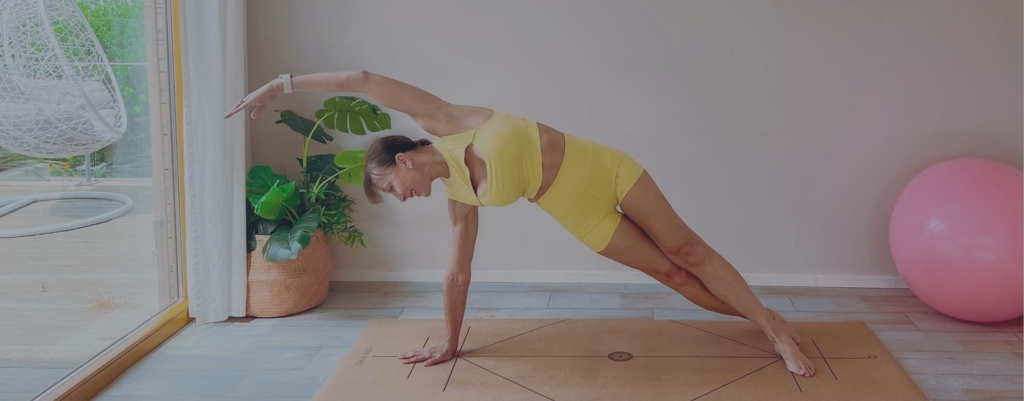

Building a Pilates Career with Purpose
Rachel Lawrence Interview Series: Part 2 of 2
Rachel Lawrence Interview Series: Part 2 of 2
Five years ago, we spoke to Rachel Lawrence about her growing online Pilates platform and the journey that took her from studio teaching to YouTube success. Since then, her audience has continued to expand, reaching people of all ages and abilities around the world.
Today, Rachel teaches more than 350,000 people online through YouTube and Zoom. But while her platform has grown dramatically, her approach remains rooted in the same values: authenticity, lifelong learning and putting people first. In this second part of our conversation, she reflects on building an online audience, mastering her craft and why community matters more than competition.
Today, my work is very much an online practice rather than an in-person practice, although I occasionally coach fellow teachers in my home studio. I guess the biggest difference is that the relationship with my clients is fully online, which I find very interesting because it doesn’t feel that different.
I teach mat classes via Zoom as well as my live broadcasts and videos on YouTube, and one aspect I love is people writing to me from all over the world telling me how Pilates has changed their lives. They describe their routines, how they fit my workouts into their day, and I really love that.
Pre-COVID, I was teaching a few hundred people; now I teach over 350,000, and I love that I can provide high-quality Pilates content online to people wherever they are in the world. It’s a wonderful global community.
My career has changed dramatically over the past five years. To be an online presence, you need many skills on top of a great Pilates education—creativity, vision, insight, presenting technique, filming and editing skills, marketing, content strategy—it’s hard work!
Keeping up with changes in technology, too—the online platforms constantly update and change, so you need to be able to adapt and pivot where needed. Alongside that, I’ve completed my Master Level Pilates qualification to be able to bring more to my community.
My audience has evolved into a much broader mix of ages, which I am so pleased to see. Five years ago, it was very much the over 40s, but now it’s all ages, and it is great to welcome a much younger audience who are looking to take care of themselves through a Pilates lifestyle. Currently, I have about 15% of people in the 25 to 35 age group, 15% in the 35 to 44, 15% in the 45 to 54, 20% in the over 50s and the rest are over 65.
One of the best things about Pilates becoming a trend is that it’s reaching more people who need it. By providing my content for free on YouTube, I am fulfilling my own lifelong dream of helping those people who need it most, and who may not always have access to high-quality classes due to personal circumstances or location.
I had worked as a documentary filmmaker for many years before moving into Pilates as an instructor, and I was very familiar with the language of creating engaging and accessible programmes. One TV executive said to me I had the ‘common touch’, which they explained as the natural ability to understand, communicate and connect well with ordinary people. I remember being so surprised and flattered by the comment.
I had survived a traumatic childhood; my mother had mental health problems all her life, and my father was born with a severe facial disability, which affected him deeply. I guess I had to learn at an early age to find connection with people outside of my immediate family, so maybe I developed that skill as a means of survival. Either way, it’s what gives me the most joy today—connection.
You can’t escape your past, and for me, it’s my constant reminder that you don’t know what someone may have been through when they arrive in your class. Whether in person or online, it’s important to remember that you, as the teacher, are there to help, support and guide people to feel better about themselves through movement, mindfulness and empathic teaching.
That it is slow! And that it’s not about the numbers; it’s about the engagement. Last year, I paid a consultant to run an analysis of my social channels compared to some competitors, thinking I wasn’t doing so well because my numbers are much smaller. I was delighted to find out that although my numbers were smaller, my engagement was much higher, meaning people were taking time to read my Instagram posts, send messages or watch the whole of one of my videos rather than just clicking away.
That is real influence. So my advice to instructors is don’t fret the numbers. Work on engaging your audience, however small, and you will get positive, organic growth.
That’s an easy one to answer. By being authentic and genuinely caring about the people you’re teaching. I think people can tell if you’re authentic and trustworthy online just as well as they can in real life, so my aim has always been to provide the best possible coaching and teaching that I can.
I respond to what my audience asks for—I’ll make a video based on a viewer’s request because it shows I do listen, and I always make a point of spending at least 30 minutes a day answering messages.
I think what’s most important for any instructor who wants to build an online following is that they must have experience teaching in person. I’d built up ten years of teaching Pilates, including working in a sports injury clinic, so I was well versed in all the possible reasons someone might want to take a class and how their body might respond to movement. Without that experience, you won’t understand your audience. It’s a combination of teaching experience and being responsive to your viewers.
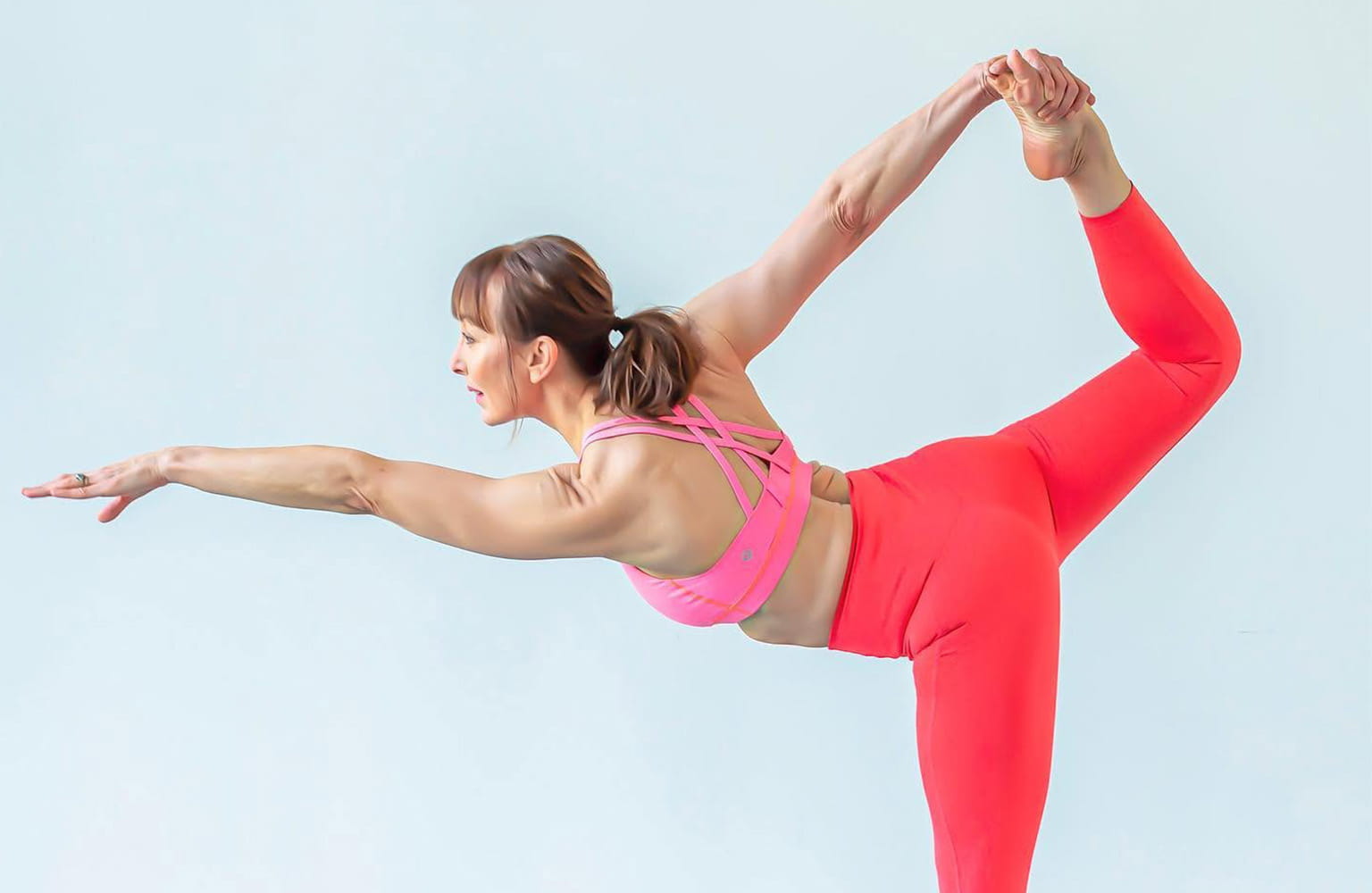
I think operating at master level means having a deep understanding of the practice, both the original method and contemporary variations. It means having a level of command over your own body to execute exercises with ease, grace and control, along with years of teaching experience that allow you to step into any class with any type of client and give them a really great session.
I also attribute mastery to constant learning and personal growth, both physically and mentally.
I think if you’re not curious about Pilates and its origins, you can’t be a good teacher. I am in a constant state of curiosity about the evolution of the method and find Joseph Pilates and the Elders fascinating.
Joseph Pilates was an athlete who practised many forms of physical fitness, including acrobatics, boxing and sword fighting, to a high level of endurance and expertise. Similarly, the Elders—the very first generation of Pilates teachers—were mostly dancers and equally experienced in a high level of athleticism and endurance. That is the origin of the method and the teachers.
I wrote a long piece about this on my Instagram page—why so many Pilates teachers are dancers or trained as dancers. I think it comes back to mastery. When you’ve worked with your body your whole life, you develop a level of understanding that is very hard to explain to someone who hasn’t. You instinctively understand and interpret movement.
That’s very important with Pilates—to reach the point where you fully understand movement while remaining curious about how you can adapt it to suit each client or your own practice.
I realised a long time ago that I’m an outlier—someone who feels a bit of an outsider whilst wanting to be part of a group. My need for absolute integrity in what I do overrides some opportunities, but I’m OK with that. What matters most to me is being professional, helping people as much as I can and never taking the trust I have built for granted.
That’s why I operate on a donation basis on my YouTube channel. People can access my teaching for free, and I trust that those who truly appreciate it—and can afford to donate—will support the continued growth of the channel.
Lots of people have told me not to do it, and I’ve been criticised for “giving away” my classes, but it matters to me that people have access to professional teaching without a paywall. That probably comes from my background, because I know what it’s like to want to do something but not be able to because of money or circumstance.
Being an outlier is one of the reasons I discovered Pilates thirty years ago when it was barely known in the UK. Whilst being an outlier can be isolating at times, I have always stayed true to my personal values because integrity is more important to me than having thousands of followers or following a trend. My followers know I care about them, and I love that relationship.
From my little corner of the Pilates industry, I want to set an example of how sharing knowledge, supporting and encouraging fellow instructors can be empowering for everyone concerned. Why not lift each other up?
I’ve had a couple of very bad experiences within the worldwide Pilates community and a couple of really incredible and inspiring experiences. As Maya Angelou said, “People will forget what you said, people will forget what you did, but people will never forget how you made them feel.”
I know lots of instructors watch my content, and some even copy it. I just think, well, that shows I’m a good influence! Some write to thank me, and that is wonderful. Knowing I’ve helped an aspiring instructor and receiving that appreciation is a win-win for everyone.
I want to pass on my knowledge, help build confidence in instructors and students, and show that Pilates is an incredibly rewarding profession. Community grows when we share knowledge and support each other.
I’d like to challenge the misconception that Pilates isn’t fitness—that it’s only for women or dancers, that it’s glorified stretching or somehow easy. As they say, if it’s easy, it’s not Pilates!
Whilst it’s wonderful that Pilates has become more widely recognised, trends can sometimes dilute its true purpose. I’d also challenge the idea that Pilates is just a trend. It isn’t. It’s been around for over 100 years, created by an extraordinarily gifted athlete and practised by athletes ever since.
I consider myself an athlete, albeit in my sixties with thirty years of Pilates behind me and fifty-seven years of dance. I also consider Pilates teaching a serious profession. It’s physically and mentally demanding, but incredibly rewarding.
The most important thing is to get lots of experience teaching people in person. If you don’t teach in person, you won’t be able to teach online effectively. You need to understand how your teaching relates to people. Learning what works, what doesn’t and receiving immediate feedback will shape the way you teach online.
Take lots of classes yourself, both online and in person. Your own practice is one of the greatest teachers you’ll ever have. Over time, you’ll naturally develop your own style and perhaps discover a particular community you want to serve. Trust that process and don’t rush it.
My final advice is that Pilates isn’t about being a trendsetter or having thousands of followers. It’s a way of life. What’s most important is the connection you have with the people you’re working with, so remember that at the other end of every phone, tablet or TV is a real human being looking to you for guidance.
Enjoy it, do your best and good luck, my friends.
Discover Rachel’s thoughts on empathy, psychology and why understanding people is at the heart of great Pilates teaching.
Read: The Foundations of Great Pilates Teaching
Gain the practical skills, knowledge and confidence to teach Pilates professionally with our comprehensive teacher training and continuing education programmes.
View Our Pilates Teacher Training
Beth is a content creator specialising in health, wellness and education. With an MA in Graphic Design, she brings together strategy, design thinking and storytelling to create engaging content that informs, inspires and connects with audiences.
Step inside the world of Pilates
Great news, you're on the list...