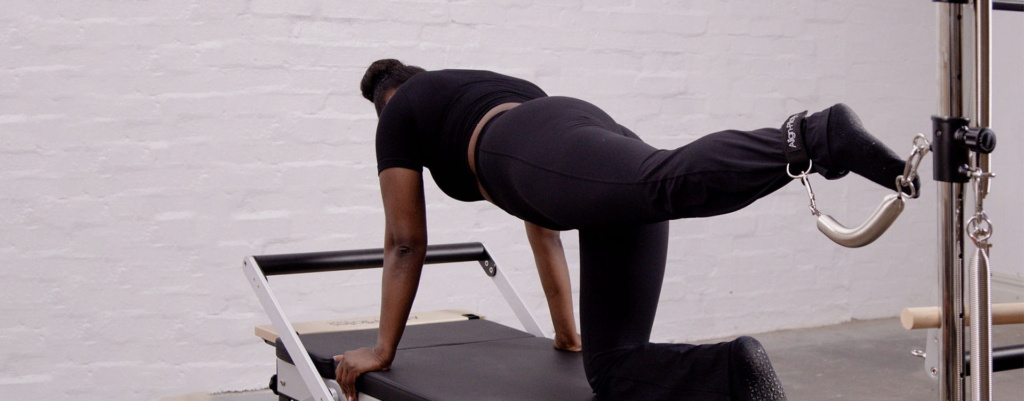
Your Guide to Pilates Tower Training
Discover how the Pilates tower works, its benefits, key exercises and what you need to know about tower teacher training.
Discover how the Pilates tower works, its benefits, key exercises and what you need to know about tower teacher training.
The Pilates tower is a contemporary piece of Pilates apparatus that has evolved from the trapeze table, which is a classical piece of equipment. Interestingly, the trapeze table is more widely and colloquially known as the Cadillac because of its striking aesthetic and function, much like the luxury car manufacturer of that time.
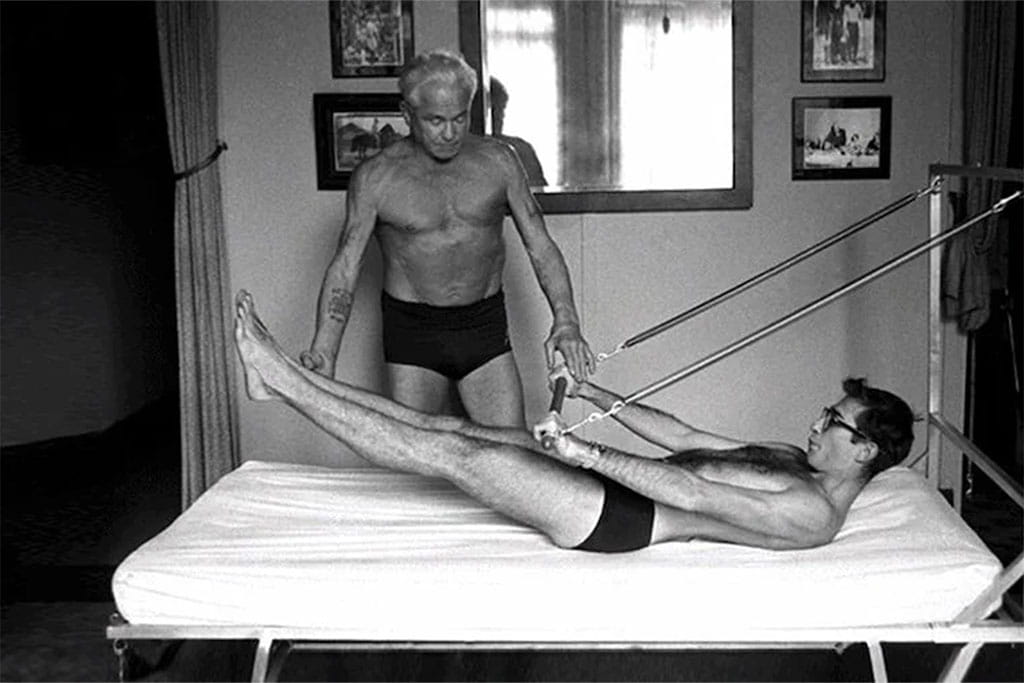
The Cadillac was designed by the namesake of the Pilates method, Joseph Pilates, and earlier iterations of the design were actually referred to as the ‘bednasium’ because Joseph Pilates created this piece of apparatus for people to use at home while in bed.
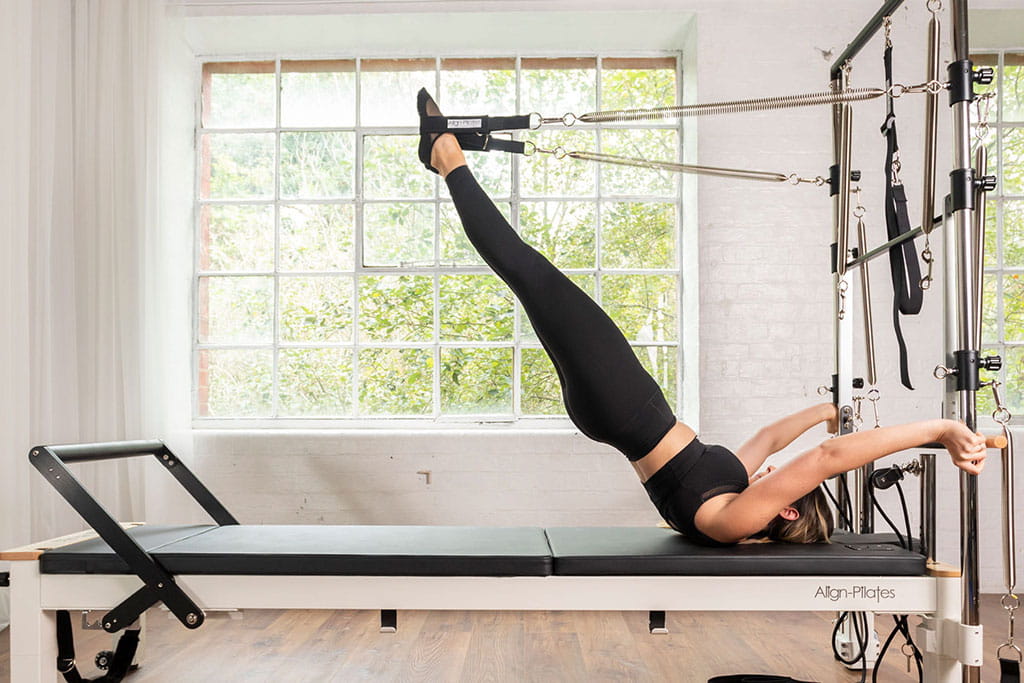
The modern Pilates tower may also be referred to as a ‘half Cadillac’ because it shares many of the features and functions with the full version, like the push-through bar and the leg springs. However, unlike the full Cadillac, the tower only has one vertical frame and does not have the overhead horizontal or sliding bars.
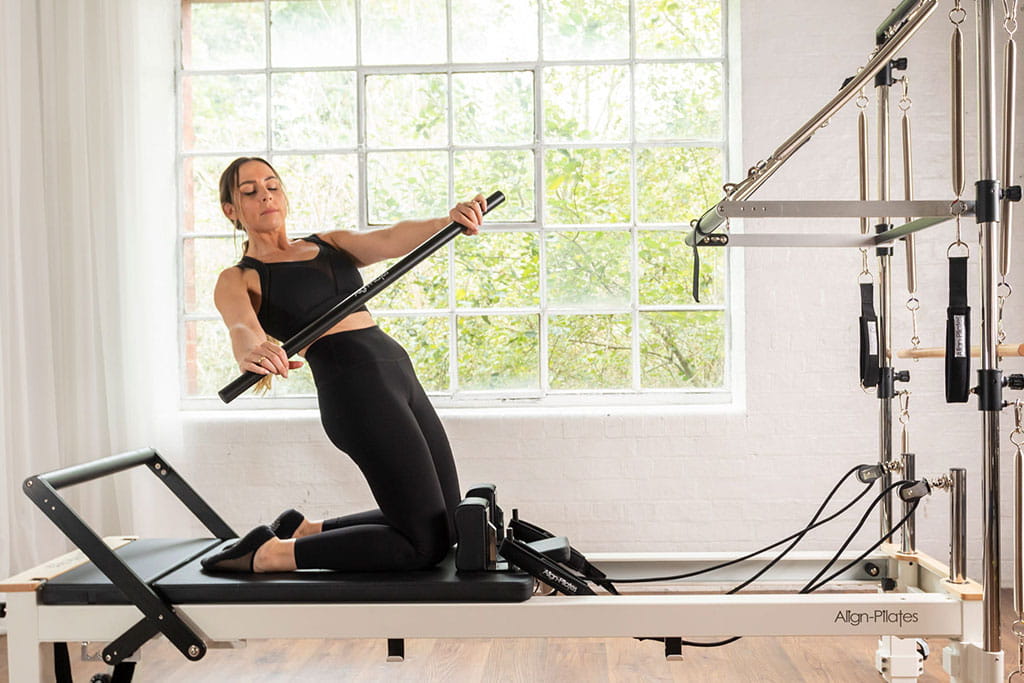
The Pilates tower may be fixed to a reformer bed, which will normally use an extended platform to create a fixed and stable surface from which exercises can be performed. On modern reformers, the shoulder pads can be removed to provide greater space and comfort. The tower can also be found as a wall unit, allowing exercises to be performed from a mat on the ground.
Most of the Cadillac exercises from classical and contemporary repertoires can be performed on the tower, with the exception of those requiring the overhead bars.
The Pilates tower is equipped with a number of spring-loaded features and attachments that can provide varying levels of resistance from different directions and planes of motion. While different manufacturers often have slight variations in design, most Pilates towers will include the following features:
A note on springs: Classical apparatus traditionally had a heavy and light version of both the leg and arm springs. Over time with the evolution of contemporary Pilates approaches, the heavy leg springs became the standard leg springs, the light leg springs became the arm springs, and the heavy arm springs became the roll-down bar springs. In reality, all springs are interchangeable and Pilates teachers will often use what is right for the client in front of them.
Broadly speaking, the benefits of the Pilates tower are much the same as with other Pilates formats, because the tower is merely a single piece of apparatus in the wider Pilates system.
That said, the distinct features of the tower allow specific movements to be supported, and resistances to be created, that aren’t accessible with other Pilates apparatus and equipment. Some of these include, but are not limited to:
Most exercises using the tower, including the wall unit or half Cadillac versions, will begin from one of the following starting positions:
As is consistent with any Pilates exercise, an optimal set-up and alignment are fundamental to the ability of participants to perform the exercise safely and effectively. Teachers must therefore dedicate sufficient time and attention to ensuring their students are in the optimal start position prior to commencing any movement.
In a classical Pilates session, students will participate in small groups and will often move between matwork, tower and other exercises performed on different types of apparatus (e.g., the reformer, ladder barrel, chair). Emphasis is usually placed on developing specific aspects of strength, length, mobility or stability, depending on the student’s functional or postural needs.
In contemporary studios, tower classes are taught to individuals and groups alike, and may include exercises performed from all of the above positions using each of the different tower features (e.g., roll-down bar, push-through bar, arm springs, leg springs).
The physical and technical demands of tower exercises increase the potential for injury because of the recoil effect of the springs. It’s therefore imperative that tower teachers are able to adequately cue, support and correct participants, which isn’t possible in larger groups.
Given the multiple attachment sites on the tower, it’s technically possible and practically useful to allow two students to use the tower at the same time. This allows the teacher to stay close and observe and support both participants as required. One student can perform standing work at the head of the reformer or tower bed, while the other can use the leg springs, arm springs or roll-down bar on the bed.
The group size is often much smaller for tower sessions than it is with other Pilates class formats, like mat and reformer. Typically, up to five participants is enough for a tower class, depending on the skill and experience of the students. Prior to performing any group tower sessions, participants should undergo a full induction. Ideally, they will also participate in some one-to-one work to ensure they are able to operate the tower apparatus safely.
Most Pilates tower training courses are taught in a modular fashion, combining independent study with a practical tower training course. While courses vary in length, format and contact time, broadly speaking, most tower teacher training courses run between two and five days, focusing on a combination of exercise technique, teaching, cueing and correction.
The conventional levels used with vocational qualifications don’t generally apply to tower teacher training courses. Instead, courses are labelled according to the complexity of the exercise repertoires taught on course. Most Pilates course providers have a foundational programme that focuses on the fundamentals, and an intermediate or advanced programme which focuses on more complex exercises and choreographic routines.
Most students will need to hold a recognised Level 3 Mat Pilates Qualification before they can enrol on specialist qualifications like reformer Pilates courses or the tower. Ideally, they will also have completed 20 hours of supervised tower practice within a group or one-to-one setting. Practical experience of using the tower as a student is essential for anyone who wants to become a Pilates instructor, because teacher training courses place greater emphasis on teaching, and less on personal practice.
Pilates tower programmes are generally classed as continuing professional development, or CPD, because they do not sit on any formal regulated qualification framework (RQF). This means that there are variable levels of quality, some good, some less so. There are also fully online courses available.
If you are thinking about completing a tower teacher training course, you should definitely do your research and prioritise courses that have quality learning materials, practical training videos to help you prepare for your training workshop, and in-person courses where you get to develop your teaching and cueing skills alongside other students. This experience will prove invaluable later in your Pilates career.
Back to articlesStep inside the world of Pilates
Great news, you're on the list...