
Why AI Can’t Replace Great Personal Trainers
Discover why AI will never replace personal trainer jobs, and how to use the tool effectively.
Discover why AI will never replace personal trainer jobs, and how to use the tool effectively.
Artificial intelligence is changing almost every industry, and personal training is no exception. AI can already write training programmes and calculate calories and macros. If those are the only things a personal trainer provides, then it is reasonable to ask whether that role could be replaced.
However, becoming successful after completing a personal training course has never simply been about passing on the information you’ve learnt. It is about knowing how to apply that information to the individual in front of you, and crucially, knowing when not to follow the plan.
This is where the art of coaching meets the science of training. The science provides the principles and the framework, the art is in interpreting what you see, adapting in real time and making decisions based on real experience. That judgement is developed through thousands of hours of working with real people.
Much of the information that underpins the programming side of personal training is readily available. Exercise selection, sets and reps, training splits and calorie calculations models can all be generated by AI quickly.That should not be seen as a threat to successful personal trainers, but rather a reminder that information has never been the same thing as having expertise.
A programme is ultimately a starting point: a plan based on the information available at the time it was written. The skill of the trainer is in understanding how those principles apply to the individual, observing how they respond, and adjusting accordingly. Two clients with the same goal, training age and apparent ability may respond very differently to exactly the same programme. An exercise that looks appropriate on paper may not suit the person performing it.
AI can provide an answer based on the information it is given. Coaching involves recognising when the information in front of you has changed, and knowing what to do about it.
A well-designed training programme is important, but it should never become more important than the person it was written for. The programme represents what you believe should work based on the information available at the time. Once the client starts training, you begin gathering new information. How they move, how they recover, how they respond to particular exercises and loads, and how they present on any given day should all influence what happens next.
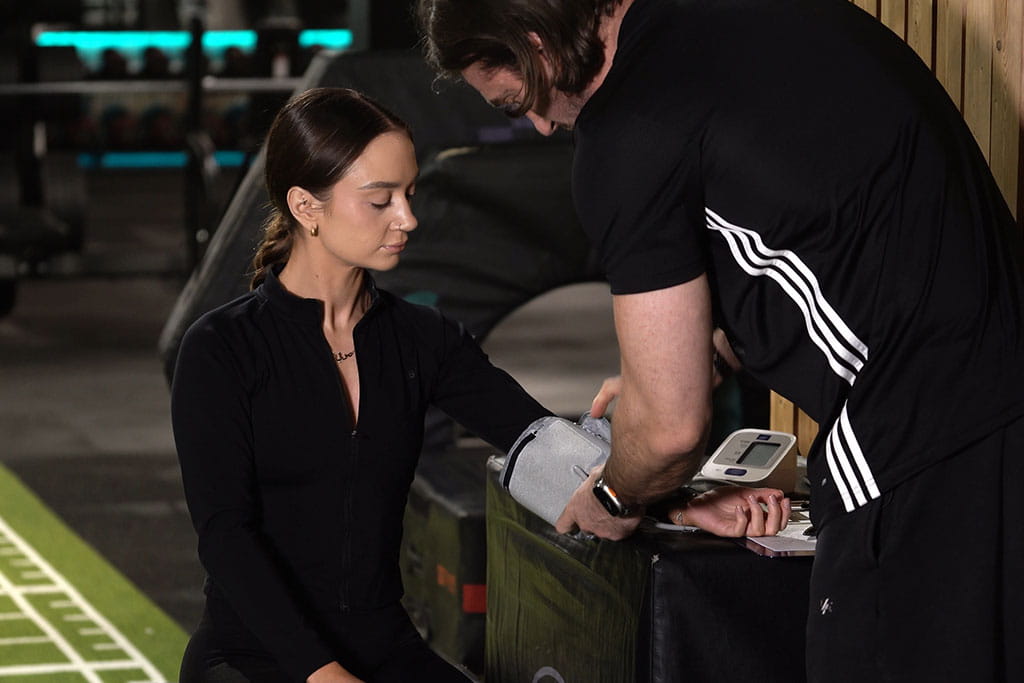
Sometimes that means progressing faster than planned. Sometimes it means reducing the load, changing an exercise or abandoning part of the session altogether. The best decision may occasionally be completely different from what is written on the page.
This is where experience becomes invaluable. Less experienced trainers can understandably become attached to the programme because it provides structure and certainty. With experience, you become more comfortable deviating from it because you understand the principles behind it well enough to know which elements matter and which can change. Mastery isn’t following the plan perfectly. It’s knowing when not to.
Experienced trainers will be able to describe having a “feel” for when something needs to change. That can sound vague or instinctive, but in reality, much of what we call intuition is pattern recognition developed through repeated experience.
After thousands of hours coaching, you have seen similar situations play out many times. You begin to recognise when someone is struggling because an exercise is genuinely inappropriate rather than simply difficult – when a client needs encouragement to push harder and when they need to back off, or when a small change in movement is worth investigating rather than coaching through.
These decisions can happen very quickly, but they are informed by years of observing people, making decisions, seeing the outcomes and refining your approach. AI can draw upon an enormous amount of existing information, but a trainer also draws upon accumulated practical experience. The more situations you have encountered, the larger your own library of reference points becomes. Good intuition isn’t guesswork. It is experience allowing you to recognise patterns before you have consciously worked through every step.
Not all useful information comes from what a client tells you. A good trainer is constantly observing, assessing and adapting. How does the client walk into the gym? Are they moving differently? Is their energy unusually low? Has their tone of voice changed? Are they hesitating before an exercise they would normally approach confidently? Is their movement slowing down because they are working hard, or because something doesn’t feel right?
Clients will often say they are “fine” when their body language suggests otherwise. Equally, someone may arrive feeling tired or unmotivated but perform exceptionally well once the session begins. Knowing the difference requires more than asking a readiness question and assigning a score.
This is where the relationship between trainer and client becomes important. When you have worked with someone consistently, you develop an understanding of what is normal for them. Small changes become noticeable because you have a baseline against which to compare them.
Great coaching therefore involves listening to what a client says, while also paying attention to what they don’t. The information that changes the session may never be spoken at all.
In my own specialism of physically preparing actors for film and television, developing an aesthetic eye is a fundamental part of the job. The goal is rarely simply to make someone leaner, stronger or more muscular – the physical preparation has to serve the character, the costume and ultimately what the audience sees on screen. That might mean creating the impression of greater width through the shoulders, bringing more shape to the arms, changing the relationship between the upper and lower body, or deliberately avoiding development in an area that doesn’t suit the character.
Measurements and body-composition data are useful, but they cannot make those decisions for you. Two actors can achieve very similar numbers while looking completely different on camera.
There are also factors that are difficult to quantify. Posture changes how a physique presents. The way someone stands, walks and carries themselves can alter the impression of size and athleticism. Costume can exaggerate some proportions and hide others, while lighting and camera angles can completely change how months of physical preparation appear on screen. This means I am constantly assessing not just whether an actor is progressing, but whether they are progressing in the right direction for the visual outcome we are trying to create.
That judgement has developed through years of preparing different bodies for different roles and seeing how those decisions ultimately translate to camera. AI can analyse measurements and suggest how to build muscle or lose body fat, but knowing what physique you are actually trying to create, and recognising the subtle adjustments needed to get there, still requires a trained and intuitive human eye.
None of this means personal trainers should resist AI. Used well, it can be an extremely useful tool. AI can help organise information, summarise research, analyse data and take on some of the administrative workload. The value is in the coaching.
AI will continue to become more capable, and some of the tasks traditionally associated with personal training will inevitably become easier to automate. That should encourage trainers to think carefully about where their real value lies. If your service consists primarily of producing generic programmes, prescribing sets and reps and providing information that is readily available elsewhere, then AI represents genuine competition.
Great personal training is about observing, interpreting and adapting. It is understanding the science well enough to know when to apply it and when circumstances require a different approach. It is reading the person in front of you, drawing on years of accumulated experience and making decisions that may never have appeared in the original plan.
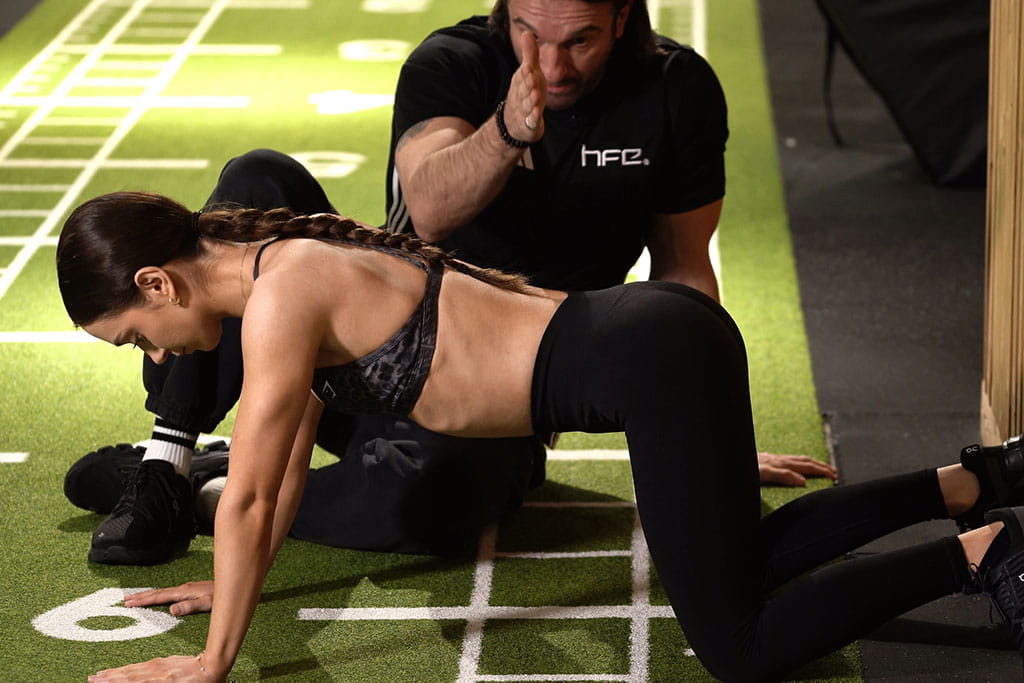
AI can give us increasingly sophisticated tools, and good trainers should embrace them, but the tool is not the coach. Ultimately, the future of personal training isn’t about trying to outperform AI at providing information. It is about becoming better at the part of the job that was always most valuable – coaching people.
The important distinction is between using AI to support your expertise and using it as a substitute for developing that expertise. A trainer still needs enough knowledge to assess whether the information being produced is appropriate, to recognise when it is wrong or overly generic, and to understand how it applies to the individual they are actually coaching. The better your own knowledge, the more useful AI becomes because you are better equipped to question, filter and apply its output.
In that sense, AI shouldn’t make great trainers redundant. It should allow them to spend less time on tasks that can be automated and more time doing the things that require genuine coaching skill. The challenge for trainers is therefore not to compete with AI at what it does well, but to become exceptionally good at the things that require judgement, experience and human interaction.
AI will continue to become more capable, and some of the tasks traditionally associated with personal training will inevitably become easier to automate. That should encourage trainers to think carefully about where their real value lies. If your service consists primarily of producing generic programmes, prescribing sets and reps and providing information that is readily available elsewhere, then AI represents genuine competition.
But great personal training is much more than programme design. It is observing, interpreting and adapting. It is understanding the science well enough to know when to apply it and when circumstances require a different approach. It is reading the person in front of you, drawing on years of accumulated experience and making decisions that may never have appeared in the original plan.
AI can give us increasingly sophisticated tools, and good trainers should embrace them. But the tool is not the coach. Ultimately, the future of personal training isn’t about trying to outperform AI at providing information. It is about becoming better at the part of the job that was always most valuable: coaching people. And that’s why a good personal training course is very important.
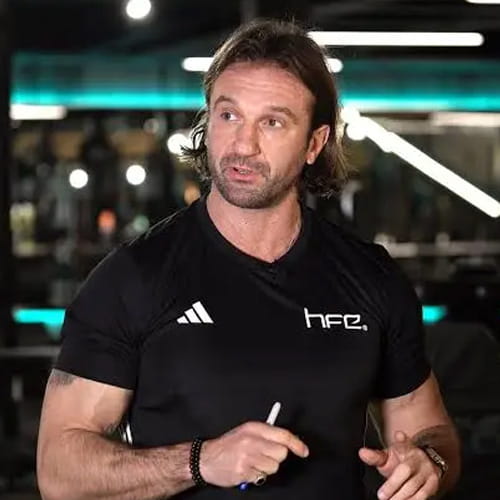
Luke Worthington is a personal trainer who needs no introduction. Arguably, he's one of the best personal trainers is the UK, and probably the world. He is globally recognised as an elite personal trainer and physical preparation coach, specialising in training actors for film, television, and stage. He has a strong of high-profile clients and is frequently assigned to projects for Netflix, Amazon, Disney, and other film and television companies.
And get the fast-paced world of personal training delivered straight to your inbox every week
Great news, you're on the list...