
Build Your Knowledge Beyond the Studio
Discover recommended Pilates books for learners, from Joseph Pilates’ original work to resources on anatomy, exercise technique and the wider principles behind the Pilates method.
Discover recommended Pilates books for learners, from Joseph Pilates’ original work to resources on anatomy, exercise technique and the wider principles behind the Pilates method.
Following on from our look at the best and most informative books for personal trainers, we now turn our attention to Pilates, which, along with yoga, has fast become one of the most popular forms of exercise.
The practice was pioneered by German-born Joseph Pilates who, as a child, suffered greatly from rickets, asthma and rheumatic fever. Despite doctors warning he could die prematurely, Pilates became determined to improve his physical condition. This led him to study yoga, martial arts, boxing and weightlifting.
His journey, which could quite easily be a story in itself, saw him on the Isle of Man when World War I broke out in 1914, after moving to England in 1912. It was during the War that he would lay the very first foundations out for Pilates as we know it today, as he worked in a hospital helping the sick and injured to recover. This would include the prototype for the reformer, using springs from old hospital beds to create resistance.
Following the war he would continue to perfect his methods, and by 1926, he had emigrated to the United States and opened a studio in New York. It was here that he gave advice to the dancers from the nearby New York School of Ballet who used to flock to him looking to overcome their dance-related injuries.
Over the years, Pilates’ original work has greatly evolved, becoming more scientific in its approach to exercise and training. Today there are many interpretations and schools of Pilates, each utilising Joseph’s teachings in a slightly different way. Even though these schools run their own class formats and Pilates courses, they all still remain true to his original vision, principles and concepts.
Whether you’re already a qualified Pilates teacher, you’re studying for your Level 3 Pilates Qualification, or you’re taking the more advanced Level 4 Pilates Course, these five books should always be within easy reach.
Originally published in 1934 and revised and updated between 1998-2008 by Presentation Dynamics, this is perhaps one of the least known works of Joseph Pilates. In many ways, this book (or booklet, as he would say) actually sets the scene for understanding the nature of his lifetime work, the ‘Contrology’ method. It also starts to present his core philosophy.
The book conveys some of his passion for health and the importance of balancing mind and body. It also conveys his frustrations about the health and science systems of that time.
The last chapter is particularly interesting because it introduces new style chairs and beds, which Pilates designed to ensure more restful sleeping positions and improved posture when sitting (rather than promoting slouching), which was well ahead of the time. One cannot help but wonder if these chairs and beds were the inspiration for the development of the various types of exercise equipment he later designed.
Originally published 1945 and again revised and updated 1998 by Presentation Dynamics, this short book outlines the foundational principles of the ‘Contrology’ method and illustrates and explains the original 34 Pilates exercises; with black and white photographs of Joe demonstrating each of them.
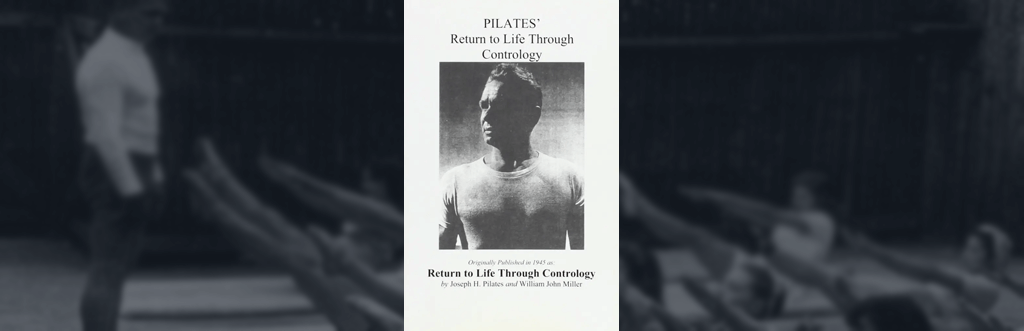
No Pilates teacher’s bookshelf would be complete without a copy of Joseph Pilates’ original Contrology book because this is the work that inspired the whole method and approach. It is the bible of the Pilates method as we know it.
To learn more about the mesmerising man behind the method, read our article on the origins and history of Pilates.
Published in 2008 by Bloomsbury Publishing, this essential Pilates read focuses on more modern exercise adaptations and approaches as they relate to the method, with emphasis on moving with awareness.
The book provides an overview of the history of the Pilates method, looking at the principles and philosophy of the original approach and how it has been taken forward by other schools. There is also extensive coverage throughout of how Pilates relates to anatomy and posture (and exercises) of the shoulder girdle, pelvic girdle and the spine.
Lawrence introduces the SEESAW acronym as a tool to help instructors analyse exercises more effectively and to think about the suitability of the exercises for different groups of clients. It also considers factors which influence the safety of the method, including speed, effectiveness, equipment, environment, stability, alignment and weight.
The book closes by offering guidelines for planning and structuring Pilates sessions, making it a valuable resource for those undertaking face-to-face Pilates teacher training courses, or as part of online Pilates training.
Published in 2006 by Human Kinetics, the cover of this book presents the copy as ‘a complete guide to mat work and apparatus exercise’, and it really is just that. As a starter, the foreword is written by Kathy Stanford Grant, a first-generation Pilates teacher and Pilates elder. As a mentor to Rael, she describes him as someone who ‘moves from within’ and somebody who ‘upholds the core values of the original Pilates lineage’.
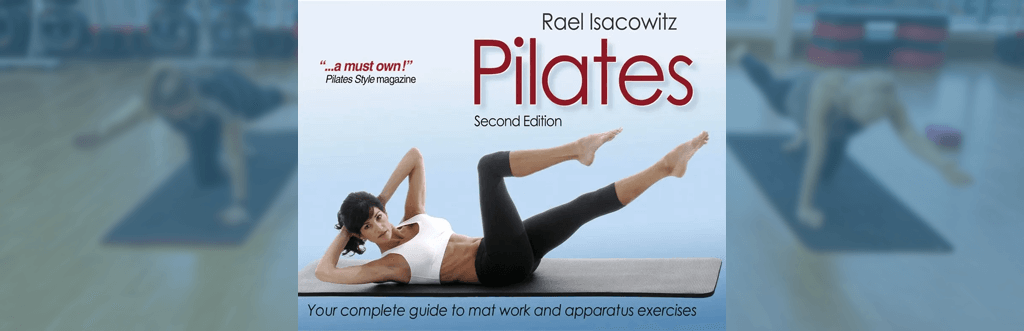
The first chapter starts with an introduction to the main Pilates principles. Highlighting the method as a practice from within, Rael also adds a couple of additional principles. It then goes on to provide a succinct coverage of alignment and posture, followed by several chapters covering mat work exercises, reformer exercises and exercise using the Cadillac, Wunda chair, barrels and ped-a-pull, arm chair and magic circle. All the exercises are beautifully photographed and clearly explained.
The book culminates with a chapter addressing the importance of exercise sequencing and some sample routines of both mat work and equipment, with different levels of skill and ability being presented. This is a fantastic and essential reference source for every Pilates instructor or enthusiast.
The self-professed ‘most comprehensive and accessible guide to Pilates ever’, contains over 200 pages of full-colour photographs which break down exercises into easy to follow steps. The book also includes special sections for new mothers and children, and people with conditions such as osteoarthritis, back pain and knee injuries.
With beginner, intermediate and advanced segments, the Pilates Bible looks to serve as a one-stop guide for any level of instructor.
Published in 2002 by Allen Unwin, this Pilates book does as its name suggests, presenting a more modern and contemporary style of the method.
As a dancer, Dr Penelope Latey experienced the Pilates method and trained with first-generation teachers. She also established one of the first Pilates training programmes in Australia.
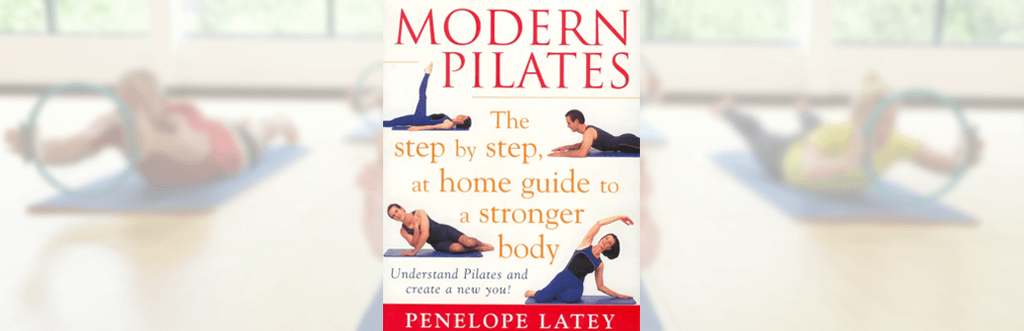
Latey’s goal with Modern Pilates was to make Pilates more accessible to the general public. The original principles and exercises are explored, along with some analysis of exercises which may be less suitable for some participants (e.g. Pilates for pre and postnatal).
The modern approach focuses on functional movement possibilities and moves away from the constant abdominal engagement and effortful movement of the original method.
Instead, it draws on teaching and influences of other holistic and therapeutic approaches, including osteopathy, manual therapies like sports massage and the Feldenkrais method.
It is a valuable read for any Pilates teacher interested in the shifting paradigm.
Harvard physician Herbert Benson wrote this bestselling self-help book with the aim of simplifying Transcendental Meditation for the Western world.
Contained within is an effective approach to relieving stress and managing blood pressure. The techniques are also recommended as a form of treatment with those with chronic pain and other physical ailments, without the need for reliance on medication. As a result, it could also be worth considering for those with a Level 3 exercise referral qualification.
The Relaxation Response also looks to promote the benefits of meditation while counteracting the fight or flight response. With the calming nature of Pilates, it would make sense for an instructor to take an interest in these methods.
If you are keen to expand your horizons further and step away from the Pilates method, there are a wealth of other notable professionals and publications in the area of movement science. Many of these inspirational movement teachers also advocate the ‘moving from within’ approach and include, but are by no means limited to:
Alternatively, you can read our range of Pilates articles and career guides for advice and information on all the important topics.
Josh is passionate about all things health and fitness, and in his spare time he's a keen marathon and ultramarathon runner.
Step inside the world of Pilates
Great news, you're on the list...